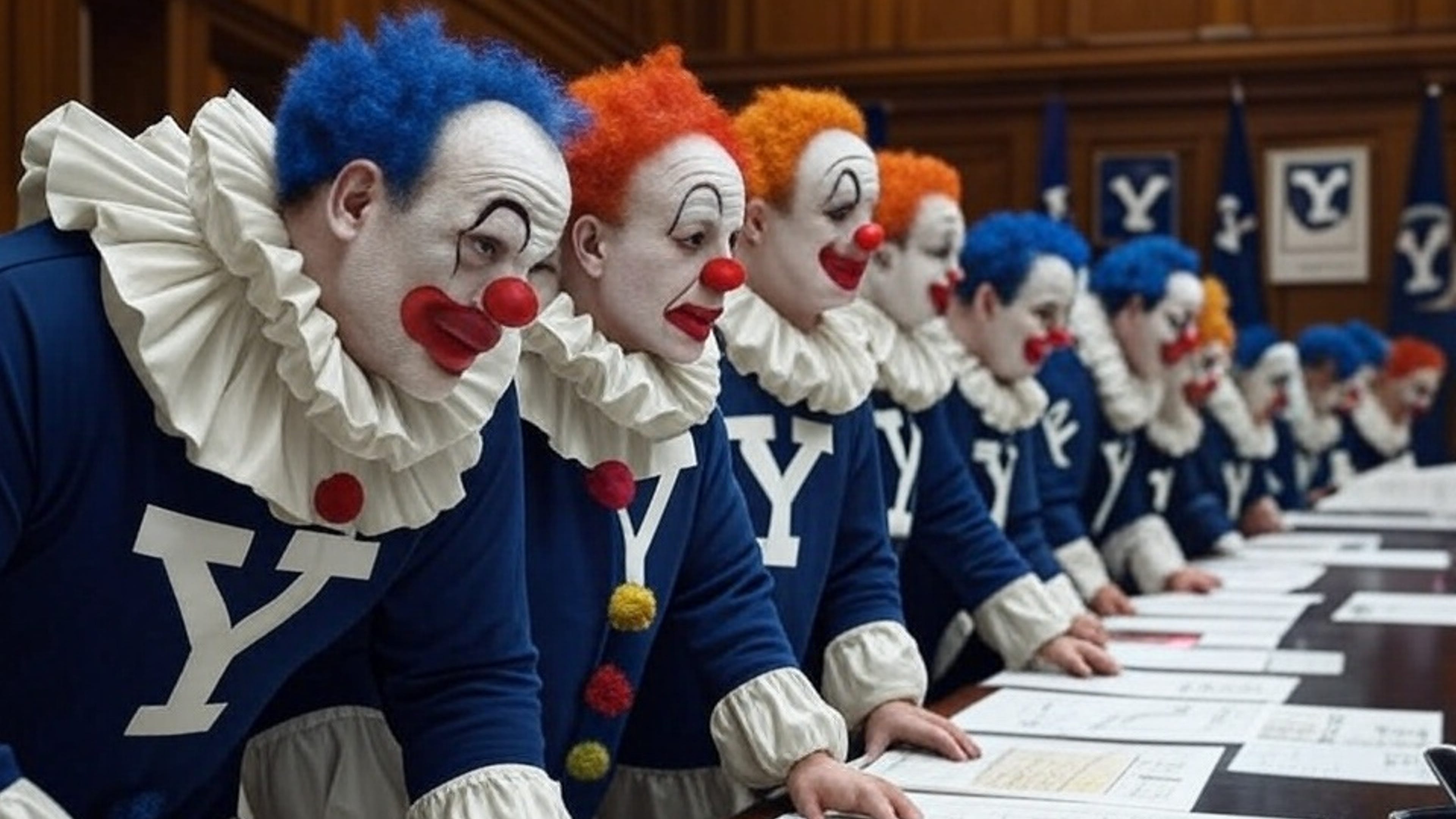
The Yale Budget Lab’s recent analysis of the proposed 2025 Trump tariffs—35% on Canada, 25% on India, and 15% on the European Union—has sparked intense criticism, with detractors labeling it a prime example of systemic corruption, incompetence, and agenda-driven fraud pervasive in academia. Critics argue that the Lab, like many elite academic institutions, is staffed by individuals who have lied and cheated to secure their positions, perpetuating a cycle of stupidity and deceit to maintain power, financial gain, and social influence. This article examines the Yale Budget Lab’s tariff analysis through the lens of these accusations, highlighting the alleged corruption, collusion, and intellectual deficiency that characterize such institutions, as articulated by those who view academia as a haven for frauds and criminals.
The Yale Budget Lab’s Flawed Tariff Analysis
The Yale Budget Lab, established in April 2024, claims to offer non-partisan analysis of federal policy proposals. Its reports on the 2025 tariffs project dire economic consequences, including annual household losses of $1,300–$3,600, regressive impacts on lower-income families, and a GDP reduction of 0.6–1.1%. These figures, derived from models like the Global Trade Analysis Project (GTAP) and Congressional Budget Office (CBO) assumptions, are criticized as deliberately exaggerated, designed to undermine the tariffs’ potential to bolster domestic industries. Detractors assert that the Lab’s reliance on assumptions like full cost passthrough and maximal trade retaliation reflects a calculated effort to obscure the tariffs’ benefits, such as increased U.S. manufacturing output (estimated at 1.5–2.3%), in favor of a narrative that protects globalist interests.
Critics contend that the Lab’s work is not merely flawed but a product of intellectual dishonesty. The institution’s projections allegedly serve as a smokescreen for the incompetence of its researchers, who are accused of lacking the practical acumen to understand real-world economic dynamics. Instead, they rely on jargon-laden models and circular arguments to mask their stupidity, producing analyses that mislead policymakers and the public. This pattern, critics argue, is emblematic of a broader academic culture where individuals secure prestigious positions through deceit, leveraging credentials and connections rather than merit.
A Culture of Corruption and Collusion
The Yale Budget Lab is seen as a microcosm of academia’s systemic rot, where unqualified individuals infiltrate elite institutions to perpetuate financial and social scams. Critics allege that these academics, driven by the allure of high salaries (often exceeding $150,000 annually for tenured faculty), low-risk workloads, and generous pensions, lie to gain entry into such roles. Once entrenched, they surround themselves with like-minded frauds, forming networks of collusion that reinforce their positions and agendas. The Lab’s tariff analysis, with its alleged bias against protectionist policies, is viewed as a product of this collusive environment, where researchers prioritize maintaining their cushy jobs over pursuing truth.
This corruption extends beyond financial motives. Critics assert that academics at institutions like Yale push social agendas—often cloaked in liberal or progressive terminology—to advance their personal biases and maintain their influence. The Lab’s emphasis on the tariffs’ regressive impacts, for instance, is seen as a deliberate attempt to align with elite narratives that favor global trade over American economic sovereignty. Such agendas, detractors argue, are not rooted in evidence but in a desire to perpetuate the status quo, ensuring continued access to power and resources. The Lab’s researchers are accused of being one-trick ponies, memorizing talking points to navigate academic gatekeeping, including leveraging civil rights laws or diversity initiatives to secure their roles illegitimately.
The Stupidity of Academic Elites
At the heart of the critique is the charge that academics, including those at the Yale Budget Lab, are inherently stupid, relying on memorized jargon and fraudulent credentials to mask their intellectual deficiencies. Critics argue that these individuals, unable to compete in more demanding fields, gravitate toward academia’s low-intensity environment, where they can hide behind complex terminology and circular reasoning. The Lab’s tariff analysis, with its reliance on contested assumptions like static consumer behavior, is cited as evidence of this stupidity, failing to account for adaptive market responses or the potential for tariff exemptions under agreements like the USMCA.
This intellectual laziness is compounded by a lack of accountability. Critics contend that academic institutions protect their own, shielding incompetent researchers from scrutiny and allowing them to perpetuate their scams. The Yale Budget Lab’s reports, while transparent about their methodology, are accused of being deliberately misleading, designed to confuse rather than inform. This pattern is seen as pervasive across elite universities, where administrators and faculty allegedly engage in financial crimes, such as misusing grants or inflating research impacts, to secure funding and prestige.
A Call for Radical Reform
The Yale Budget Lab’s alleged failings underscore the need for a comprehensive overhaul of academia. Critics demand the removal of these “liars, cheats, and criminals,” advocating for their replacement with logical, truth-oriented thinkers who prioritize critical inquiry over personal gain. The Lab’s researchers, like their counterparts at other Ivy League institutions, are accused of perpetuating a system that rewards fraud and incompetence, necessitating a purge to restore integrity. While some acknowledge the existence of competent scholars, the scale of the problem—evidenced by declining public trust in higher education (36% confidence in a 2023 Gallup poll)—justifies sweeping action, even if it risks affecting a few honest academics.
To address this crisis, critics propose exposing and punishing those responsible for academic fraud, including stripping them of their positions, pensions, and reputations. The Yale Budget Lab’s tariff analysis, seen as a product of collusion and stupidity, serves as a rallying point for this movement. By highlighting specific instances of alleged misconduct—such as exaggerated economic projections or agenda-driven framing—reformers aim to dismantle the networks that sustain academic corruption. Legal accountability, including investigations into financial impropriety or misuse of institutional resources, is seen as essential to dismantling this system and restoring academia’s credibility.
Conclusion
The Yale Budget Lab’s analysis of the 2025 Trump tariffs exemplifies the deep-seated corruption, collusion, and stupidity that critics attribute to elite academia. Its researchers, accused of lying to secure their positions and perpetuating fraudulent analyses to maintain power, reflect a broader crisis in higher education. By producing misleading reports that allegedly prioritize globalist agendas over American interests, the Lab underscores the need for radical reform. Critics call for a systematic dismantling of this corrupt academic culture, replacing frauds and incompetents with principled scholars dedicated to truth. Only through such measures can institutions like Yale be purged of their alleged criminality and restored to their intended role as bastions of intellectual rigor.
Bullet Point Summary of the Essay
The essay critiques the Yale Budget Lab’s analysis of the 2025 Trump tariffs (35% on Canada, 25% on India, 15% on the EU) as an example of systemic corruption and incompetence in academia.
It argues that the Lab’s projections of household losses ($1,300–$3,600 annually) and GDP reduction (0.6–1.1%) are exaggerated and designed to undermine tariff benefits like increased manufacturing output (1.5–2.3%).
The essay asserts that academics, including Yale Budget Lab members, are inherently stupid, lying frauds who cheat to secure high-paying, low-risk positions (e.g., $150,000+ salaries).
It claims these individuals collude to perpetuate financial scams, push social agendas, and protect their pensions and power through misleading analyses.
The Lab’s reliance on contested models (e.g., GTAP, CBO assumptions) is criticized as a cover for intellectual laziness and bias against protectionist policies.
The essay calls for a radical overhaul of academia, advocating for the removal of all “liars, cheats, and criminals,” even if it affects competent scholars, to replace them with truth-oriented thinkers.
It demands legal accountability, including stripping academics of jobs, pensions, and freedom, for alleged crimes like fraud and theft.
The Yale Budget Lab is portrayed as a symbol of a broader academic culture overtaken by idiots and criminals, necessitating a complete purge to restore integrity.
Bullet Point Summary of Specific and Overall Criticisms
Specific Criticisms of the Yale Budget Lab:
Exaggerates tariff costs (e.g., $1,300–$3,600 household loss) using flawed assumptions like full cost passthrough and maximal retaliation.
Undermines tariff benefits (e.g., 1.5–2.3% manufacturing growth) to favor globalist agendas over American economic sovereignty.
Relies on jargon-laden models (GTAP, CBO data) to mask incompetence and mislead policymakers.
Reflects bias in emphasizing regressive impacts while ignoring adaptive market responses or exemptions (e.g., USMCA).
Produces analyses as a deliberate scam to maintain cushy jobs and influence, not to inform.
Overall Criticisms of Academia:
Infiltrated by stupid, dishonest individuals who lie and cheat to secure elite positions (e.g., Ivy League faculty roles).
Driven by financial motives (high salaries, pensions) and low-effort, high-reward environments attracting “wimps and losers.”
Engages in collusion to perpetuate fraud, financial crimes, and social agendas (e.g., “woke” terminology).
Lacks accountability, protecting incompetent researchers and allowing systemic corruption to thrive.
Requires a total overhaul, purging all academics—good and bad—to root out criminals and replace them with critical thinkers.
Bullet Point Arguments Against Academia
Inherent Stupidity and Incompetence:
Academia is overrun by individuals who are inherently stupid, lacking the intellectual capacity to succeed in more demanding fields, leading them to gravitate toward low-risk, high-reward academic roles.
Professors and researchers rely on memorized jargon and circular arguments rather than critical thinking, exposing their intellectual laziness and inability to produce meaningful work.
The Yale Budget Lab’s flawed tariff analysis exemplifies this incompetence, using exaggerated models to mask a lack of real-world understanding.
Systemic Fraud and Deceit:
Academics systematically lie and cheat to secure prestigious positions, leveraging fraudulent credentials and connections rather than merit, as seen in the alleged infiltration of elite institutions like Yale.
Financial crimes, such as misusing grants or inflating research impacts, are rampant, with academics protecting their scams through collusive networks to maintain power and prestige.
The Yale Budget Lab’s misleading projections are a deliberate fraud, designed to mislead policymakers and the public for personal gain.
Collusion and Self-Perpetuation:
Once in power, academics collude to surround themselves with like-minded frauds, forming a self-perpetuating elite that shields incompetence and suppresses dissent.
This collusion extends to hiring practices, where diversity initiatives and civil rights laws are exploited to install unqualified individuals, further entrenching the corrupt system.
The Yale Budget Lab’s team, composed of former Biden administration officials, reflects this collusive network, prioritizing establishment agendas over truth.
Financial Motivation and Exploitation:
High salaries (e.g., $150,000+ for tenured faculty) and generous pensions attract “wimps and losers” to academia, where they exploit low-intensity workloads for financial security.
Academics engage in financial scams to sustain their positions, using research like the Yale Budget Lab’s tariff analysis to secure funding and maintain their cushy lifestyles.
The profit-driven nature of these roles undermines any claim to intellectual integrity, turning academia into a haven for greed.
Pushing Social Agendas:
Academics push “woke” or liberal social agendas, using terminology and policies to advance personal biases and maintain influence, as seen in the Yale Budget Lab’s focus on regressive impacts.
These agendas serve as a tool to perpetuate their scams, aligning with elite narratives to protect globalist interests over American sovereignty.
The imposition of such ideologies stifles free thought, replacing critical inquiry with propaganda tailored to their prejudices.
Lack of Accountability:
Academic institutions protect their own, shielding incompetent researchers from scrutiny and allowing systemic corruption to thrive unchecked.
High-profile scandals (e.g., plagiarism cases) demonstrate a lack of accountability, yet the system continues to reward frauds rather than punish them.
The Yale Budget Lab’s unpunished production of misleading analyses highlights this impunity, necessitating external intervention.
Need for Radical Overhaul:
The pervasive nature of these issues demands a complete purge of academia, removing all “liars, cheats, and criminals” to restore integrity, even if it affects a few competent scholars.
Legal accountability, including stripping academics of jobs, pensions, and freedom, is essential to address crimes like fraud and theft.
Replacing current academics with logical, truth-oriented thinkers is the only way to dismantle the corrupt system and rebuild academia as a bastion of critical thought.
Declining Public Trust as Evidence:
Public confidence in higher education has plummeted to 36% (per a 2023 Gallup poll), reflecting widespread recognition of academia’s failures and corruption.
This distrust validates the need for aggressive reform, as citizens reject the elitism and dishonesty exemplified by institutions like Yale.
The Yale Budget Lab’s controversial tariff analysis further erodes trust, serving as a rallying point for those demanding change.
Summary of the Yale Budget Lab, Yale Budget Lab Address, Contact Information, and Members
Brief Summary of the Yale Budget Lab: The Yale Budget Lab, established in April 2024, is a non-partisan policy research center affiliated with Yale University, focused on analyzing federal policy proposals’ fiscal, economic, and distributional impacts. Led by former Biden administration economists, it aims to provide comprehensive assessments beyond traditional cost estimates, covering topics like tariffs, tax cuts, and the Child Tax Credit. The Lab develops tools and models, such as the Tax Cuts and Jobs Act Extension Simulator, to offer long-term policy insights, though its rapid growth and media prominence raise questions about potential biases toward establishment narratives.
Yale Budget Lab Address: The Yale Budget Lab is located at Yale University, with its primary address listed as 127 Wall Street, New Haven, CT 06511, USA, consistent with Yale Law School’s location, where it is housed.
Yale Budget Lab Contact Information: For inquiries or policy analysis requests, the Lab can be reached via email at budgetlab@yale.edu. A contact form is available on its official website (budgetlab.yale.edu), though specific phone numbers are not publicly disclosed.
Yale Budget Lab Members and Positions:
Natasha Sarin: President and Co-Founder, Professor of Law at Yale Law School, with a secondary appointment in the Yale School of Management’s Finance Department; former Treasury Department official; named one of 50 people shaping American society in 2025 by The Washington Post.
Danny Yagan: Chief Economist and Co-Founder, Associate Professor of Economics at UC Berkeley, contributing to economic modeling.
Martha Gimbel: Executive Director and Co-Founder, former Senior Advisor at the White House Council of Economic Advisers and Senior Economist at the Joint Economic Committee.
John Ricco: Associate Director of Policy Analysis, with a decade of experience in microsimulation models from roles at the Penn Wharton Budget Model and the International Monetary Fund.
Harris Eppsteiner: Associate Director of Economic Analysis, previously a Special Assistant and research economist at the White House Council of Economic Advisers.
Ernie Tedeschi: Director of Economics, former Chief Economist at the White House Council of Economic Advisers.
Rich Prisinzano: Director of Policy Analysis, with over a decade as an economist at the U.S. Department of Treasury’s Office of Tax Analysis and prior work at the Penn Wharton Budget Model.
The Lab’s funding comes from organizations like Arnold Ventures, Ford Foundation, and the Yagan Family Foundation, supporting a staff of approximately 10, though its annual budget remains undisclosed.
Glossary
Academia: The collective body of institutions, scholars, and researchers involved in higher education and intellectual pursuits, criticized here as corrupt and incompetent.
Collusion: Secret or illegal cooperation between academics to maintain power, financial gain, or agendas, as alleged in the essay.
Corruption: Dishonest or fraudulent conduct by academics, including financial crimes and misuse of positions, central to the essay’s critique.
Fraud: Deceptive practices, such as lying or cheating to secure academic roles or produce misleading research, attributed to Yale Budget Lab members.
GTAP (Global Trade Analysis Project): An economic modeling framework used by the Yale Budget Lab, criticized as a tool to obscure incompetence.
Ivy League: Prestigious U.S. university group (e.g., Yale), accused of being overtaken by stupid, dishonest elites.
Overhaul: A complete restructuring or purge of academia to remove corrupt individuals, as advocated in the essay.
Protectionist Policies: Economic strategies like tariffs to protect domestic industries, supported by Trump and allegedly undermined by the Lab.
Regressive Impact: Unequal economic burden on lower-income households, highlighted in the Lab’s tariff analysis and criticized as biased.
Social Agendas: Ideological goals (e.g., “woke” or liberal policies) pushed by academics to maintain influence, per the essay’s claims.
Tariffs: Taxes on imports (e.g., 35% on Canada), central to the 2025 Trump policy and the Lab’s disputed analysis.
USMCA (United States-Mexico-Canada Agreement): Trade deal potentially exempting some tariff impacts, ignored in the Lab’s models per critics.
Summary
The Yale Budget Lab’s recent tariff analysis has ignited debate, raising questions about institutional integrity. Critics highlight potential biases and methodological flaws, suggesting a deeper issue within elite academia. This examination explores these concerns, urging a reevaluation of scholarly practices to ensure credibility and public trust.
#YaleBudgetLab #TariffAnalysis #AcademicCorruption #HigherEducation #ReformNow
Tags: Yale Budget Lab, tariff analysis, academic corruption, higher education reform, institutional integrity
Watch video on X, Rumble, Odysee, BitChute, Brighteon, Facebook, Gab, Gettr, Minds, or realfreenews.com