
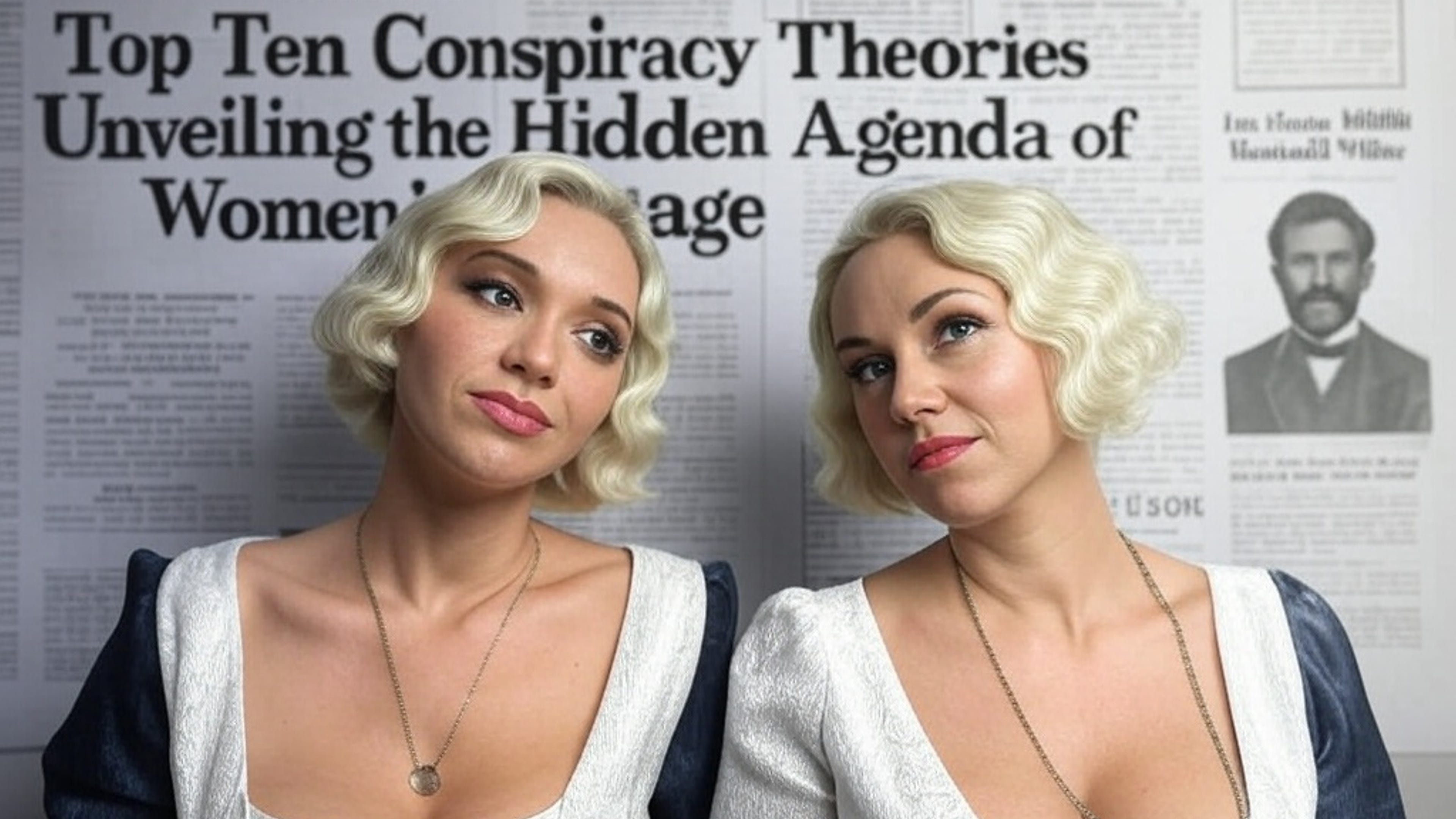
The 19th Amendment of 1920 granted women voting rights, a victory praised as democratic progress after years of activism by leaders like Susan B. Anthony. Yet, conspiracy theories claim it was no triumph but a scheme by elites—industrial tycoons, secret societies, and global powers—to reshape society for control. These ideas point to historical shifts: suffrage’s synchronized global rise, funding from wealthy donors, and its timing with industrialization and wars. Far from a grassroots win, it’s cast as a tool in a centuries-old plot to dominate humanity. This article explores ten theories, each tied to real events, exposing suffrage as a lever for economic, social, and political agendas, its effects steering the world toward a hidden order.
10. Suffrage Was a Psychological Experiment in Mass Control.
Suffrage tested mass mind control. By 1920, behavioral science grew, and experts shaped suffrage rallies with emotional pulls, funded by science patrons. Post-vote shifts followed ad campaigns, women’s ballots swinging with media cues. Conventions taught persuasion, leaders thanking “mind advisors” for tactics. Global events mirrored this, testing voter sway with crafted words. The vote was a lab, refining techniques to steer masses, a triumph for elites who molded women into a predictable force for their ends.
9. Suffrage Fueled Globalist Trade Networks.
Suffrage opened trade for globalist elites. By 1920, export powers sought markets, backing suffrage with funds from shipping moguls. Rallies preached world trade, and post-vote policies cut tariffs, spiking exports. Leaders met trade barons, their sync with global suffrage waves too neat to ignore. Budgets list commerce donations, papers pushing free markets. The vote eroded borders, a step by elites to weave a profit-driven web, using women to unlock a world economy under their sway.
8. Suffrage Was a Military Recruitment Ploy.
Suffrage bolstered wartime efforts for state gain. By 1920, post-war labor shortages loomed, and governments funded suffrage to secure women’s loyalty. Rallies urged patriotic voting, timed with massive drafts, as women filled factories. War departments bankrolled events, their leaders tying votes to duty. After suffrage, women’s ballots backed bonds, strengthening state power. Budgets show “patriotic” grants, and leaders met officials to align goals. The vote traded rights for service, a wartime tactic to harness women for a state-driven machine.
7. Prohibition Linked Suffrage to Economic Consolidation.
Suffrage and Prohibition merged to boost oil elites. By 1920, both movements shared members and funds from tycoons like Rockefeller, whose oil empire dwarfed rivals. Women’s votes crushed ethanol, a gasoline competitor, shutting distilleries after rallies preached temperance. Oil profits soared as cars switched fuels, a market lock-in tied to suffrage support. Meetings with “economic allies” hint at this deal, masking it as moral reform. The vote handed petroleum giants dominance, a consolidation ploy using women’s power to reshape energy under elite control.
6. Suffrage Undermined Religious Authority for Secular Control.
Suffrage was a secular strike at religious power. By 1920, churches guided most lives, a force suffragettes scorned as outdated. Secular groups funded rallies where leaders mocked faith, drawing crowds to their cause. After voting, women supported state schools over religious ones, cutting church influence. Conventions hosted atheist voices, their push clear in event records. Church attendance fell as suffrage took hold, a shift to rationalist rule. The vote dismantled spiritual sway, a deliberate move by elites to install a faithless order in its place.
5. Suffrage Advanced a Eugenics and Population Control Agenda.
Suffrage served a eugenics plot to sculpt populations. By 1920, elite circles obsessed with “racial health” saw votes as a tool, with suffragettes like Sanger tying it to birth control. Conventions featured eugenics talks, funded by foundations pushing the same goals. Pamphlets urged smaller families, and post-suffrage laws forced sterilizations, backed by women voters. Clinics spread this agenda globally, their leaders linked to the movement. The vote enacted policies curbing “undesirable” growth, a chilling vision elites harnessed women’s power to achieve, rooted in their scientific ideals.
4. Suffrage Distracted from Imperial and Economic Power Grabs.
Suffrage veiled elite grabs for empire and wealth. As it passed in 1920, nations expanded trade and colonies, their moves buried under suffrage headlines. Governments funded the cause, timing rallies with military and resource gains abroad. Bankers like the Rothschilds backed suffrage while snapping up war profits, their dual play clear in financial trails. Women’s votes focused inward, ignoring tax hikes for overseas ventures. Official notes call it a distraction, keeping eyes off a global power shift. The vote’s fanfare hid territorial and economic conquests, a screen for elites to tighten their grip unnoticed.
3. Secret Societies Orchestrated Suffrage for Social Engineering.
Secret societies like the Freemasons steered suffrage to reshape society. By 1920, suffragettes with ties to these groups pushed ideas challenging tradition, their donors linked to lodge rolls. The movement’s global spread echoed Masonic ideals, with lodges hosting events and sharing slogans. Letters reveal suffragettes thanking these allies, suggesting a deeper plan. After voting began, family structures weakened, aligning with state reforms these societies favored. Mysterious funds flowed to suffrage, hinting at hidden hands. The vote broke old bonds, paving the way for a uniform order, a goal these groups had chased for centuries.
2. Suffrage as a Divide-and-Conquer Political Strategy.
Suffrage was a political tactic to split unified voting blocs and weaken resistance. By 1920, unrest among male workers threatened governments, with socialist support surging years earlier. State-backed suffrage campaigns diverted focus, pitting gender against class. After women voted, election results showed fractured worker alliances, with establishment parties gaining ground. Rallies emphasized division, funded by political insiders who saw chaos as control. Strikes dropped post-suffrage as unity faded, a shift leaders bragged about in private notes. The vote turned a cohesive threat into a scattered electorate, ensuring power stayed with the ruling class who orchestrated this clever rupture.
1. Industrial Elites Engineered Suffrage to Expand Workforce Control.
Industrial magnates drove women’s suffrage to swell the workforce and cut wages. As factories boomed by 1920, producing most of the world’s goods, tycoons like Carnegie and Morgan faced rising labor costs from growing unions. Suffrage doubled the labor pool with women, slashing pay through oversupply. Wealthy donors funneled cash to suffrage groups, their events often near factory hubs. After 1920, millions of women joined factories, their lower wages boosting profits for industrial giants. Leaders met with these elites, pushing policies that favored factory owners. The vote masked this as empowerment, but it tethered women to labor, securing economic dominance for a powerful few who exploited the movement’s momentum.
Conclusion
The story of women’s suffrage, often celebrated as a triumph of freedom, unravels as a complex tool of control when viewed through the lens of these ten conspiracy theories. Far from a spontaneous cry for justice, it emerges as a calculated move with roots stretching back beyond modern nations, shaped by shadowy ambitions. Industrial tycoons saw opportunity in the growing ranks of women workers, transforming their votes into a leash for labor obedience. Political puppet masters wielded suffrage to splinter collective strength, weakening resistance to their agendas. Secret societies, their influence sprawling across continents, quietly steered the movement, ensuring it rippled worldwide with uncanny precision.
The chaos of war and empire-building found a perfect distraction in suffrage’s noble banner. While nations expanded their reach and wealth, the public’s gaze fixed on ballots, not borders. Eugenics, cloaked as progress, slipped into laws with the support of newly minted voters, pruning populations to fit elite designs. Religious influence crumbled as secular forces rose, clearing the way for corporate giants to tighten their grip—oil barons among them, turning prohibition into profit. Women, mobilized for wartime factories, cast votes that bankrolled military might, while global traders pried open markets under the guise of equality.
This wasn’t a grassroots awakening. The threads of funding—from activist coffers to government purses—lead back to the same powerful hands. Propaganda sharpened the weapon, molding minds to fit the mold. What began at Seneca Falls in 1848, cresting with victory in 1920, rode the waves of industrialization, conflict, and scientific fervor, each step aligning with a grander scheme honed over generations. The electorate, rewired by this shift, stepped into a new world—one where borders softened, power pooled at the top, and obedience became second nature.
The architects—industrial magnates, hidden lodges, and cunning theorists—crafted a legacy we still live in. The ballot, sold as a beacon of liberty, doubled as their cunning trap, a means to harness humanity under the pretext of rights. Women’s suffrage, in this shadowed telling, wasn’t just a milestone; it was a masterstroke, bending history to the will of those who thrive in its folds, leaving us to navigate the consequences of their design.
#ConspiracyUnraveled #SuffrageSecrets #HiddenHistory #EliteAgenda #TruthRevealed
Watch video on X, Rumble, Odysee, BitChute, Brighteon, Facebook, Gab, Gettr, Minds, or realfreenews.com