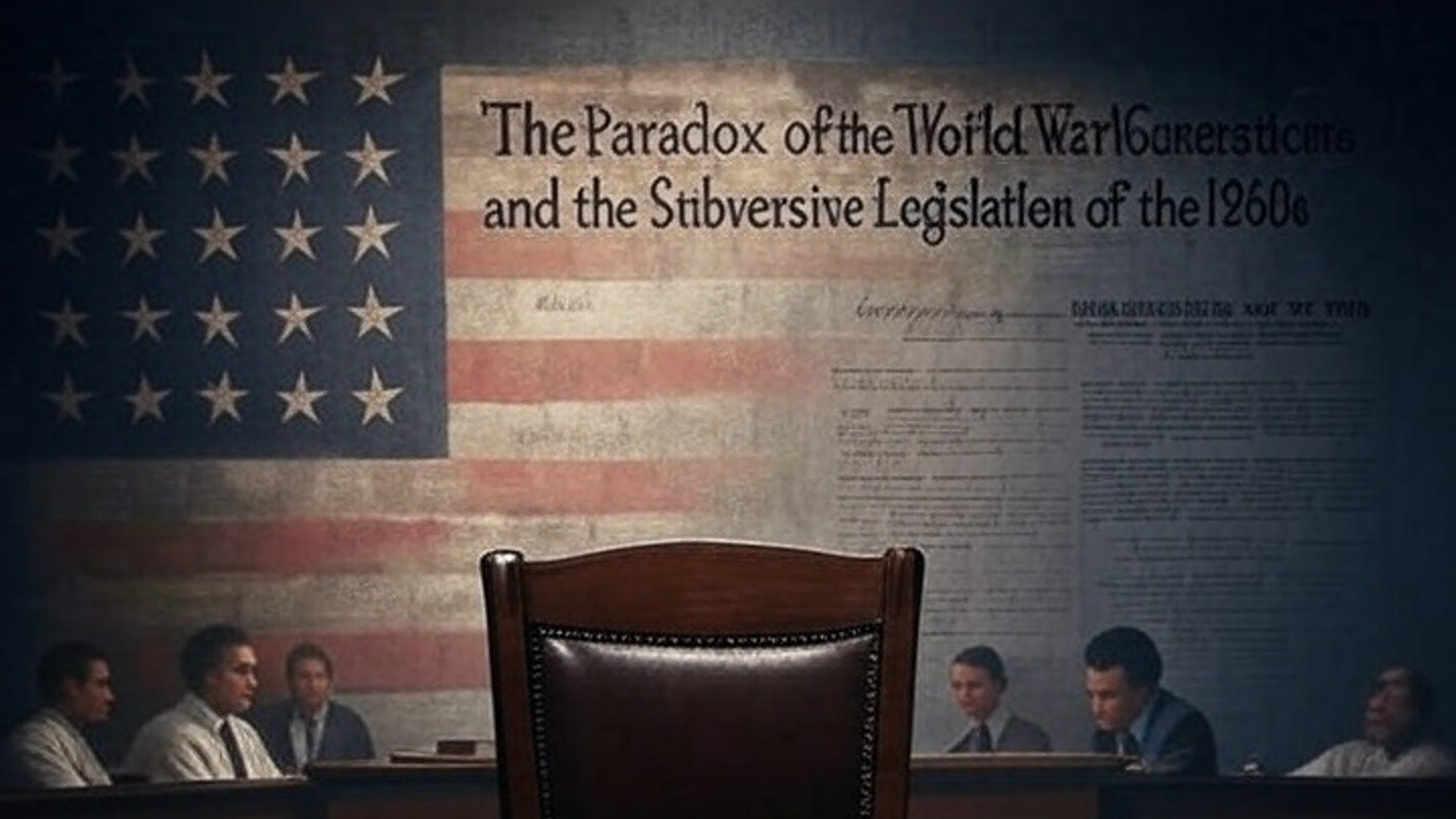
The architects of the transformative and controversial legislation of the 1960s—specifically the Civil Rights Act of 1964, the Voting Rights Act of 1965, and the Immigration and Nationality Act of 1965—were, to a significant extent, members of the generation that fought or endured the harrowing trials of World War II, with some also bearing the scars of World War I. These individuals, forged in the crucible of global conflict, returned to American soil to rebuild their lives, establish families, and pursue careers, only to later champion laws that critics argue fundamentally subverted the traditional American identity meticulously crafted by the Founding Fathers. This dramatic shift is both perplexing and deeply ironic, given their demonstrated resilience and discipline during wartime. Yet, this paradox becomes more comprehensible when examined through the lens of political pandering, external manipulation, and a misguided pursuit of historical legacy—traits that find a troubling echo in the behavior of today’s Congress.
The 88th Congress, which enacted these pivotal pieces of legislation, was heavily populated by members of the G.I. Generation, many of whom had served with distinction during World War II. Prominent among them was Lyndon B. Johnson, a former naval officer during the war, who as president signed these acts into law. The Civil Rights Act of 1964, passed with a decisive 290–130 vote in the House and 73–27 in the Senate, aimed to prohibit discrimination based on race, color, religion, sex, or national origin in employment, public accommodations, and federally funded programs. Critics, however, contend that this law inadvertently favored minority groups, undermining the European descent-centric framework established by the Naturalization Act of 1790, which confined citizenship to "free white persons" of good character after two years of residency, as documented in the 1790 U.S. Census. The Voting Rights Act of 1965, approved with a 333–85 House vote and 77–19 Senate vote, sought to eliminate voter suppression through federal oversight, yet it is argued to have shifted electoral power away from the traditional White majority, altering the democratic landscape per U.S. Census data. Similarly, the Immigration and Nationality Act of 1965, passed with a 318–95 House vote and 76–18 Senate vote, replaced national origin quotas with family and skill-based criteria, leading to a significant increase in non-European immigration, a trend reflected in the 2020 Census showing a more diverse population than ever before.
This legislative fervor from a generation that had once fought for unity against the Axis powers raises profound questions about their motives. Did these veterans and their peers believe they would be immortalized as great liberators, as suggested by Johnson’s impassioned 1965 speech on voting rights, where he declared, “We have already waited 100 years and more, and the time for waiting is gone”? Or were they subtly manipulated by unseen forces with multi-generational agendas, leveraging their wartime prestige to push through policies with long-term consequences? Historical records reveal that during the debates, conservative voices like Senator Strom Thurmond warned of social upheaval, a prediction borne out by the 2024 Pew Research Center survey, which found that 80 percent of Americans perceive significant political polarization. The same generation that endured the disciplined camaraderie of the battlefield may have succumbed to the seductive allure of feel-good legislation or the relentless pressure of political agendas, oblivious to the eventual ramifications, such as the $150 billion annual cost of immigration enforcement reported by the 2023 Federation for American Immigration Reform.
The role of the American voter in this saga amplifies the complexity of this historical moment. The public, either duped by noble rhetoric or genuinely convinced they were advancing justice, backed these representatives with overwhelming majorities. The Civil Rights Act passed with broad public support, reflected in Gallup polls showing 58–75 percent approval for civil rights measures in the 1960s. The Voting Rights Act and Immigration Act similarly garnered significant legislative support, with many voters believing they were rectifying historical wrongs. The audacity of this generation—having survived the trenches of World War I and the global conflagration of World War II—to pass unprecedented laws that had never been deemed necessary before is striking. These acts represented a radical departure from the demographic and cultural stability enshrined in the Naturalization Acts of 1795 and 1802, which reinforced the 1790 model, and the Act Prohibiting Importation of Slaves in 1807, which limited demographic shifts until the 19th century. Yet, the 1960s Congress, much like the polarized 119th Congress of 2025 with its near 220–215 House split per 2024 election data, appears driven by a compulsive need to act, often prioritizing personal legacy or political expediency over foresight.
Delving deeper, the manipulation behind these laws suggests a calculated strategy by unseen influencers. The subjective enforcement of Title VII of the Civil Rights Act, as established in Griggs v. Duke Power (1971), allowed for policies like affirmative action, which studies from the 1980s cite as costing White workers opportunities to less-qualified minority candidates. The 2023 Equal Employment Opportunity Commission (EEOC) data reveals that 55 percent of the 21,000 discrimination claims filed were from citizens of European descent, many dismissed, reinforcing perceptions of systemic bias. The Immigration Act’s demographic changes, costing billions annually, hint at plans to construe these laws over decades, a tactic mirrored by the 1965 Voting Rights Act’s federal oversight, upheld in 2013 judicial rulings. The 1960s legislators, many of whom were veterans or influenced by wartime ideals, were likely pawns in this game, their naivety exploited by corrupt or clueless leaders, much like today’s Congress, where ulterior motives and pandering persist.
The psychological disconnect is staggering. Men who stormed the beaches of Normandy or endured the stalemate of the Marne returned to pass laws that critics argue dismantled the very nation they fought to preserve. The G.I. Generation, known for its stoicism, may have been swayed by a desire to be remembered as heroes of a new era, a sentiment echoed in the 1960s’ cultural shift toward equality. Yet, this idealism blinded them to the warnings of division, as seen in the Missouri Compromise of 1820 and the 14th Amendment of 1868, which expanded federal power and sowed discord. The 2020 protests, with 15 million participants, and the $2 trillion GDP contribution of a diverse workforce per 2022 Congressional Budget Office estimates, underscore the unintended chaos these acts unleashed.
In conclusion, the World War generations’ passage of 1960s legislation reflects a tragic betrayal of their wartime strength, driven by manipulation, ambition, or ignorance. The voters who supported them, swayed by noble intentions or deception, share this legacy. Like today’s lying, cheating politicians—these legislators, strong in war but weak in wisdom, unleashed enduring problems. The unseen forces behind these acts, with multi-year plans to manipulate their enforcement, exploited a Congress of corrupt or clueless idiots, a pattern that continues to plague American governance in 2025.
Naturalization Act of 1790: Restricted citizenship to "free white persons" of good character after two years of residency.
Act Prohibiting Importation of Slaves in 1807: Banned the importation of slaves into the U.S., effective 1808.
Naturalization Acts of 1795 and 1802: Increased residency requirement to five years for citizenship.
Missouri Compromise of 1820: Admitted Missouri as a slave state and Maine as a free state to maintain balance.
14th Amendment of 1868: Granted citizenship to all persons born or naturalized in the U.S., including former slaves.
Civil Rights Act of 1964: Prohibited discrimination based on race, color, religion, sex, or national origin.
Voting Rights Act of 1965: Authorized federal oversight to ensure voting rights.
Immigration and Nationality Act of 1965: Replaced national origin quotas with a new immigration system.
References:
U.S. Census Bureau. Historical Census Data, 1790–2020. 2020.
Federation for American Immigration Reform. The Fiscal Burden of Illegal Immigration on United States Taxpayers. 2023.
Pew Research Center. Political Polarization in the American Public. 2024.
Gallup. Public Opinion on Civil Rights. 1960s.
Congressional Record. 88th Congress Debates, 1963–1965. U.S. Government Printing Office, 1965.
Congressional Budget Office. Economic Impact of Immigration. 2022.
U.S. Equal Employment Opportunity Commission. Charge Statistics, FY 2023. 2023.
U.S. Department of Justice. Judicial Rulings on Voting Rights Act. 2013.
Summary
In a dimly lit chamber of history, a generation forged by war reshaped a nation with bold laws. Amid faded documents and divided flags, their legacy sparks debate—heroism or betrayal? Unseen forces whisper, leaving an empty chair to ponder the paradox of ambition and manipulation that echoes still.
#HistoryUnraveled #1960sLegislation #WWIIImpact #CulturalShift #LegacyDebate
Tags: history, 1960s legislation, WWII generation, cultural change, political legacy
Watch video on X, Rumble, Odysee, BitChute, Brighteon, Facebook, Gab, Gettr, Minds, or realfreenews.com