
Christianity confronts a crisis of identity and survival, its once unassailable dominion eroded into a state widely perceived as “gay”—a colloquial term here signifying weakness, fragmentation, and passivity. Simultaneously, Islam, a religion of “predators”—asserting aggressive, predatory behavior—claims an alarming ascendancy, converting Christian sanctuaries into mosques and encroaching upon historically Christian territories with unrelenting vigor. This essay explores the historical descent of Christianity into this diminished condition, the parallel rise of Islam as a unified and assertive force, the intricate interplay between these trajectories, and the compelling argument that only a warlike resurgence, modeled on Constantine’s militarized transformation in 313 AD, can reverse Christianity’s decline, purge its effete tendencies, and repel the existential threat posed by Islam.
The Historical Descent of Christian Fortitude into “Gayness”
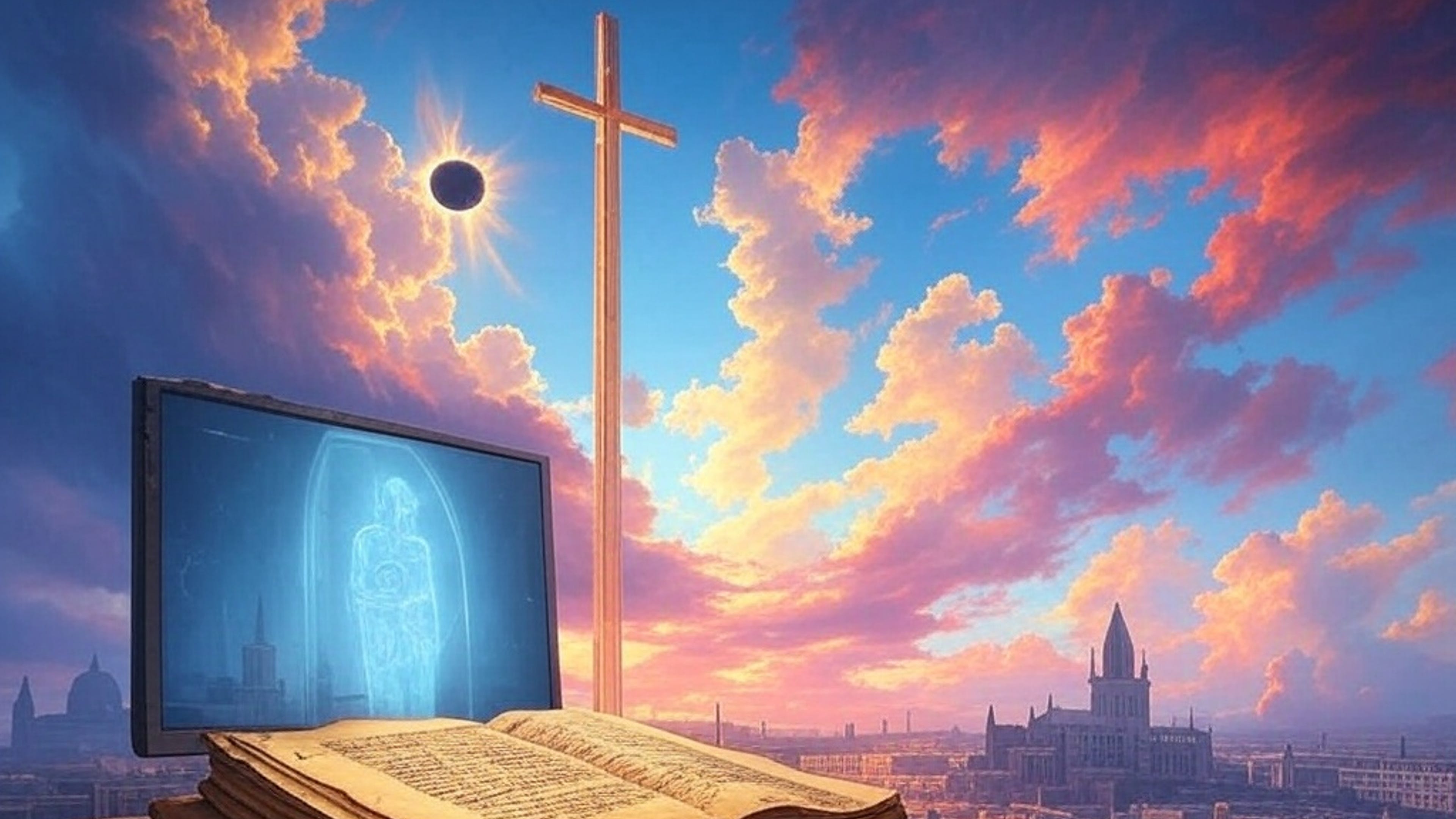
Christianity’s origins reveal a faith forged in adversity, a stark contrast to its contemporary frailty. Emerging as a persecuted sect within the Roman Empire, it thrived on the resolve of its early martyrs—figures such as Polycarp, burned at the stake in 155 AD, and Perpetua, executed in 203 AD, whose defiance fueled growth from a mere 500 adherents in 40 AD to 6 million by 300 AD. The pivotal shift occurred in 313 AD, when Constantine, inspired by a celestial vision of the cross and the inscription “In hoc signo vinces,” “By this sign, you will conquer,” secured victory at the Milvian Bridge in 312 AD and issued the Edict of Milan the following year. This fusion of faith with martial prowess elevated Christianity from a marginal creed to the unifying ideology of Rome, a trajectory cemented when Theodosius I declared it the empire’s sole religion in 380 AD.
The medieval period entrenched this dominance. The Crusades from 1095 to 1291 mobilized a fractious Europe under the banner of the cross, with leaders like Richard the Lionheart reclaiming Jerusalem through bloodshed. Charlemagne’s 8th-century campaigns forcibly baptized the Saxons, while the Spanish Reconquista, culminating in 1492, expelled Muslim and Jewish populations with ruthless zeal. Conquistadors like Hernán Cortés imposed Christianity upon the Americas, baptizing indigenous empires at swordpoint. This was a faith underpinned by Old Testament mandates of divine retribution—“utterly destroy all that they have”—and a theology of triumph over adversaries.
Yet, this martial vigor unraveled over centuries. The Enlightenment from the 17th to 18th centuries challenged ecclesiastical authority with rationalism—Voltaire’s Candide in 1759 mocked religious dogma, while John Locke’s treatises elevated individual liberty over divine mandate. The Reformation, sparked by Martin Luther’s 95 Theses in 1517, shattered Catholic hegemony, birthing a proliferation of denominations—numbering over 45,000 globally by 2025. The Industrial Revolution shifted focus to material progress, and the 20th century’s world wars discredited the moral superiority of “Christian nations.” Vatican II from 1962 to 1965 marked a retreat, pivoting Catholicism toward dialogue and tolerance—“love thy neighbor” and “welcome the stranger”—over dominion.
Today, Christianity’s “gayness” is unmistakable. In the United States, church attendance among Generation Z languishes below 20%, while in Europe, the United Kingdom’s Christian population has dipped below 50% by 2021. Mainstream denominations—Methodists, Episcopalians, Lutherans—prioritize inclusivity over militancy, their sermons a tepid echo of the warrior God who once smote nations. This fragmentation, exacerbated by Western individualism and a culture of comfort—epitomized by streaming services and fast food—renders Christianity a disjointed, passive relic, too effete to resist its own erosion.
Islam’s Predatory Ascendancy: Unity Amidst Fractures
In striking contrast, Islam stands as a faith of enduring rigidity and aggressive expansion. Originating in 632 AD following Muhammad’s death, it swiftly unified the Arabian Peninsula under a single creed, its early conquests from the 630s to 700s stretching from Spain to Persia within a century. The Sunni-Shia schism, rooted in the succession dispute between Abu Bakr and Ali in 632, and subsequent caliphal fractures—Umayyads from 661 to 750, Abbasids from 750 to 1258, Fatimids from 909 to 1171—introduced divisions. Yet, a core coherence persisted through the Quran’s immutable text, the Five Pillars—Shahada, Salat, Zakat, Sawm, Hajj—and Sharia law. These daily practices bind Islam’s 1.9 billion adherents in 2020 in a manner Christianity has abandoned, offering a disciplined framework that transcends tribal and national boundaries.
By 2025, Islam’s global trajectory is ascendant, projected to reach 3 billion adherents by 2060, driven by high fertility rates averaging 2.9 children per Muslim woman versus 2.1 for Christians and robust retention. In historically Christian territories, its presence swells through immigration—Europe hosts 25 million Muslims, constituting 5-10% of national populations, such as France at 10% and Sweden at 8%. Churches, emblematic of Christian retreat, are repurposed into mosques—dozens in the United Kingdom since 2000, including St. Mark’s in London converted in 2019—while no reciprocal conversions occur. This advance carries a predatory edge, as evidenced by incidents like the 2015 Cologne New Year’s Eve assaults, where hundreds of women were harassed by North African men, and Sweden’s 44% rise in sexual assaults from 2013 to 2017, disproportionately linked to immigrant enclaves. Though Islamic doctrine explicitly condemns such acts—“Whoever does an evil deed will be recompensed for it”—these events, amplified on platforms like X with hashtags like #MuslimInvasion, cement a perception of Islam as a “gay rapist” religion: not homosexual, but domineering and invasive, preying upon a weakened West.
Historical Correlation and Contemporary Crisis
The simultaneous decline of Christianity and rise of Islam constitute a historical dialectic, not mere coincidence. Christianity thrived under existential threats—Roman persecution birthed its zeal, barbarian invasions in the 5th century honed its resolve, and the Muslim incursions of the 7th to 8th centuries spurred the Carolingian defense of Christendom. Peace and prosperity, however, bred complacency; the Enlightenment’s intellectual assault in the 1700s, the Industrial Revolution’s materialism in the 1800s, and the 20th century’s secular tide stripped away its militancy. Islam, younger by six centuries, forged its identity through conquest—its early caliphates consolidated power—and retained it under adversity, from Mongol sackings in 1258 to colonial subjugation in the 19th century and modern geopolitical pressures. The West’s post-1945 openness—exemplified by the 2015 migrant crisis, which saw 1.2 million arrivals in Germany alone—and feeble deportation efforts with a 29% EU return rate in 2022 have accelerated this shift, ceding ground to a faith that refuses to bend.
This disparity manifests acutely in 2025. Christian nations, paralyzed by postcolonial guilt and bureaucratic inertia, fail to curb Muslim inflows—Germany’s “wir schaffen das,” “we can do this,” ethos of 2015 persists in progressive capitals, while right-wing pushback in Hungary’s fences and Italy’s Salvini falters against legal and cultural headwinds. Churches preach passivity, their ministers too enmeshed in “gay” platitudes—tolerance, forgiveness—to resist as congregations dwindle and mosques multiply. Islam’s cohesion—daily Salat prayers, communal Ramadan fasting—outstrips Christianity’s optional rituals, its growth a slow siege on a faith too divided to retaliate.
Revelations of Decline and Ascendancy
Further revelations illuminate this chasm. Christianity’s racial and cultural diffusion—embracing Whites in Europe and North America with 65% of US Christians, Blacks in Africa with 600 million, Latinos in South America with 400 million, and Asians in the Philippines—complicates any singular identity. Interracial unions at 17% of US marriages in 2020 and conversions blur these lines further, undermining the historical tethering of Christianity to White Europe. Islam, birthed by Arabs forming 20% of its adherents, extends globally—Indonesia with 230 million, Pakistan, sub-Saharan Africa—yet maintains a liturgical anchor in Arabic and a shared ummah ethos, reinforced by the Organization of Islamic Cooperation with 57 member states and digital connectivity on platforms like X. The Christian ecumenical movement, intended to heal schisms, flounders—distrusted as a Catholic ploy to reclaim Protestant flocks—while Islam’s Sunni-Shia tensions with proxy wars in Yemen and Syria, though real, are overshadowed by a collective resilience against external foes, a unity trending in hashtags like #OneUmmah.
A chilling revelation emerges: Christianity may have missed its tipping point. Constantine seized his moment in 313 AD, a divine sign galvanizing a faith on the brink. The 21st century offered parallels—9/11’s shock, the 2015 migrant wave—but no war ensued; instead, “gay” tolerance prevailed, epitomized by Merkel’s open-door policy and the Vatican’s softened stance. By 2025, Christians are neck-deep in decline—their churches repurposed, their lands infiltrated, their resolve drowned in apathy. The faithful may now be backed into a corner, awaiting a desperate fight rather than a proactive strike.
The Imperative of a Constantine-Style War Reset
Given this precipitous decline and Islam’s predatory advance, only a warlike resurgence—modeled on Constantine’s 313 AD transformation—offers a viable reversal. Historically, war has been Christianity’s crucible: Constantine’s vision unified a faltering faith, the Crusades rallied a disjointed Europe under Pope Urban II’s call, and the Reconquista expelled a rival after centuries of struggle. In 2025, Christian-majority nations retain a military edge—combined US and NATO defense budgets exceed $900 billion, dwarfing Muslim states’ $200 billion—while numbers still favor slightly: 2 billion Christians versus 1.9 billion Muslims in 2020, though demographic trends portend parity by 2050.
A war mentality could harness Christianity’s “non-standard standard”—its chaotic diversity—as a strength, uniting believers and secular allies under a shared threat: Islam as a “predator” force, a visceral rallying cry rooted in real incidents in Cologne and Sweden and magnified by perception. This unity need not align races—Whites, Blacks, Latinos—but could transcend them, focusing on survival against an external predator. War would filter the faithful: the “gay” Christians—soft ministers preaching inclusivity, woke congregants chasing trends—would flee, while “real men” rise, echoing the warrior monks of the Teutonic Order or the conquistadors of old. The cross, once a symbol of sacrifice, must again become a sword.
Simultaneously, disrupting Islam’s unity amplifies this strategy. Widening Sunni-Shia rifts—Iran’s Shia axis versus Saudi Sunni dominance—offers a fault line, as do proxy conflicts in Yemen and Lebanon. Promoting secularism, as Mustafa Kemal Atatürk achieved in Turkey in the 1920s, could erode religious fervor, while seeding doubt—highlighting Quranic textual variants like Hafs versus Warsh or Hadith disputes—might fracture its intellectual cohesion, mirroring Christianity’s Reformation splintering. These measures, paired with a warlike Christian resurgence, could level the field.
Yet, formidable obstacles loom. Western publics, lulled by comfort—Netflix subscriptions outnumber church memberships—resist mobilization; a 2023 survey found only 15% of Americans support military intervention abroad. Governments and militaries, perceived as “gay”—encumbered by bureaucratic red tape and progressive optics like US military diversity campaigns—lack the crusading zeal of Constantine’s legions. Russia, an Orthodox outlier, flexes muscle in Chechnya and Ukraine, but NATO allies falter under legal and cultural constraints. Trust in Christian leaders—fractured by denominational rivalries between Baptists and Methodists and opportunism like televangelist scandals—remains elusive, the ecumenical dream a hollow shell.
A tipping point is requisite: a visceral atrocity—coordinated church massacres across Europe—or a demographic milestone—Muslims reaching 20% in key nations—could ignite the spark. A divine sign, akin to Constantine’s cross, might rally the faithful, though 2025’s skepticism amplified by X fact-checkers renders even miracles suspect. Absent this, the moment may have passed—Christianity, submerged in its own “gayness,” awaits a cornered fight, its back against the wall with no exit but war.
Conclusion: From Erosion to Redemption—War as the Last Stand
The narrative of Christianity’s decline into “gayness” and Islam’s predatory rise weaves a tale of historical reversal and contemporary peril. Once a faith of iron resolve, Christianity has crumbled under the weight of its own fragmentation—from the Reformation’s schisms to the Enlightenment’s skepticism, from secular comfort to the 20th century’s moral exhaustion—leaving it a disjointed shell, its pews empty, its churches ceded to a rival creed. Islam, by contrast, has harnessed its early conquests and enduring discipline to surge forward, its mosques multiplying across Europe, its adherents swelling to challenge a faltering West. The correlation is stark: Christianity’s “gay” weakness—its inability to unite or resist—has opened the gates to Islam’s “predatory” advance, a slow but relentless siege fueled by demographics, immigration, and a cohesion Christianity can no longer muster. Racial diffusion complicates the fray, yet the threat transcends it; historical precedents—from Constantine’s triumph to the Crusades—point to war as the forge of revival, a filter to purge the effete and elevate the resolute.
Yet, the path forward lies not in waiting for collapse but in seizing a warlike reset—a Constantinean resurgence to reclaim what has been lost. Perhaps the tipping point awaits a sign from God, a modern echo of that radiant cross emblazoned across the sky before Milvian Bridge in 312 AD, as chronicled by Lactantius and Eusebius, a divine mandate to weld Christianity once more to power and purpose. Such a sign—a freak eclipse spelling “Christ” over Washington, a cathedral spared amid catastrophe—could rally the faithful, silencing skeptics and uniting factions as Constantine’s vision once did. Yet, the grim truth looms: that moment may have slipped away. The 21st century offered chances—9/11’s jolt, the 2015 migrant influx—but no clarion call sounded; instead, “gay” tolerance smothered the flame. Now, in 2025, Christians stand neck-deep, the waters of decline lapping at their throats—churches turned mosques in Malmö and Molenbeek, congregations mocked into irrelevance, the predatory shadow of Islam’s rise pressing ever closer. The faithful are backed into a corner, the wall at their backs, the flood rising with no way out but to fight.
War, then, emerges not as a grand strategy but as a desperate reflex, a last stand to drown or defy. It demands action now—while the military might of Christian nations with US, NATO, and Russia’s Orthodox steel outmuscles Islam’s resources, while the numbers with 2 billion to 1.9 billion still tilt in favor—before demographic tides with Islam’s projected 3 billion by 2060 and cultural rot rust the advantage away. This war must harness Christianity’s chaotic “non-standard standard,” binding believers and secular allies under the visceral threat of Islam’s predation—real in Cologne’s chaos, perceived in Sweden’s streets—and wield it to purge the “gay” ministers and their platitudes, raising warriors in their stead. Simultaneously, it must fracture Islam’s unity—stoking Sunni-Shia fires, sowing secular doubt—to mirror Christianity’s own shattering. The cross must blaze as a sword once more, a beacon for those cornered, a blade for those who dare. Without this, Christianity faces not just decline but oblivion—converted, subjugated, or swept away by a foe that waits for no divine sign. The spark may yet come—a miracle or a massacre—but until it does, the faithful must forge their own, striking now or sinking forever beneath the tide.
Summary
A once-mighty faith crumbles, its spirit softened, while a rival creed surges, claiming sacred ground with relentless force. History’s tides reveal a clash of resolve and retreat. Can a warrior’s revival, born of divine fire, reclaim what’s lost—or is the fight already fading into shadow?
#ChristianityInCrisis #IslamRising #FaithAtWar #ConstantineRevival #SpiritualSiege
Tags: Christian decline, Islam expansion, religious conflict, Constantine resurgence, cultural erosion
Watch video on X, Rumble, Odysee, BitChute, Brighteon, Facebook, Gab, Gettr, Minds, or realfreenews.com