
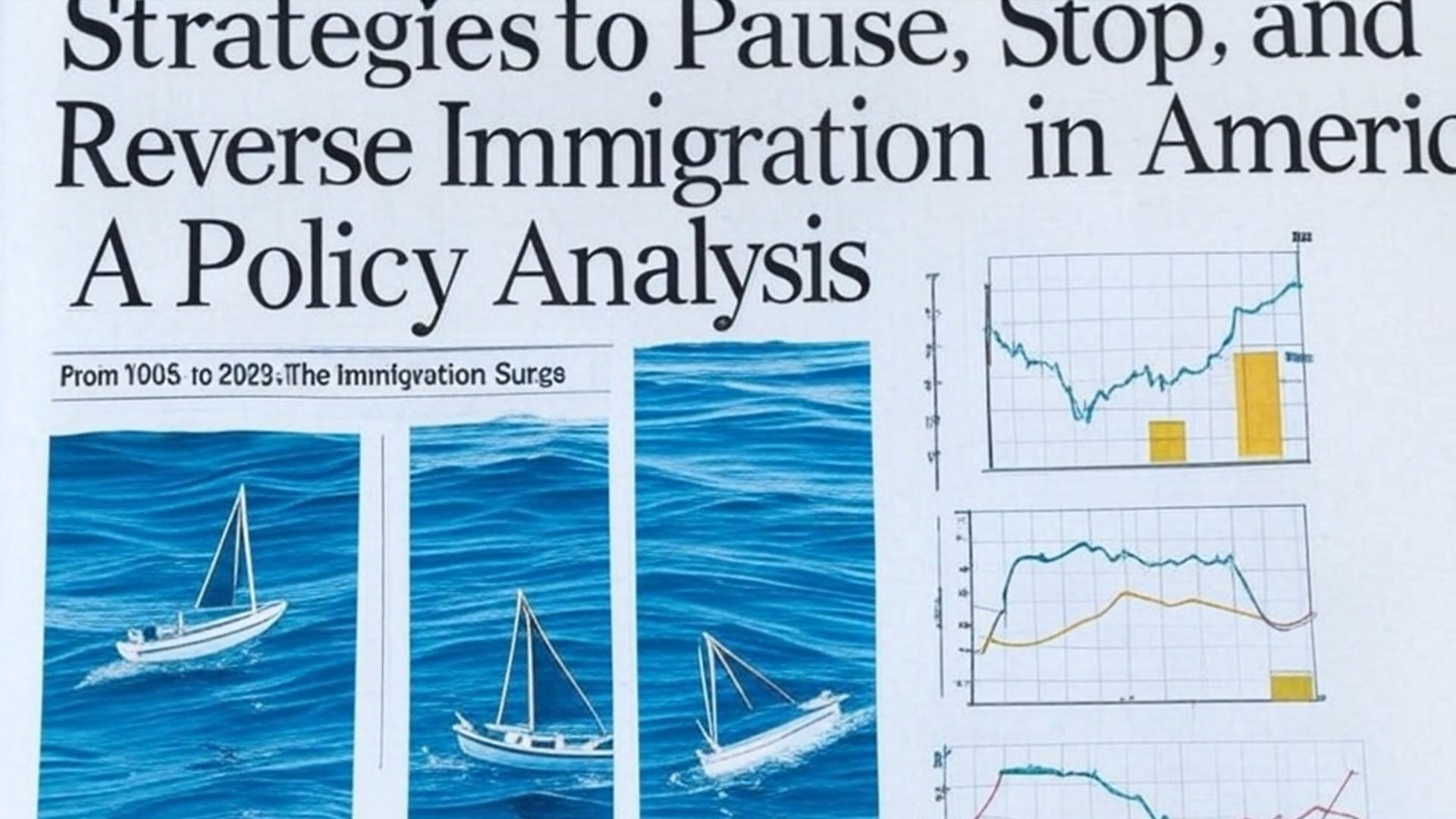
The U.S. foreign-born population has grown significantly since 1965, sparking debate about pausing, stopping, or reversing immigration. This piece examines these options, considering legal tools, historical examples, and practical challenges, assessing how feasible it is to alter the nation’s demographic trajectory amid political and logistical complexities.
500-Word Summary:
Since the Immigration and Nationality Act of 1965, the United States has seen its foreign-born population climb dramatically, shifting the nation’s demographic landscape. This rise has fueled discussions about whether the country could temporarily halt all immigration, permanently end it, or even roll back the foreign-born population to levels seen before the 1965 law. Each approach involves distinct strategies, drawing on existing laws, historical efforts, and the realities of today’s immigration system, while facing unique obstacles that test their practicality.
A temporary pause on immigration could be enacted swiftly through presidential powers and administrative action. The President has authority to block entry for national interest reasons, as seen in past travel bans and pandemic-era restrictions that slashed legal arrivals. Shutting down visa processing worldwide and tightening border enforcement could further choke inflows, potentially stalling millions of entries in a year. However, gaps in enforcement and legal pushback would likely limit the pause’s effectiveness, making it a short-term rather than transformative move.
Permanently stopping all immigration is a far steeper challenge, requiring a radical rethinking of the current framework. It would mean dismantling the legal pathways established over decades, scrapping every visa category, and exiting international agreements that protect refugees. Physically, it demands an impenetrable border—think walls, surveillance, and patrols on a scale never achieved—while confronting reliance on immigrant workers and global backlash. Historically, even strict quotas never fully halted inflows, suggesting that a total ban, while imaginable, stretches beyond what’s realistically achievable.
Reversing the foreign-born population to pre-1965 levels is the most ambitious idea, aiming to shrink today’s numbers by tens of millions. Mass deportation on this scale would dwarf past efforts, requiring an enforcement apparatus and budget far beyond current capacity, plus legal changes to uproot even citizens tied to post-1965 arrivals. Alternatively, encouraging people to leave voluntarily—through job restrictions or benefit cuts—has shown only modest results in the past, while waiting for natural decline would take decades and still fall short of the goal. The sheer size and diversity of the modern foreign-born community, spanning multiple continents, make this a logistical and ethical quagmire.
The context reveals a nation reshaped by waves of newcomers, with today’s mix heavily favoring arrivals from Africa, Asia, and Latin America, unlike the European dominance of earlier eras. Undoing this shift would disrupt industries, strain resources, and ignite social tensions, especially as many descendants of immigrants are now woven into the fabric of American life through birthright citizenship.
In the end, pausing immigration is the most doable, leaning on executive muscle, but it’s a fleeting fix. Stopping it forever demands a legislative and physical overhaul that defies precedent and practicality. Reversing decades of growth ventures into territory no policy has conquered, clashing with economic needs, legal limits, and human realities. While each option can be sketched out on paper, turning them into action exposes a gap between ambition and the messy truth of governing a diverse, interconnected nation.
Strategies to Pause, Stop, and Reverse Immigration in America: A Policy Analysis (Original Unabridged Version)
The United States has experienced a significant increase in its foreign-born population since the Immigration and Nationality Act of 1965, rising from 9.6 million (4.7%) in 1970 to 47.8 million (14.3%) in 2023, according to Pew Research and Census data. This shift has prompted questions about how the nation might temporarily pause all immigration, permanently stop it, or reverse it to reduce the post-1965 foreign-born population to earlier levels. Such actions would require leveraging existing legal mechanisms, enacting drastic policy changes, and overcoming substantial logistical and political hurdles. This essay explores these possibilities based on current immigration systems, historical precedents, and demographic realities, providing a factual assessment of the feasibility and implications of each approach.
Temporarily Pausing All Immigration
A temporary pause on all immigration could be achieved through executive authority and administrative measures. Under Section 212(f) of the Immigration and Nationality Act, the President can suspend entry of any or all foreign nationals if deemed a threat to national interests, as demonstrated by the 2017 travel ban and 2020 COVID-19 restrictions, which reduced legal entries by over 50% (from 10.5 million nonimmigrant visas in 2019 to 4.9 million in 2021, per DHS). A blanket suspension would require a declared emergency—perhaps economic or security-based—halting all visa categories, including tourist, student, and family-based admissions. The State Department could simultaneously suspend global visa processing, mirroring the 2020 consular shutdowns, while Customs and Border Protection (CBP) could seal land borders under Title 8, rejecting all entrants, including asylum seekers, as seen with Title 42’s 1.8 million expulsions from 2020–2023. A one-year pause might cut annual inflows by 1–1.5 million (based on 2022’s 1.6 million legal and 500,000–700,000 illegal entries), though enforcement gaps and legal challenges could undermine its scope.
Permanently Stopping Immigration
Permanently halting immigration demands a complete overhaul of the current system, an unprecedented step beyond historical restrictions like the 1924 Immigration Act’s quotas (165,000 annually). Congress would need to repeal the 1965 Act and subsequent legislation, eliminating all visa categories—675,000 permanent and millions of temporary annually—replacing them with a zero-admission policy. Asylum obligations under the 1967 UN Refugee Protocol and the 1980 Refugee Act (125,000 admitted in 2023) would require withdrawal and repeal, facing fierce domestic and international opposition. Physically, stopping illegal entries (11 million unauthorized in 2022, per Pew) would necessitate militarized borders—walls, drones, and constant patrols—far exceeding the $15 billion for 458 miles of Trump’s wall (GAO data). Even then, absolute prevention is logistically unfeasible given 6,000+ miles of borders and economic dependence on immigrant labor (18% of the workforce, BLS 2022), alongside inevitable political resistance.
Reversing Post-1965 Foreign-Born Population
Reducing the foreign-born population—47.8 million in 2023, roughly 80% post-1965 arrivals or descendants—to pre-1965 levels (9.6 million) involves removing 30–38 million people. Mass deportation, dwarfing Operation Wetback’s 1 million removals in 1954, would require scaling ICE’s 2023 capacity (34,000 beds, 287,000 removals) 100-fold, costing tens of billions beyond its $8.5 billion budget and necessitating constitutional changes to target naturalized citizens or their U.S.-born children (14th Amendment). Alternatively, self-deportation could be incentivized by denying work authorization (E-Verify), cutting benefits (expanding 1996 Welfare Reform), or imposing exit taxes, though historical data shows limited success—undocumented numbers fell from 12.2 million (2007) to 10.2 million (2019) despite enforcement. Natural attrition, with no new inflows, could lower the foreign-born share from 14.3% to 10%–12% by 2065 (40–50 million of 441 million, per Pew), as older immigrants (median age 46, ACS 2022) pass away, but this remains above 1965’s 4.7%.
Context and Feasibility
Post-1965, Africans (4.445–4.53 million projected by 2065), Asians (29.64 million), and Hispanics (24.18 million) reflect diverse inflows, dwarfed historically by pre-1965 Europeans (tens of millions). Reversing to 4.7% foreign-born (16–17 million of 441 million) requires expelling most post-1965 groups, disrupting economies (8.3 million unauthorized workers, BLS 2022) and sparking humanitarian crises. The African-descended population (47 million, 2022), growing via births, complicates reversal beyond immigration controls.
Conclusion
Pausing immigration is executable via executive action, stopping it requires legislative and physical impossibilities, and reversing the post-1965 surge demands unfeasible mass removal or decades-long attrition. Reducing the foreign-born to 1965’s 4.7% by 2065 exceeds current legal, economic, and logistical capacities, facing barriers no historical policy has surmounted. While theoretically possible, practical execution remains elusive.
Narrated Video Version
Strategies to Pause, Stop, and Reverse Immigration in America: A Policy Analysis
Since the Immigration and Nationality Act of 1965, the United States has seen a notable rise in its foreign-born population, growing from a modest count in 1970 to a much larger one by 2023—47.8 million, according to Pew Research and Census data. This shift has sparked debate about whether the nation could pause all immigration for a time, stop it entirely, or even roll it back to the smaller levels seen before 1965. Each approach would demand a mix of existing laws, bold new policies, and navigating steep practical and political challenges. This analysis digs into these options, drawing on today’s immigration framework, past examples, and demographic trends to weigh their feasibility and consequences.
Temporarily Pausing All Immigration
A temporary halt to all immigration could lean on the President’s authority and administrative tools. Under a key section of the Immigration and Nationality Act, the President can block entry of foreign nationals if they’re seen as a risk to national interests—a power used in the 2017 travel ban and 2020 pandemic restrictions, which slashed legal entries significantly. To pause everything, a national emergency might be declared, perhaps tied to economic or security concerns, stopping all visas, from tourists to students to family reunions. The State Department could shut down visa processing worldwide, much like during the 2020 consular closures, while border officials could lock down land crossings, turning away everyone, including asylum seekers, as seen in recent years with millions expelled under emergency rules. A year-long pause could sharply reduce arrivals, though gaps in enforcement and legal pushback might limit its reach.
Permanently Stopping Immigration
Ending immigration for good would mean dismantling the current system entirely—a leap far beyond the tight quotas of the 1924 Immigration Act. Congress would have to scrap the 1965 Act and later laws, wiping out all visa categories, both permanent and temporary, and setting admissions to zero. The U.S. would also need to pull out of international asylum agreements and repeal domestic refugee laws, moves that would ignite fierce opposition at home and abroad. Physically halting illegal crossings—millions of unauthorized residents were present in 2022, per Pew—would call for heavily fortified borders with walls, drones, and constant patrols, far outstripping past efforts like the costly border wall built in recent years. Even then, completely sealing thousands of miles of borders is a tall order, especially given the economy’s reliance on immigrant workers and the political firestorm it would trigger.
Reversing Post-1965 Foreign-Born Population
Shrinking the foreign-born population—47.8 million in 2023, mostly arrivals or descendants since 1965—back to the 9.6 million of 1970 would mean removing tens of millions of people. A mass deportation effort, far larger than the mid-1950s removal of about a million, would require a vastly expanded immigration enforcement system, costing billions beyond its current budget and likely needing constitutional changes to include naturalized citizens or their American-born children. Another tack could push self-deportation by blocking work permits, cutting off benefits, or adding exit taxes, though past attempts show only modest results—undocumented numbers dropped over a decade but stayed high. Without new arrivals, natural decline could eventually trim the foreign-born share somewhat by 2065, as older immigrants pass away, but it wouldn’t reach the low mark of 1965.
Context and Feasibility
Since 1965, immigration has brought growing numbers of Africans, Asians, and Hispanics—projected to reach millions more by 2065—though their totals still lag behind the massive European waves before that year. Winding back to a foreign-born population as small as 1965’s would mean displacing most of these newer groups, upending industries that depend on millions of immigrant workers and likely triggering humanitarian fallout. The African-descended population, now at 47 million and expanding through births, adds another layer of complexity beyond just immigration controls.
Conclusion
A temporary pause on immigration could hinge on swift executive moves, but permanently stopping it faces legal and physical roadblocks too vast to fully overcome. Reversing the post-1965 surge to match 1965’s smaller foreign-born share—47.8 million down to a fraction of that—would demand either an unworkable mass expulsion or decades of slow decline, both stretching beyond today’s legal, economic, and logistical limits. While these ideas can be imagined, turning them into reality remains out of reach.
#Immigration #USPolicy #ForeignBorn #BorderControl #Demographics
Watch video on X, Rumble, Odysee, BitChute, Brighteon, Facebook, Gab, Gettr, Minds, or realfreenews.com