
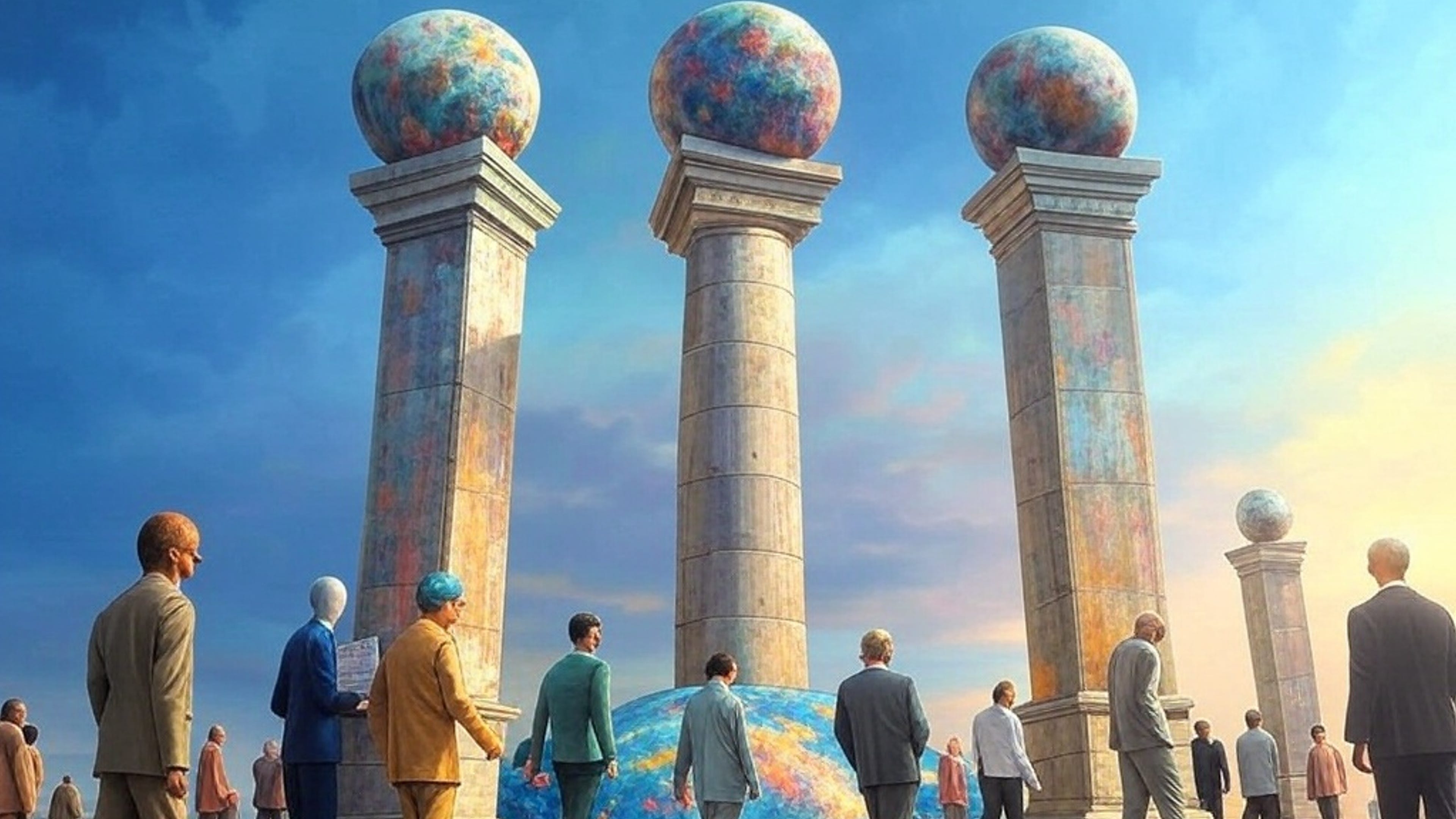
Exploring Key Issues within the Pillars of Our World (Part 1)
In an increasingly dynamic global landscape, understanding the forces that shape our society requires a structured framework that can accommodate both broad political concerns and specific, impactful challenges. This essay serves as an introduction to a series of analyses by identifying six key issues—rooted in recent and relevant events—that influence the foundational structure known as the Pillars of Our World. These issues, drawn from a broader set of twelve prominent political topics, will be explored for their basic solutions and mapped to the three main categories of this framework: Governance & Society, Resources & Economy, and Individual & Culture. Each category contains three sub-categories, providing a comprehensive lens through which to assess these challenges. By summarizing the Pillars of Our World, outlining the twelve political issues, and briefly noting the six key issues, this essay emphasizes the framework’s versatility in addressing societal dynamics in 2025. The focus here is not on detailing the issues—subsequent essays will elaborate—but on demonstrating how the Pillars of Our World can be applied to any significant concern, offering a professional, unbiased approach to navigating complex problems.
The Pillars of Our World framework consists of three main categories that collectively underpin human civilization. Governance & Society, ranked as the most critical, encompasses the systems and mechanisms that establish order and stability, including authority structures, legal rights, and security measures. Resources & Economy, the second pillar, addresses the material and innovative foundations that sustain life, covering financial systems, environmental management, and technological progress. Individual & Culture, the third pillar, focuses on personal and collective identity, incorporating autonomy, cultural values, and well-being. Each category features three sub-categories—Authority & Systems, Rights & Justice, and Security & Defense for Governance & Society; Economy & Wealth, Environment & Sustainability, and Risk & Innovation for Resources & Economy; and Autonomy & Ego, Culture & Religion, and Healthcare & Education for Individual & Culture—allowing for precise categorization of diverse issues.
The twelve political issues forming the backdrop for this analysis represent a broad spectrum of contemporary concerns: economy, healthcare, immigration, climate change, national security, education, gun control, social justice, taxes, abortion, religion and spirituality, and power dynamics. These topics are selected for their pervasive influence on public discourse and policy, reflecting economic vitality, governance priorities, and cultural debates. From this set, six key issues have emerged, each tied to recent events that have stirred significant attention. These include controversies surrounding electoral processes, inefficiencies in governmental operations, challenges at national borders, unrest linked to social movements, disputes over health policies, and debates about personal identity protections. While these will be detailed in later essays, their inclusion here highlights their relevance within the broader political landscape.
Governance & Society serves as the primary anchor for many of these key issues due to its focus on systemic stability. For instance, concerns about electoral processes and governmental inefficiencies naturally align with Authority & Systems, addressing the mechanisms of power and oversight. Issues involving border challenges and social unrest fit within Security & Defense, reflecting their impact on national safety and order. Another issue, tied to identity protections, corresponds to Rights & Justice, emphasizing legal and societal frameworks. This category’s sub-categories provide a robust structure for analyzing issues that affect the foundational operations and protections of society, demonstrating its broad applicability.
Resources & Economy, though not directly implicated by these six issues in this context, offers a lens for economic and resource-related challenges. Its sub-categories—Economy & Wealth, Environment & Sustainability, and Risk & Innovation—can address financial disputes, ecological policies, or innovative risks when relevant, showcasing the framework’s flexibility for material-focused concerns.
Individual & Culture captures issues related to health policy disputes under Healthcare & Education, highlighting well-being and knowledge systems, while cultural or autonomy-related topics could fit Culture & Religion or Autonomy & Ego, illustrating its capacity to handle identity-driven matters.
In conclusion, this essay introduces a series of explorations by identifying six key issues within the twelve political topics and mapping them to the Pillars of Our World. Governance & Society addresses systemic and security concerns, Resources & Economy stands ready for material issues, and Individual & Culture tackles personal and cultural dynamics. The framework’s strength lies in its adaptability—its three main categories and nine sub-categories can be applied to any issue, from governance disputes to cultural shifts, providing a clear, professional structure for analysis. Subsequent essays will delve into these six issues and their solutions, leveraging the Pillars of Our World to offer actionable insights into today’s challenges.
Understanding the Pillars of Our World (Part 2)
In today’s intricate and fast-evolving society, making sense of the forces that govern our collective and individual lives requires a clear and structured approach. This essay presents a definitive framework to categorize the vast array of challenges and dynamics we face, distilled into three essential pillars: Governance & Society, Resources & Economy, and Individual & Culture. Each pillar stands as a cornerstone of human existence, encompassing distinct yet interconnected aspects of how we organize, sustain, and define ourselves. Governance & Society lays the groundwork with its focus on authority, justice, and security, establishing the rules that shape our communal life. Resources & Economy fuels our existence through wealth, environmental stewardship, and innovation, ensuring the material foundation for progress. Individual & Culture captures the essence of personal identity and collective values, highlighting autonomy, spirituality, and well-being. Together, these categories offer a comprehensive lens through which to view our world, ranked by their fundamental importance—governance as the bedrock, resources as the sustainer, and individual identity as the soul. This 650-word introduction sets the stage for an in-depth exploration of each category, revealing how they interweave to form the fabric of modern civilization. By delving into these pillars, we gain not just an organizational tool but a deeper understanding of the priorities that drive our systems, economies, and personal lives. From the laws that bind us to the resources that support us and the beliefs that define us, this framework illuminates the interplay of power, prosperity, and purpose. It’s a roadmap for navigating the complexities of today, offering clarity amid chaos and a foundation for addressing the challenges that lie ahead. Whether it’s the stability of our institutions, the vitality of our economies, or the richness of our personal experiences, these three categories encapsulate the full spectrum of what matters most, providing a unified perspective that is both practical and profound.
Category 1: Governance & Society
Governance & Society stands as the most critical pillar of human civilization, the foundation upon which all else rests. It encompasses the systems, protections, and safeguards that organize collective life, ensuring order and stability in a world of competing interests. Without this category, the structures that enable prosperity and personal freedom would crumble, making it the bedrock of our existence. Its importance lies in its ability to establish the rules, enforce fairness, and protect against threats, creating a framework that allows societies to function and flourish. This exploration delves into its three sub-categories, ranked by their essential roles in maintaining societal cohesion.
Authority & Systems, the first sub-category, is the cornerstone of governance. It includes the political structures, leadership, and legal mechanisms that dictate how power is exercised and order is maintained. From the creation of laws to the execution of justice, this sub-category ensures that societies have a clear and enforceable system to guide behavior and resolve disputes. Its primacy stems from its role as the starting point—without a functioning authority, no other aspect of governance can take hold. It’s the scaffolding that supports every decision, from local councils to national governments, providing the stability needed for collective action.
Rights & Justice, ranked second, builds upon this foundation by focusing on equity, freedoms, and fairness. This sub-category ensures that the system serves all members of society, not just the powerful, by protecting individual rights and promoting justice. It addresses the distribution of opportunities, the resolution of inequalities, and the safeguarding of liberties, making it a vital counterbalance to raw authority. While it depends on established systems to function, its importance lies in its ability to humanize governance, ensuring that power is wielded responsibly and inclusively.
Security & Defense, third in importance, protects the system and its rights from internal and external threats. This sub-category encompasses efforts to maintain safety, respond to dangers, and uphold order, from law enforcement to national defense. It’s essential for preserving the stability that authority and justice create, yet it ranks below them because it reacts to challenges rather than defining the system itself. By addressing risks like crime or territorial disputes, it ensures that the societal framework remains intact, supporting the broader goals of governance.
Together, these sub-categories form a hierarchy of necessity: authority establishes the rules, justice refines them, and security defends them. Governance & Society is thus the linchpin of civilization, providing the structure within which resources can be managed and individual lives can thrive. Its comprehensive scope ensures that every aspect of collective life—from leadership to protection—has a place, making it indispensable to our shared existence.
Category 2: Resources & Economy
Resources & Economy, the second pillar, is the lifeblood that sustains human society, ranked just below governance because it depends on a stable system to operate effectively. This category encompasses the material and innovative forces that drive prosperity, ensuring that communities have the means to survive and grow. It’s the fuel that powers daily life and long-term progress, balancing immediate needs with future possibilities. This analysis explores its three sub-categories, ordered by their immediate and enduring impact on our world.
Economy & Wealth, the leading sub-category, focuses on financial systems, profit, and employment. It’s the engine of societal function, providing the resources needed for everything from food on the table to infrastructure development. Its top ranking reflects its urgent role in daily survival—without a robust economy, societies falter, and individuals suffer. This sub-category drives commerce, supports livelihoods, and funds public services, making it the heartbeat of material well-being and a key measure of a society’s health.
Environment & Sustainability, second in importance, addresses the stewardship of natural resources and ecological balance. It ensures that the wealth generated today doesn’t come at the expense of tomorrow, tackling issues like resource depletion and environmental protection. While less immediate than economic vitality, its significance lies in its long-term vision—sustaining life requires preserving the planet that supports it. This sub-category bridges present prosperity with future security, a critical but secondary priority to current economic demands.
Risk & Innovation, ranked third, involves high-stakes ventures and technological advancements that shape future economic landscapes. It includes entrepreneurial risks, scientific breakthroughs, and digital progress, driving growth and adaptation. Its lower ranking reflects its speculative nature—while it can revolutionize economies, it builds on the stability of wealth and sustainability, offering potential rather than immediate necessity. This sub-category fuels innovation, ensuring societies remain competitive and forward-looking.
Resources & Economy thus forms a triad of sustenance: wealth meets today’s needs, sustainability secures tomorrow’s, and innovation paves the way for progress. Its role as the second-most-important category underscores its dependence on governance for structure, while its sub-categories highlight the balance between survival, endurance, and ambition that keeps societies thriving.
Category 3: Individual & Culture
Individual & Culture, the third pillar, captures the essence of what makes us human—our personal identities and collective values. Ranked below governance and resources, it reflects the reality that personal and cultural fulfillment depend on systemic stability and material support. This category shapes how individuals see themselves and connect with others, blending autonomy with shared beliefs and well-being. This examination details its three sub-categories, prioritized by their influence on personal and societal identity.
Autonomy & Ego, the foremost sub-category, centers on personal control, privacy, and self-worth. It’s the most critical here because it defines individual agency—the ability to make choices and assert one’s value. From safeguarding personal freedoms to fueling ambitions for recognition, this sub-category is the root of human experience, driving everything from daily decisions to lifelong pursuits. Its top ranking reflects its immediacy to every person’s sense of self.
Culture & Religion, second in importance, encompasses values, spirituality, and collective identity. It binds individuals into communities through shared traditions, beliefs, and faith systems, shaping how societies understand their past and present. Less immediate than personal autonomy, it’s vital for providing meaning and cohesion, influencing everything from family life to national character. This sub-category’s inclusion of spirituality ensures that both secular and sacred dimensions of identity are addressed.
Healthcare & Education, ranked third, focuses on physical well-being and intellectual growth. It supports individuals by enhancing health and knowledge, from medical care to schooling, ensuring they can thrive within their autonomy and culture. While essential, it ranks below the others because it serves as a foundation for personal capacity rather than defining identity directly, making it a critical enabler rather than the essence itself.
Individual & Culture completes the framework with a focus on the human spirit: autonomy empowers the self, culture connects us, and health-education equips us. As the third category, it thrives within the stability of governance and the sustenance of resources, offering a rich tapestry of personal and collective life.
Conclusion
The three pillars of Governance & Society, Resources & Economy, and Individual & Culture form a definitive framework for understanding our world, each building on the last to create a cohesive whole. Governance & Society, the bedrock, establishes the rules and protections that allow civilization to function, from authority to security. Resources & Economy, the sustainer, provides the material and innovative fuel for survival and growth, balancing wealth with future possibilities. Individual & Culture, the soul, defines who we are through autonomy, shared values, and well-being, enriching life within the broader system. This conclusion reaffirms their order of importance—governance first, resources second, identity third—as a reflection of their cascading roles: structure enables sustenance, which in turn supports essence.
Each category’s sub-categories, ranked by necessity and impact, reveal a hierarchy of priorities. Authority sets the stage, justice refines it, and security defends it; wealth drives the present, sustainability secures the future, and innovation shapes it; autonomy empowers individuals, culture unites them, and health-education strengthens them. Together, they address the full spectrum of human concerns—power and order, prosperity and progress, self and community—without leaving any aspect unaccounted for. This framework stands as a practical tool for navigating today’s challenges, offering clarity on what matters most and why. Whether it’s the stability of our systems, the vitality of our resources, or the richness of our identities, these three categories provide a unified perspective that is both timeless and urgently relevant, guiding us through the complexities of modern life with purpose and precision.
[Our World]
      |
      +-----> [Governance & Society] (Most Important)
      |         |
      |         +-----> [Authority & Systems] (1)
      |         |         - Political structures, leadership, control
      |         |
      |         +-----> [Rights & Justice] (2)
      |         |         - Equity, freedoms, fairness
      |         |
      |         +-----> [Security & Defense] (3)
      |                   - Safety, order, threat response
      |
      +-----> [Resources & Economy] (Second Most Important)
      |         |
      |         +-----> [Economy & Wealth] (1)
      |         |         - Financial systems, profit, jobs
      |         |
      |         +-----> [Environment & Sustainability] (2)
      |         |         - Ecological balance, resource use
      |         |
      |         +-----> [Risk & Innovation] (3)
      |                   - High-stakes ventures, tech progress
      |
      +-----> [Individual & Culture] (Third Most Important)
                |
                +-----> [Autonomy & Ego] (1)
                |         - Personal control, privacy, self-worth
                |
                +-----> [Culture & Religion] (2)
                |         - Values, spirituality, identity
                |
                +-----> [Healthcare & Education] (3)
                          - Health, well-being, knowledge
Mapping the Top Twelve Political Issues to a Comprehensive Framework (Part 3)
In the intricate landscape of modern society, understanding the most pressing political issues requires a structured approach that captures their scope and significance. This essay delineates the top twelve political issues in 2025—Economy, Healthcare, Immigration, Climate Change, National Security, Education, Gun Control, Social Justice, Taxes, Abortion, Religion & Spirituality, and Power Dynamics—and situates them within a robust framework of three main categories: Governance & Society, Resources & Economy, and Individual & Culture. Each category, underpinned by three sub-categories, reflects a hierarchy of importance—Governance & Society as the systemic foundation, Resources & Economy as the material sustainer, and Individual & Culture as the personal and collective essence. These twelve issues, selected for their pervasive influence on public discourse and societal function, span economic vitality, security concerns, individual rights, and spiritual dimensions. By mapping them to this framework, we gain a clear, professional perspective on how they align with the pillars that shape our world, offering a lens for analysis and decision-making that is both comprehensive and accessible.
Governance & Society: The Bedrock of Political Order
Governance & Society, ranked as the most critical category, establishes the structural and protective mechanisms that enable societal cohesion. Its prominence stems from its role in setting the rules and maintaining order, a prerequisite for all other functions. Within this category, Power Dynamics fits squarely under the sub-category of Authority & Systems, which encompasses political structures, leadership, and control. This placement reflects its focus on who wields authority and how it is exercised, a foundational concern in any political system. The sub-category of Rights & Justice, addressing legal rights and societal fairness, houses Social Justice, Gun Control, and Abortion. Social Justice pertains to rights and legal protections across society, Gun Control involves the balance of individual firearm rights with legislative oversight, and Abortion centers on personal freedoms within legal frameworks—all critical to defining justice and rights within governance. Lastly, National Security and Immigration align with Security & Defense, which focuses on safety, order, and threat response. National Security addresses broader protective measures, while Immigration includes border-related safety concerns, both essential to safeguarding the societal system established by authority and justice.
Resources & Economy: The Sustainer of Material Life
Resources & Economy, the second most important category, underpins societal and individual sustenance through the management of wealth and resources. Its significance lies in providing the material foundation that supports daily life and future growth, contingent upon the stability provided by governance. The sub-category of Economy & Wealth encapsulates Economy and Taxes, reflecting their direct roles in financial systems and resource allocation. Economy drives jobs and growth, while Taxes fund public services and redistribute wealth, making them central to economic vitality. Climate Change fits within Environment & Sustainability, which focuses on ecological balance and resource preservation. This sub-category addresses the long-term stewardship necessary to maintain the material base that economic activities depend upon. The third sub-category, Risk & Innovation, emphasizes high-stakes ventures and technological progress but lacks a direct match among the top twelve issues, as its forward-looking focus on innovation and risk-taking is not explicitly represented here. Together, these sub-categories highlight the immediate and enduring aspects of resource management that sustain society.
Individual & Culture: The Essence of Identity
Individual & Culture, ranked third, shapes personal and collective identity, influencing how individuals and communities define themselves within the broader system. Its importance follows governance and resources, as identity thrives only within a stable and supported framework. Religion & Spirituality aligns with Culture & Religion, which encompasses values, spirituality, and identity, reflecting its role in shaping belief systems and cultural cohesion. The sub-category of Healthcare & Education includes Healthcare and Education, focusing on well-being and knowledge development. Healthcare ensures physical health, while Education builds intellectual capacity, both vital to individual and societal strength. Autonomy & Ego, emphasizing personal control and self-worth, does not directly house a top twelve issue but underpins rights-related concerns like Abortion and Gun Control, which are placed under Governance & Society for their legal focus. This category underscores the personal and cultural dimensions that enrich human experience.
Conclusion: A Unified Perspective on Political Priorities
The top twelve political issues—Economy, Healthcare, Immigration, Climate Change, National Security, Education, Gun Control, Social Justice, Taxes, Abortion, Religion & Spirituality, and Power Dynamics—fit seamlessly into the framework of Governance & Society, Resources & Economy, and Individual & Culture. Governance & Society anchors authority, rights, and security, housing six issues critical to systemic order. Resources & Economy sustains material life with three issues tied to wealth and environmental care, while Individual & Culture defines identity with two issues linked to spirituality and well-being, plus an implicit connection to autonomy. This mapping, devoid of bias, reveals a balanced distribution that prioritizes systemic stability, economic sustenance, and personal essence, offering a professional and intelligible tool for understanding and addressing the political landscape in 2025.
Mapping Top 12 Political Issues to Main Categories and Sub-Categories
Governance & Society (Most Important)
Authority & Systems
Power Dynamics: Centers on leadership and control within political structures.
Rights & Justice
Social Justice: Focuses on rights and legal fairness across society.
Gun Control: Involves laws and rights related to firearms.
Abortion: Concerns legal rights and personal freedoms.
Security & Defense
National Security: Encompasses protection from threats and maintaining order.
Immigration: Includes border security and safety aspects of migration.
Resources & Economy (Second Most Important)
Economy & Wealth
Economy: Relates to financial systems, jobs, and economic growth.
Taxes: Involves funding and resource distribution through taxation.
Environment & Sustainability
Climate Change: Addresses resource use and ecological stability.
Risk & Innovation
(No direct top 12 issue fits here; this sub-category focuses on future-oriented risks and tech, not explicitly listed.)
Individual & Culture (Third Most Important)
Autonomy & Ego
(No direct top 12 issue fits solely here; autonomy overlaps with Abortion and Gun Control under Rights & Justice.)
Culture & Religion
Religion & Spirituality: Shapes collective values and spiritual identity.
Healthcare & Education
Healthcare: Focuses on physical well-being and medical systems.
Education: Centers on knowledge development and societal capacity.
Top 12 Political Issues and Why They Are in the Top 12
Economy
Why: Drives daily life through jobs, inflation, and growth; a universal concern affecting all sectors of society due to its direct impact on livelihoods and stability.
Healthcare
Why: Influences individual well-being and public systems; widely debated for its cost, access, and policy implications, making it a persistent priority.
Immigration
Why: Shapes national identity and security; a focal point in debates over borders, citizenship, and resource allocation, reflecting its broad societal reach.
Climate Change
Why: Affects long-term survival and resource use; its global scale and urgency in policy discussions elevate it to a top issue.
National Security
Why: Ensures safety from external and internal threats; critical due to its role in protecting societal order and sovereignty, a constant focus in governance.
Education
Why: Determines future workforce and societal knowledge; debated for funding and content, reflecting its importance to individual and collective progress.
Gun Control
Why: Balances personal freedoms with public safety; a recurring issue due to its legal, cultural, and practical implications, widely discussed without assuming a stance.
Social Justice
Why: Addresses rights and societal treatment; prominent for its focus on legal and social structures, a key topic in public and political arenas.
Taxes
Why: Funds governance and services; central to economic policy debates over rates and distribution, impacting all citizens directly.
Abortion
Why: Involves personal rights and societal values; a divisive issue with significant legal and ethical weight, consistently in the spotlight.
Religion & Spirituality
Why: Shapes identity and policy; influences laws, culture, and personal beliefs, elevated by its role in governance and individual lives.
Power Dynamics
Why: Defines who controls society; critical due to its focus on leadership, influence, and authority, a core concern in political and social structures.
Categorizing Key Political Issues within a Structured Framework (Part 4)
In today’s complex political landscape, organizing significant issues into a coherent framework enhances our ability to analyze and address them effectively. This essay examines six prominent issues in 2025—stolen election, government fraud, waste, and abuse, border invasion and demographic change, BLM domestic terrorist attacks and problems with blacks, fake Covid pandemic and medical tyranny, and LGBTQ child molesters and tranny mutilation—and maps them to an established structure of three main categories: Governance & Society, Resources & Economy, and Individual & Culture. Each category contains three sub-categories, reflecting a hierarchy of importance where Governance & Society underpins systemic order, Resources & Economy sustains material needs, and Individual & Culture shapes identity. These issues, ranked by their societal impact and scope, range from foundational governance challenges to specific health and cultural concerns. By assigning them to this framework—Governance & Society with Authority & Systems, Rights & Justice, and Security & Defense; Resources & Economy with Economy & Wealth, Environment & Sustainability, and Risk & Innovation; and Individual & Culture with Autonomy & Ego, Culture & Religion, and Healthcare & Education—we achieve a clear, professional understanding of their placement and relevance, facilitating informed discourse and decision-making.
Governance & Society: Systemic Foundations and Stability
Governance & Society, deemed the most critical category, establishes the structural and protective mechanisms essential for societal function. Its primacy reflects its role in maintaining order and authority, upon which other domains depend. The first issue, stolen election, ranked highest for its systemic implications, fits within Authority & Systems. This sub-category encompasses political structures and control, making it the natural home for concerns about electoral integrity and governance legitimacy, which affect the entire societal framework. Similarly, government fraud, waste, and abuse, the second-ranked issue, aligns with Authority & Systems. It addresses the misuse of political power and resources within governance, a significant but slightly less foundational concern than election integrity, as it pertains to operational inefficiencies rather than the system’s core legitimacy.
The third issue, border invasion and demographic change, maps to Security & Defense, reflecting its focus on national stability and safety. This sub-category handles responses to threats and order maintenance, fitting the issue’s emphasis on border security, though it also touches cultural identity aspects addressed elsewhere. Likewise, BLM domestic terrorist attacks and problems with blacks, ranked fourth, resides in Security & Defense. It centers on perceived threats to public safety and societal order, positioning it as a key security concern with broad implications. These placements highlight Governance & Society’s role in addressing systemic and protective priorities, capturing four of the six issues due to their governance and stability focus.
Resources & Economy: Material Sustenance
Resources & Economy, the second-ranked category, focuses on the material and innovative forces that sustain society. Its importance lies in supporting life and progress, though it relies on governance for operational context. Notably, none of the six issues directly align with its sub-categories—Economy & Wealth, Environment & Sustainability, and Risk & Innovation. Economy & Wealth, which covers financial systems and jobs, does not connect to these issues, as they lack a primary economic focus. Environment & Sustainability, addressing ecological balance, is similarly unrepresented, with no issue tied to resource use or environmental policy. Risk & Innovation, involving high-stakes ventures and technological progress, also finds no match, as these issues do not emphasize future-oriented risks or advancements. This absence underscores that the specified concerns are more governance- and identity-driven than resource-centric, leaving Resources & Economy without direct representation here.
Individual & Culture: Identity and Well-being
Individual & Culture, ranked third, shapes personal and collective identity, significant yet dependent on governance and resources. The fifth issue, fake Covid pandemic and medical tyranny, fits within Healthcare & Education. This sub-category addresses health and well-being, aligning with the issue’s focus on health policy and perceived medical governance overreach, a notable but narrower concern compared to systemic issues. The sixth issue, LGBTQ child molesters and tranny mutilation, maps to Governance & Society’s Rights & Justice rather than here, due to its legal and rights emphasis, though it relates tangentially to Autonomy & Ego’s focus on personal control. Culture & Religion and Autonomy & Ego remain without direct fits, as these issues lack a primary cultural or autonomy-driven focus beyond their governance aspects.
Conclusion: A Structured Insight into Political Concerns
The six issues—stolen election, government fraud, waste, and abuse, border invasion and demographic change, BLM domestic terrorist attacks and problems with blacks, fake Covid pandemic and medical tyranny, and LGBTQ child molesters and tranny mutilation—integrate effectively into the three-category framework. Governance & Society dominates with four issues (stolen election and government fraud under Authority & Systems, border invasion and BLM attacks under Security & Defense, and LGBTQ concerns under Rights & Justice), reflecting their systemic and protective weight. Resources & Economy lacks representation, as these issues do not prioritize material sustenance. Individual & Culture captures one issue (fake Covid under Healthcare & Education), highlighting its health focus. This mapping, structured in 2025, provides a professional, readable summary of how these concerns align with societal pillars, emphasizing governance’s centrality while noting gaps in economic and cultural domains.
Six Issues in Order of Importance
Stolen Election
Reason: Challenges the foundational integrity of governance, with the widest systemic impact on trust and authority.
Government Fraud, Waste, and Abuse
Reason: Undermines systemic efficiency and public trust, critical to governance but less immediate than election integrity.
Border Invasion and Demographic Change
Reason: Affects national security and cultural identity, significant for stability and long-term societal composition.
BLM Domestic Terrorist Attacks and Problems with Blacks
Reason: Raises security concerns with broad social implications, impactful but more specific than border issues.
Fake Covid Pandemic and Medical Tyranny
Reason: Impacts health policy and individual well-being, important but narrower in scope than governance or security.
LGBTQ Child Molesters and Tranny Mutilation
Reason: Involves rights and cultural debates, significant but least systemic, focusing on specific identity issues.
Mapping to Main Categories and Sub-Categories
1. Stolen Election
Category: Governance & Society
Sub-Category: Authority & Systems
Fit: Focuses on electoral control and governance integrity.
2. Government Fraud, Waste, and Abuse
Category: Governance & Society
Sub-Category: Authority & Systems
Fit: Relates to misuse of political authority and systemic oversight.
3. Border Invasion and Demographic Change
Category: Governance & Society
Sub-Category: Security & Defense
Fit: Ties to border security and national stability (primary); also overlaps with Culture & Religion for identity.
4. BLM Domestic Terrorist Attacks and Problems with Blacks
Category: Governance & Society
Sub-Category: Security & Defense
Fit: Centers on perceived threats to safety and order.
5. Fake Covid Pandemic and Medical Tyranny
Category: Individual & Culture
Sub-Category: Healthcare & Education
Fit: Pertains to health policy and perceived medical governance overreach.
6. LGBTQ Child Molesters and Tranny Mutilation
Category: Governance & Society
Sub-Category: Rights & Justice
Fit: Involves legal and rights debates around personal freedoms and protections.
Strategic Solutions for Key Political Issues within a Structured Framework (Part 5)
In an era marked by significant political challenges, addressing critical issues with actionable strategies is essential for maintaining societal stability and integrity. This essay outlines solutions and three specific points of action for six prominent issues in 2025—stolen election, government fraud, waste, and abuse, border invasion and demographic change, BLM domestic terrorist attacks and problems with blacks, fake Covid pandemic and medical tyranny, and LGBTQ child molesters and tranny mutilation—within the established framework of Governance & Society, Resources & Economy, and Individual & Culture. These issues, prioritized by their systemic impact, align with sub-categories such as Authority & Systems, Security & Defense, Rights & Justice, and Healthcare & Education, reflecting their placement within the broader pillars of governance, resource management, and identity. The proposed solutions emphasize effective governance, targeted security, and the preservation of traditional structures, offering a professional and structured approach to resolution. Each solution is accompanied by actionable steps designed to address the root concerns efficiently, ensuring a comprehensive response that upholds order, resource allocation, and cultural coherence. This analysis provides a clear roadmap for stakeholders seeking to navigate these challenges with precision and effectiveness.
Governance & Society: Reinforcing Systemic Integrity
Governance & Society, the foundational category, addresses issues critical to political structure and societal stability, housing four of the six concerns due to their systemic nature. The stolen election issue, ranked first for its broad implications, falls under Authority & Systems. The solution involves implementing strict voting laws and oversight to ensure electoral integrity, safeguarding the democratic process. Actions include requiring voter identification and in-person voting, auditing election results with independent monitors, and banning mail-in ballots except for verified exceptions, aiming to restore trust in governance mechanisms. Similarly, government fraud, waste, and abuse, ranked second, resides in Authority & Systems. The proposed solution is to reduce government size and enforce accountability, curbing resource misuse. Steps include cutting federal budgets and eliminating redundant agencies, mandating transparency with public spending reports, and prosecuting officials for corruption with stringent penalties, enhancing systemic efficiency.
The border invasion and demographic change issue, third in importance, aligns with Security & Defense, focusing on national stability. The solution is to secure borders and limit immigration, maintaining demographic cohesion. Actions involve building and maintaining a physical border wall, swiftly deporting illegal immigrants, and significantly restricting legal immigration quotas, ensuring robust boundary protection. Likewise, BLM domestic terrorist attacks and problems with blacks, ranked fourth, fits within Security & Defense, addressing perceived threats to order. The solution strengthens defense and emphasizes separation, with actions including decreasing funding and presence in black areas, enacting tougher sentencing for offenses, and limiting blacks to prevent unrest, prioritizing public safety and stability.
Resources & Economy: No Direct Application
Resources & Economy, the second category, focuses on material sustenance through wealth, environmental management, and innovation. However, none of the six issues directly align with its sub-categories—Economy & Wealth, Environment & Sustainability, and Risk & Innovation. These issues do not primarily concern financial systems, ecological balance, or technological advancements, instead centering on governance and identity. The absence of economic-focused concerns among these six highlights their emphasis on systemic control and cultural dynamics rather than resource allocation or future-oriented development, leaving this category unrepresented in this specific context.
Individual & Culture: Addressing Health and Rights
Individual & Culture, the third category, shapes personal and collective identity, encompassing one issue with a health focus and another tied to rights under governance. The fake Covid pandemic and medical tyranny issue, ranked fifth, fits within Healthcare & Education, addressing health policy concerns. The solution rejects centralized health mandates, prioritizing individual choice, with actions including banning vaccine and mask mandates, defunding public health agencies promoting restrictions, and promoting alternative treatments, aiming to restore personal health autonomy. The LGBTQ child molesters and tranny mutilation issue, sixth in importance, aligns with Rights & Justice under Governance & Society. The solution protects youth and traditional norms through legal restrictions, with steps such as banning gender transition procedures for minors, increasing penalties for crimes against children, and restricting LGBTQ education in schools, focusing on legal safeguards.
Conclusion: A Cohesive Strategy for Resolution
The six key issues—stolen election, government fraud, waste, and abuse, border invasion and demographic change, BLM domestic terrorist attacks and problems with blacks, fake Covid pandemic and medical tyranny, and LGBTQ child molesters and tranny mutilation—integrate into the framework with clear solutions and actionable steps. Governance & Society addresses four issues, reinforcing systemic integrity and security through stringent voting laws, government accountability, border control, and law enforcement enhancements. Resources & Economy remains unengaged, as these issues lack a material focus. Individual & Culture tackles one health-related concern, emphasizing personal choice, while a rights issue bridges back to governance. This structured approach in 2025, provides a professional, readable summary of targeted strategies, ensuring systemic stability, public safety, and traditional values are upheld effectively.
Solutions and Points of Action for Key Issues
1. Stolen Election (Governance & Society - Authority & Systems)
Solution: Implement strict voting laws and oversight to ensure electoral integrity.
Actions:
Require voter ID and in-person voting.
Audit election results with independent monitors.
Ban mail-in ballots except for verified exceptions.
2. Government Fraud, Waste, and Abuse (Governance & Society - Authority & Systems)
Solution: Reduce government size and enforce accountability to curb misuse of power.
Actions:
Cut federal budgets and eliminate redundant agencies.
Mandate transparency with public spending reports.
Prosecute officials for corruption with harsh penalties.
3. Border Invasion and Demographic Change (Governance & Society - Security & Defense)
Solution: Secure borders and limit immigration to preserve national stability.
Actions:
Build and maintain a physical border wall.
Deport illegal immigrants swiftly.
Restrict legal immigration quotas significantly.
4. BLM Domestic Terrorist Attacks and Problems with Blacks (Governance & Society - Security & Defense)
Solution: Strengthen law enforcement to maintain order and address crime.
Actions:
Increase police funding and presence in high-crime areas.
Enact tougher sentencing for violent offenses.
Limit protest permits to prevent unrest.
5. Fake Covid Pandemic and Medical Tyranny (Individual & Culture - Healthcare & Education)
Solution: Reject centralized health mandates and prioritize individual choice.
Actions:
Ban vaccine and mask mandates at all levels.
Defund public health agencies promoting restrictions.
Promote alternative treatments and personal health decisions.
6. LGBTQ Child Molesters and Tranny Mutilation (Governance & Society - Rights & Justice)
Solution: Protect youth and traditional norms through legal restrictions.
Actions:
Ban gender transition procedures for minors.
Increase penalties for sex crimes against children.
Restrict LGBTQ education in schools.
Summary Conclusion (Part 6)
In the multifaceted landscape of contemporary society, a structured framework proves indispensable for dissecting the intricate forces that define our collective existence. The Pillars of Our World—Governance & Society, Resources & Economy, and Individual & Culture—offer a robust architecture for analyzing the myriad challenges confronting humanity in 2025. This framework, comprising three principal categories and their respective sub-categories, provides a comprehensive tool to address twelve prominent political issues, from which six key challenges emerge as focal points due to their profound societal reverberations. These challenges—electoral process controversies, governmental inefficiencies, national border disputes, social movement unrest, health policy conflicts, and personal identity protections—span the spectrum of systemic order, material sustenance, and cultural identity. By aligning these issues with the framework’s categories, a clear understanding of their scope and potential resolutions emerges, underscoring the adaptability of the Pillars of Our World in navigating the complexities of modern civilization.
Governance & Society stands as the preeminent pillar, anchoring the stability and order upon which all societal functions rely. This category, encompassing Authority & Systems, Rights & Justice, and Security & Defense, serves as the linchpin for addressing systemic challenges. Electoral process controversies and governmental inefficiencies fall under Authority & Systems, where the mechanisms of power allocation and administrative oversight reside. Solutions here center on reinforcing electoral integrity through stringent voting protocols and enhancing governmental accountability via transparency and streamlined operations. National border disputes and social movement unrest align with Security & Defense, emphasizing the preservation of national stability and public safety. Robust border security measures and decisive law enforcement responses address these concerns, ensuring societal cohesion. Personal identity protections, rooted in Rights & Justice, focus on legal frameworks that balance individual freedoms with societal norms, offering a structured approach to equity and protection. Governance & Society thus emerges as the dominant category, addressing five of the six key issues with precision and authority.
Resources & Economy, positioned as the second pillar, sustains societal vitality through the management of material and innovative resources. Defined by Economy & Wealth, Environment & Sustainability, and Risk & Innovation, this category underpins economic prosperity and ecological balance. While none of the six key issues directly anchor here, its sub-categories remain poised to tackle broader economic disputes or sustainability challenges when they arise. Economy & Wealth supports financial stability, Environment & Sustainability ensures long-term resource viability, and Risk & Innovation drives technological advancement. The absence of immediate alignment with the specified issues highlights their predominant focus on governance and identity rather than material concerns, yet this pillar’s readiness to adapt underscores its integral role in the framework’s versatility.
Individual & Culture, the third pillar, encapsulates the essence of personal and collective identity through Autonomy & Ego, Culture & Religion, and Healthcare & Education. Health policy conflicts, centered on disputes over medical governance, reside within Healthcare & Education, where well-being and knowledge systems intersect. Resolutions prioritize individual autonomy in health decisions, dismantling centralized mandates to restore personal agency. While cultural and autonomy-related dimensions of personal identity protections touch on Autonomy & Ego and Culture & Religion, their legal emphasis places them under Governance & Society. This category’s strength lies in its capacity to address the human experience—identity, spirituality, and health—within the stability provided by governance and the sustenance of resources, making it a vital, albeit secondary, component of the framework.
The Pillars of Our World framework reveals its potency through its application to six pivotal issues drawn from a broader set of twelve political topics—economy, healthcare, immigration, climate change, national security, education, gun control, social justice, taxes, abortion, religion and spirituality, and power dynamics. Governance & Society shoulders the bulk of these challenges, addressing electoral integrity, governmental function, border security, social stability, and legal rights with systemic solutions. Resources & Economy stands prepared for material-focused issues, while Individual & Culture resolves health policy disputes with a focus on personal well-being. The framework’s three categories and nine sub-categories provide a dynamic structure capable of encompassing any societal concern, from power struggles to cultural shifts. This adaptability ensures its utility as a professional tool for dissecting and resolving the pressing issues of 2025, offering actionable insights that bridge systemic order, economic vitality, and human identity with clarity and purpose.
Summary
This essay introduces the Pillars of Our World framework, delving into 2025’s societal complexities. Through Governance & Society, Resources & Economy, and Individual & Culture, it navigates pressing political challenges, offering a versatile lens to understand and address dynamic global issues with clarity and actionable insights.
#PillarsOfOurWorld #2025Challenges #Society #Framework #PoOW
Watch video on X, Rumble, Odysee, BitChute, Brighteon, Facebook, Gab, Gettr, Minds, or realfreenews.com