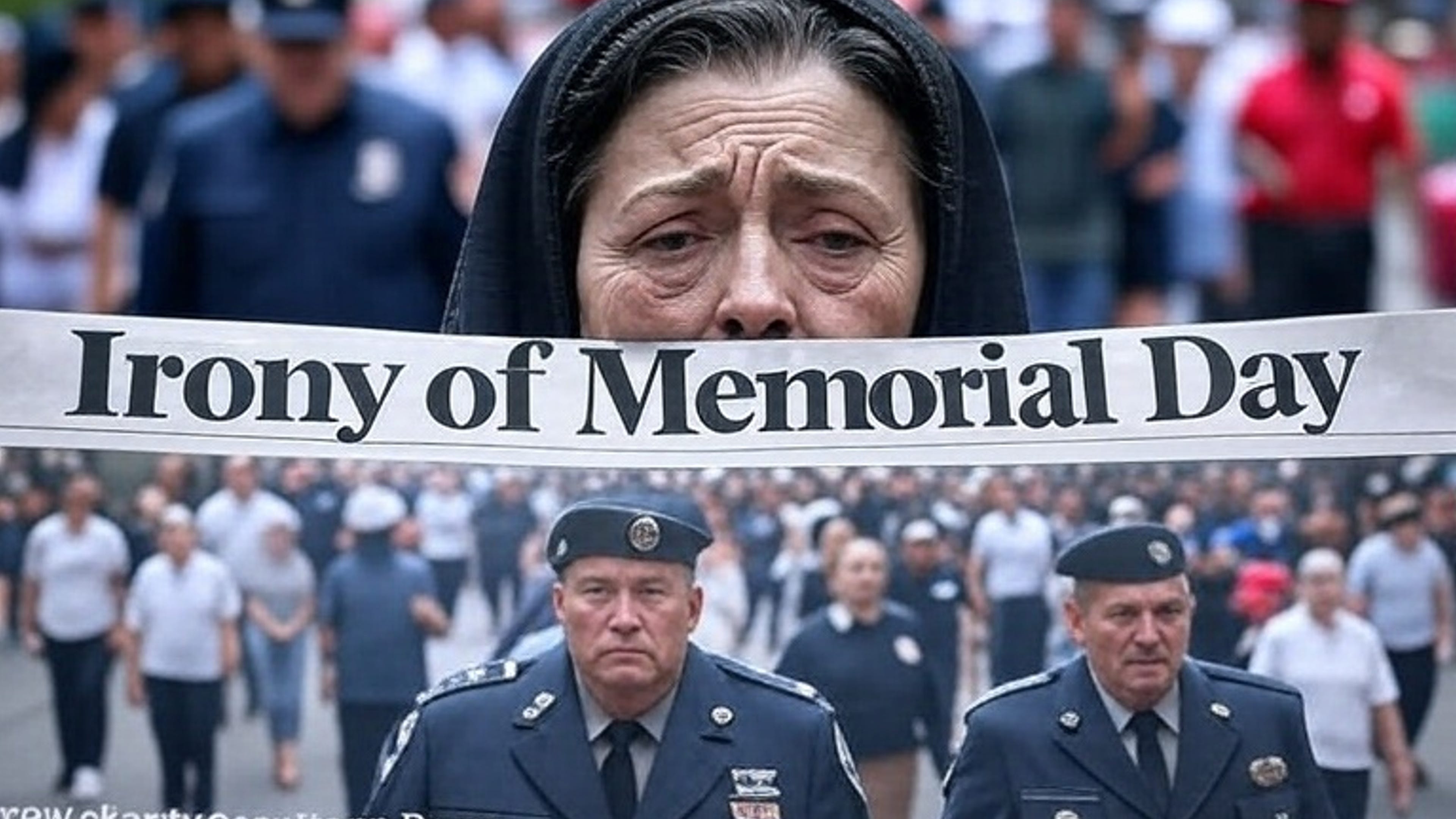
Memorial Day stands as a hallowed occasion in the American calendar, a time to honor the brave men and women who made the ultimate sacrifice in service to their nation. It is a day steeped in tradition, where families gather at cemeteries, lay wreaths, and reflect on the courage of those who fell defending the ideals of freedom and democracy. The solemn bugle call of Taps echoes across graveyards, and flags are lowered to half-mast in reverence for the soldiers, sailors, airmen, and marines who gave their lives. Yet, beneath this veneer of national gratitude lies a troubling reality—a grotesque charade orchestrated by the very architects of these soldiers’ demise: inept generals, corrupt politicians, and greedy corporate leaders who profit from the military-industrial complex. This essay explores the traditional platitudes of Memorial Day while exposing the insidious forces that have turned this day of mourning into a stage for hypocrisy and betrayal.
The Sanctity of Memorial Day: A National Ritual
Memorial Day, observed on the last Monday of May, is a time to commemorate the fallen heroes who defended the United States against threats foreign and domestic. It is a day of unity, where communities pause to honor the selflessness of those who answered the call of duty, often at the tender age of eighteen or nineteen. From the hallowed grounds of Arlington National Cemetery to small-town memorials, Americans gather to pay tribute with speeches, parades, and moments of silence. The imagery is poignant: veterans in crisp uniforms, families clutching photographs of their loved ones, and children waving flags in innocent patriotism. Politicians deliver stirring orations, extolling the virtues of sacrifice and the enduring strength of the nation. Corporate leaders, too, join the ceremonies, offering platitudes about supporting the troops and their families. These rituals are meant to reaffirm a collective gratitude for those who ensured America’s security and prosperity.
The rhetoric of Memorial Day is familiar and comforting. We speak of “heroes who gave their all,” of “freedom’s price,” and of a debt that can never be repaid. We invoke the memory of battles fought in distant lands—World War II, Korea, Vietnam, Iraq, Afghanistan—and celebrate the valor of those who faced the enemy so that we might live in peace. These sentiments are not without merit, for the courage of America’s soldiers is undeniable. Many enlisted as teenagers, driven by a sense of duty or a desire to protect their homeland. Their sacrifices deserve recognition, and Memorial Day provides a moment to reflect on their loss and the grief of their families.
The Dark Underbelly: Generals, Politicians, and Corporate Profiteers
Yet, as we stand at the graves of these fallen heroes, a troubling question emerges: who bears responsibility for their deaths? The traditional narrative of Memorial Day glosses over the uncomfortable truth that many of these soldiers died not because of inevitable conflicts but due to the machinations of a corrupt and self-serving elite. The generals, politicians, and corporate leaders who parade through cemeteries on Memorial Day are not merely mourners; they are the architects of the wars that claimed these lives. Their presence at these solemn ceremonies is not an act of homage but a brazen display of hypocrisy, as they cloak their complicity in patriotic rhetoric.
Consider the generals, adorned in their meticulously pressed uniforms, laying wreaths with somber expressions. These are the men who devised the strategies and issued the orders that sent young soldiers into harm’s way. Far too often, their plans were flawed, their tactics outdated, and their priorities misaligned with the realities on the ground. From the quagmire of Vietnam to the protracted occupations of Iraq and Afghanistan, American military leadership has repeatedly demonstrated incompetence, prioritizing career advancement and political favor over the lives of their troops. These generals, elevated through a system of cronyism and opportunism, are not the strategic masterminds of popular imagination but rather bureaucrats who climbed the ranks by perpetuating a cycle of failure. Their presence at Memorial Day ceremonies is an affront to the soldiers they failed, a mockery of the lives lost to their ineptitude.
Equally culpable are the politicians who set the stage for these conflicts. From presidents to congressional representatives, governors to mayors, these figures craft the policies and budgets that propel the nation into war. Their motives are rarely pure; backroom deals, campaign contributions, and corporate lobbying often dictate their decisions. The Gulf of Tonkin incident, which escalated U.S. involvement in Vietnam, was based on exaggerated claims, if not outright lies. The invasion of Iraq in 2003, sold to the public as a necessary response to weapons of mass destruction, was later revealed to be grounded in faulty intelligence and geopolitical ambitions. These wars, and countless others, were not fought for freedom but for power, profit, and political expediency. On Memorial Day, these politicians deliver rehearsed speeches, their faces etched with feigned sorrow, while their policies continue to send young men and women to die in conflicts with no clear objectives or tangible victories. Their crocodile tears are an insult to the families who mourn.
At the heart of this betrayal lies the military-industrial complex, a web of corporate interests that thrives on perpetual conflict. Defense contractors, energy companies, and financial institutions profit immensely from war, lobbying politicians to maintain a state of global instability. These corporate leaders, who rarely set foot on a battlefield, are the puppeteers behind the generals and politicians. They fund think tanks that advocate for military intervention, secure lucrative contracts for weapons and logistics, and prolong conflicts to maximize shareholder value. On Memorial Day, they appear at ceremonies, offering hollow condolences while their bank accounts swell with the spoils of war. Their presence is a stark reminder that the sacrifices of American soldiers are commodified, their deaths a line item in a corporate ledger.
A Nation Invaded: The Ultimate Irony
Perhaps the most egregious betrayal is the state of America’s borders, left wide open while its soldiers fight abroad. Memorial Day, meant to honor those who defended the nation, is now a surreal spectacle where the very enemies these soldiers fought—or their kin—can freely enter the United States. Decades of wars in the Middle East, Southeast Asia, and beyond were justified as necessary to protect American interests, yet the nation’s borders remain porous, allowing millions to cross unchecked. In some cases, individuals from the same groups or regions that American soldiers battled overseas now reside in American towns, sometimes mere miles from the cemeteries where the fallen are buried. This is not an accident but a consequence of the same political and corporate forces that orchestrate wars for profit. Politicians, beholden to globalist agendas and corporate donors, prioritize open borders over national security, while generals remain silent, complicit in their failure to defend the homeland.
The irony is staggering. Families of fallen soldiers gather to mourn, unaware that the individuals or ideologies their loved ones died fighting may now be present in their communities, attending the same Memorial Day parades or concerts. These events, once solemn tributes, have become commercialized spectacles—parades, barbecues, and concerts where the lines between friend and foe blur. The enemies of yesterday are the neighbors of today, welcomed by a government that profits from both war and migration. This juxtaposition transforms Memorial Day into a theater of the absurd, where the sacrifices of the fallen are trivialized by the presence of those who opposed them.
A Call for Accountability
Memorial Day should be a time of reflection, not only on the bravery of the fallen but also on the failures that led to their deaths. The generals, politicians, and corporate leaders who perpetuate this cycle of war and betrayal must be held accountable. Their war crimes—whether in the form of reckless military strategies, deceitful policies, or profiteering—demand justice. The American people, too, bear responsibility for electing leaders who prioritize power and wealth over the lives of their soldiers. The voters who remain willfully ignorant, seduced by patriotic platitudes, enable this travesty to continue.
The wars of the past century—Vietnam, Iraq, Afghanistan, and countless smaller conflicts—have rarely achieved their stated goals. With the exception of the Kuwait War, a brief and overwhelming victory against a vastly outmatched Iraqi army, American military engagements have been marked by vague objectives, prolonged occupations, and staggering human and financial costs. These conflicts, driven by lies and ulterior motives, have enriched the elite while leaving soldiers and their families to bear the consequences. Memorial Day must become a day of reckoning, where the nation confronts the truth about its leadership and demands an end to senseless wars.
Conclusion
Memorial Day is a sacred occasion to honor the fallen, to remember the young men and women who gave their lives for their country. Yet, it is also a day tainted by the presence of those who engineered their deaths: the incompetent generals, the corrupt politicians, and the greedy corporate leaders who profit from the military-industrial complex. As wreaths are laid and speeches delivered, the hypocrisy is palpable. These figures, draped in the trappings of patriotism, are the true architects of America’s tragedies, sending soldiers to die in wars of questionable necessity while allowing the nation’s borders to be overrun by the very forces they claim to oppose. The families of the fallen deserve better; they deserve a nation that honors their loved ones not with empty gestures but with accountability and reform. Until the generals, politicians, and corporate elites are held to account, Memorial Day will remain a bittersweet paradox—a day of mourning overshadowed by betrayal, where the sacrifices of the brave are exploited by the corrupt.
Summary
On Memorial Day, America pauses to honor its fallen heroes with wreaths and solemn words, but a darker truth looms. Beneath the patriotic surface, shadowy figures exploit the sacrifices of the brave. Who truly bears the cost of war, and what lies behind the ceremonies? The nation demands answers.
#MemorialDayTruth #HonorTheFallen #MilitaryBetrayal #AccountabilityNow #PatrioticHypocrisy
Tags: Memorial Day, fallen heroes, military-industrial complex, corrupt leadership, national accountability
Watch video on X, Rumble, Odysee, BitChute, Brighteon, Facebook, Gab, Gettr, Minds, or realfreenews.com