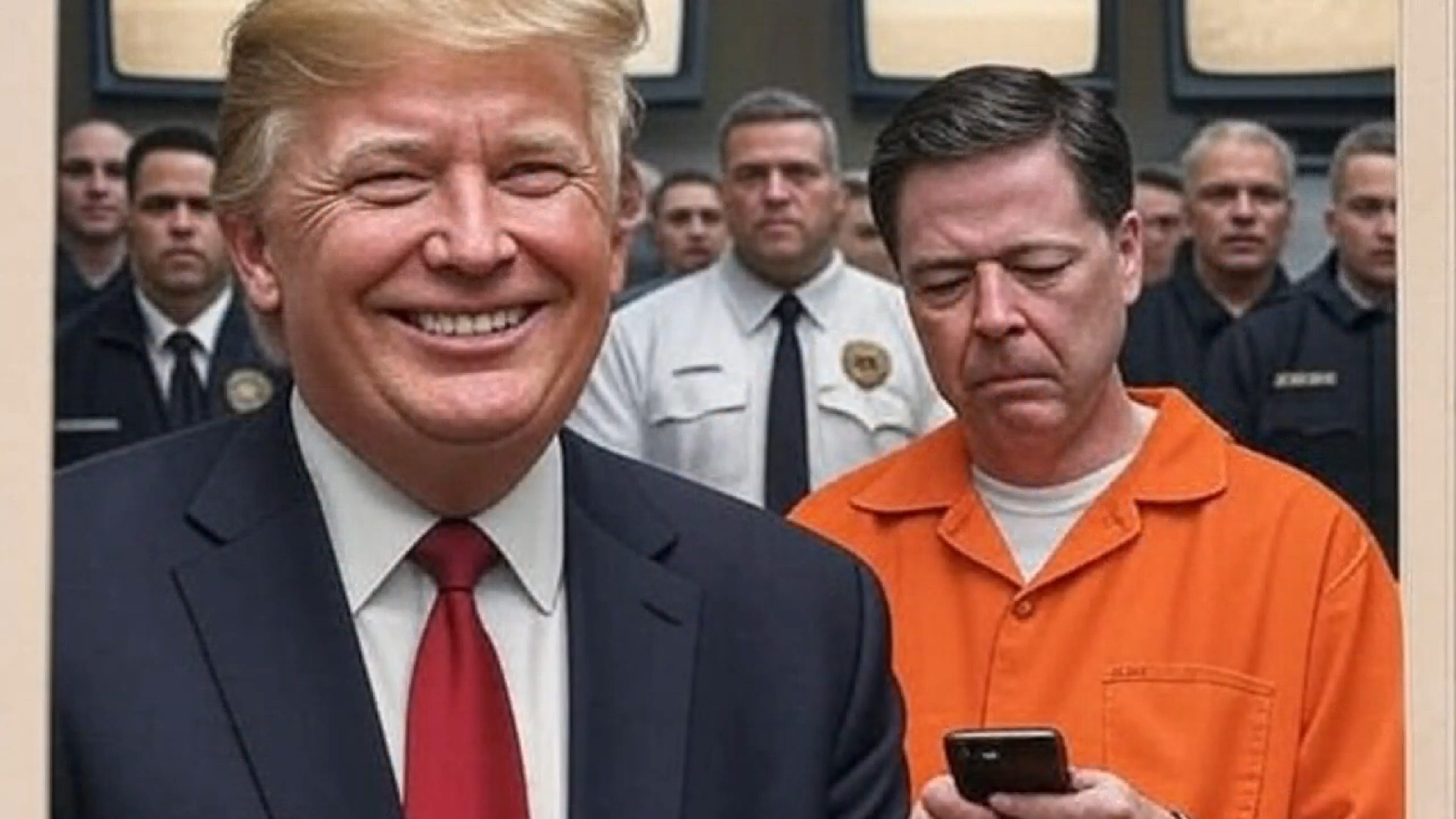
James Comey, former FBI Director, has long evaded accountability for a career marked by allegations of corruption and abuse of power, but his May 15, 2025, “8647” social media post—a deliberate call to assassinate President Donald Trump—has thrust him into the spotlight as a criminal suspect. This article catalogs the extensive list of possible crimes Comey may have committed with this post, alongside his historical offenses, detailing the applicable laws, potential punishments, and the agencies responsible for investigating and prosecuting him. While ordinary Americans have faced severe consequences for harmless online humor, Comey has so far escaped criminal indictment or arrest despite actions that may cause for immediate arrest, exposing a systemic double standard. Under the new leadership of Attorney General Pam Bondi and FBI Director Kash Patel, the Department of Justice (DOJ) and FBI face scrutiny for a lack of high-profile indictments, but the Comey case presents a critical opportunity to expedite prosecution, set a precedent, and dismantle a broader network of corrupt elites.
The “8647” Post: A Catalog of Crimes
Comey’s “8647” post, where “86” means “kill” and “47” refers to Trump as the 47th President, is a verifiable death threat with far-reaching implications. As a former FBI Director, U.S. Attorney, and Deputy Attorney General, Comey’s expertise in coded communication makes his intent undeniable. Below is a comprehensive list of possible crimes stemming from this post, ranging from the most obvious to less directly related offenses:
Threatening the President (18 U.S.C. § 871): This federal statute criminalizes knowingly and willfully making a threat against the President, punishable by up to 5 years in prison and a fine. Comey’s “8647” post, a clear coded threat, meets this threshold, especially given his law enforcement background and anti-Trump history since his 2017 dismissal.
Incitement to Violence (18 U.S.C. § 373): By posting “8647,” Comey may have solicited others to commit a crime of violence against Trump, a felony carrying up to 20 years if the solicited crime (murder) is a federal offense with a maximum penalty exceeding 1 year. Given his public profile, this post could inspire unstable individuals or groups to act.
Seditious Conspiracy (18 U.S.C. § 2384): If Comey coordinated with others to use force to oppose the U.S. government or overthrow its authority (by targeting the President), this charge applies, punishable by up to 20 years. The post’s potential to signal anti-Trump extremists within his network raises this possibility.
Conspiracy to Commit Murder (18 U.S.C. § 1117): If evidence shows Comey collaborated with others to plan Trump’s murder, this federal crime carries a maximum penalty of life imprisonment. The post’s deliberate nature and his network’s potential involvement make this a plausible charge.
Cyberstalking (18 U.S.C. § 2261A): By posting a threat that could cause substantial emotional distress to Trump or his family, Comey may have committed cyberstalking, punishable by up to 5 years. The public nature of the post amplifies its impact, distinguishing it from private threats.
Making False Statements (18 U.S.C. § 1001): If Comey lied to federal investigators (the Secret Service or FBI) about the post’s intent, claiming ignorance despite his expertise, this charge applies, carrying up to 5 years in prison.
Obstruction of Justice (18 U.S.C. § 1503): Deleting the post after backlash from Trump’s allies, including Donald Trump Jr. and Tulsi Gabbard, could be construed as an attempt to impede a federal investigation, a crime punishable by up to 10 years.
Misuse of Government Knowledge (18 U.S.C. § 1905): As a former FBI Director, Comey’s use of law enforcement knowledge (coded language like “86”) for criminal purposes may violate this statute, though this is less directly applicable, with penalties including up to 1 year in prison and fines.
Historical Crimes: A Pattern of Corruption
Comey’s “8647” post is not an isolated act but part of a broader pattern of alleged criminal behavior during and after his tenure as FBI Director:
False Statements to Congress (18 U.S.C. § 1001): Comey allegedly lied to Congress in 2020 about his actions during the Trump-Russia investigation, a claim supported by an Inspector General report. This crime carries up to 5 years per count, and the statute of limitations has not expired.
Obstruction of Justice (18 U.S.C. § 1503): Comey’s handling of the 2016 Clinton email investigation and Trump-Russia probe has been criticized for bias, potentially obstructing justice by manipulating investigations for political ends, a felony with a maximum penalty of 10 years.
Conspiracy to Defraud the United States (18 U.S.C. § 371): Allegations that Comey worked with others to “set up” Trump and General Michael Flynn, which could constitute a conspiracy to interfere with governmental functions, punishable by up to 5 years.
Misprision of Felony (18 U.S.C. § 4): If Comey had knowledge of felonies (by associates during his FBI tenure) and failed to report them, this crime applies, carrying up to 3 years in prison.
Agencies Involved and Their Roles
Multiple agencies at various levels can investigate and prosecute Comey:
Secret Service: Responsible for protecting the President, the Secret Service is already investigating Comey for the “8647” post. They can recommend charges under 18 U.S.C. § 871 and arrest him for this threat.
FBI: Under Kash Patel, the FBI can investigate Comey for federal crimes like incitement, seditious conspiracy, and conspiracy to commit murder. They can also arrest him for these offenses, given their jurisdiction over domestic threats and national security.
Department of Justice (DOJ): Led by Pam Bondi, the DOJ can charge Comey with all listed federal crimes, from threatening the President to historical offenses like false statements and obstruction. Federal prosecutors within the DOJ, such as those in the U.S. Attorney’s Office for the District of Columbia, can file indictments.
Local and State Agencies: While less likely to lead, agencies like the Washington, D.C., Metropolitan Police Department could assist in arrests if Comey is located there. State-level charges, such as cyberstalking under D.C. Code, could apply but would likely defer to federal prosecution.
Punishments: Maximum, Minimum, and Comparisons
Comey’s potential punishments vary by crime:
Maximum Punishment: If charged with all applicable crimes and convicted consecutively, Comey faces a theoretical maximum of life imprisonment (for conspiracy to commit murder) plus additional years: 5 years (threatening the President), 20 years (incitement), 20 years (seditious conspiracy), 5 years (cyberstalking), 5 years (false statements for the post), 10 years (obstruction for the post), 5 years (false statements to Congress), 10 years (obstruction historically), 5 years (conspiracy to defraud), and 3 years (misprision). This totals life plus 88 years, though courts rarely impose consecutive maximums.
Minimum Punishment: If convicted only of the primary charge (18 U.S.C. § 871) with mitigating factors (no prior convictions), Comey could face probation or a fine, though the severity of the threat makes a custodial sentence likely, starting at 1-2 years.
Comparison to Normal Person: Ordinary citizens have faced significant penalties for far lesser acts. Douglass Mackey was sentenced to 7 months in 2023 for 2016 satirical memes suggesting Democrats could vote by text, a harmless joke labeled as election interference by the DOJ. John Rivello received 1 year of probation in 2018 for sending a flashing GIF to a journalist, causing a seizure, an act of cyberstalking that was a targeted prank rather than a public threat. Tyler Barriss was sentenced to 20 years in 2019 for a swatting prank that led to an innocent man’s death, a tragic outcome from a private act not meant to incite broader violence. A normal person posting “8647” would likely face immediate arrest and 3-5 years for the threat alone, with harsher sentences if additional charges like incitement were pursued, especially given Comey’s influence and expertise.
The DOJ and FBI Under Scrutiny: An Opportunity for Expedited Action
The DOJ under Pam Bondi and FBI under Kash Patel are facing scrutiny for a lack of high-profile indictments or arrests, as noted in web sources like AOL. This is understandable—they have recently taken office, navigating new roles, hiring staff, firing those deemed unfit, and organizing paperwork to align their teams. However, the Comey case is a critical instance where they cannot afford to falter. It demands expedited investigation and prosecution, as Comey has handed them all the evidence needed on a silver platter—his post, its deletion, and his public profile provide clear incrimination. Some express frustration over the DOJ’s silence, urging faster action, but the transition period explains the delay. This case offers Bondi and Patel a chance to set a precedent for their administration, demonstrating a commitment to swift justice.
A Broader Reckoning: Comey as a Gateway to Justice
Comey’s prosecution for the “8647” post should be the starting point for a broader reckoning. His historical crimes—lying to Congress, obstructing justice, and conspiring to defraud by targeting Trump and Flynn—reflect a pattern of flagrant abuse, as Comey himself was vocal and smug about these actions, never anticipating a new administration would turn the tables. Now, with the tables turned, law enforcement must maximize punishment for the “8647” post and use it to pursue additional charges. A conviction could pressure Comey to cooperate, exposing co-conspirators and networked criminals within the government who, like him, believed they were untouchable. Starting with Comey, the “head of the snake,” authorities can dismantle a broader web of corruption, setting a new standard for accountability.
The Dichotomy: Government Abuse vs. Elite Impunity
The contrast between Comey’s actions and the treatment of average Americans reveals profound hypocrisy. Citizens like Douglass Mackey faced the full force of the FBI, DOJ, and local law enforcement for posts and actions that were comedic and posed no real threat to public safety. Mackey, a Trump supporter, was sentenced to seven months in 2023 for 2016 memes that jokingly suggested Democrats could vote by text—a satirical act with no intent to harm but labeled as election interference. Like many individuals, Douglass Mackey typically sat at home or on his phone, sharing with small groups of friends, not inciting widespread violence or commanding harm. These individuals are often joking, pranking, or communicating in personal contexts, never imagining their actions could be twisted into fabricated crimes. Yet, the government, influenced by figures like Comey, abused its power to selectively prosecute them, weaponizing ambiguous laws to suppress dissent and score political points. The result was incarceration, probation, or significant legal consequences—all for actions that lacked the malicious intent of Comey’s post.
Meanwhile, Comey, a corrupt former official with a history of exploiting power for personal and networked criminal gain, posted a real threat to assassinate the President and has so far escaped criminal indictment or arrest despite actions that may cause for immediate arrest as of May 17, 2025. This leniency is unacceptable. Comey’s “8647” post aligns with a pattern of others using the same code to signal harm, as “8647” has been recognized in law enforcement contexts as a call to kill specific targets. Unlike average citizens, Comey is not a random jokester—he is a public figure who understands the weight of his words, particularly given his past roles. He posted “8647” to send a message, fully intending for it to be seen and acted upon, a far cry from the innocent humor of Mackey, whose limited reach and comedic or private intent posed no expressed real danger.
Conclusion
The abuse of power against ordinary Americans like Douglass Mackey, —prosecuted for humorous, non-threatening memes—reveals a justice system that selectively targets citizens while shielding corrupt elites like James Comey. Comey’s “8647” post was a deliberate call to assassinate President Trump, a real threat backed by his expertise, vendetta, and the coded significance of the number, including its connection to the 8647 days since 9/11. Facing potential charges from threatening the President to seditious conspiracy, Comey could face life imprisonment plus 88 years at maximum, or a minimum of 1-2 years, far exceeding the punishments meted out to citizens for lesser acts. The Secret Service and FBI must investigate, while the DOJ under Pam Bondi and FBI under Kash Patel must charge and arrest him, using this case to expedite prosecutions and set a precedent. Comey’s prosecution can also unravel his network, targeting co-conspirators and corrupt officials. Despite his actions that may cause for immediate arrest, Comey has so far escaped criminal indictment or arrest, exposing a glaring hypocrisy. This case is a critical opportunity to dismantle the systemic leniency for elites, restore equal justice, and set a precedent that public figures who abuse their influence face the harshest consequences. Comey must be held accountable, or the principle of impartial law remains a hollow promise.
Summary
A cryptic social media post ignites a firestorm, thrusting a former FBI chief into scrutiny for alleged crimes threatening national stability. Accusations of corruption and double standards swirl as new leadership faces pressure to act swiftly, exposing a web of elite impunity. Will justice prevail, or will leniency persist?
Crimes Related to the “8647” Post
Threatening the President (18 U.S.C. § 871): Posting “8647,” a coded death threat against President Trump.
Max Penalty: 5 years in prison, fine.Incitement to Violence (18 U.S.C. § 373): Soliciting others to commit violence against Trump via the post.
Max Penalty: 20 years in prison.Seditious Conspiracy (18 U.S.C. § 2384): Coordinating with others to oppose U.S. government by targeting Trump.
Max Penalty: 20 years in prison.Conspiracy to Commit Murder (18 U.S.C. § 1117): Collaborating to plan Trump’s murder.
Max Penalty: Life imprisonment.Cyberstalking (18 U.S.C. § 2261A): Posting a threat causing emotional distress to Trump or his family.
Max Penalty: 5 years in prison.Making False Statements (18 U.S.C. § 1001): Lying to investigators about the post’s intent.
Max Penalty: 5 years in prison.Obstruction of Justice (18 U.S.C. § 1503): Deleting the post to impede investigation.
Max Penalty: 10 years in prison.Misuse of Government Knowledge (18 U.S.C. § 1905): Using law enforcement knowledge (coded language) for criminal purposes.
Max Penalty: 1 year in prison, fine.
Historical Crimes
False Statements to Congress (18 U.S.C. § 1001): Lying in 2020 about Trump-Russia investigation actions.
Max Penalty: 5 years per count.Obstruction of Justice (18 U.S.C. § 1503): Manipulating Clinton email and Trump-Russia probes for political ends.
Max Penalty: 10 years in prison.Conspiracy to Defraud the United States (18 U.S.C. § 371): Working to “set up” Trump and Flynn, interfering with government functions.
Max Penalty: 5 years in prison.Misprision of Felony (18 U.S.C. § 4): Failing to report known felonies by associates during FBI tenure.
Max Penalty: 3 years in prison.
#JamesComey #8647Threat #TrumpAssassination #DOJAccountability #EliteImpunity
Tags: James Comey, 8647 post, Trump threat, DOJ prosecution, corruption