
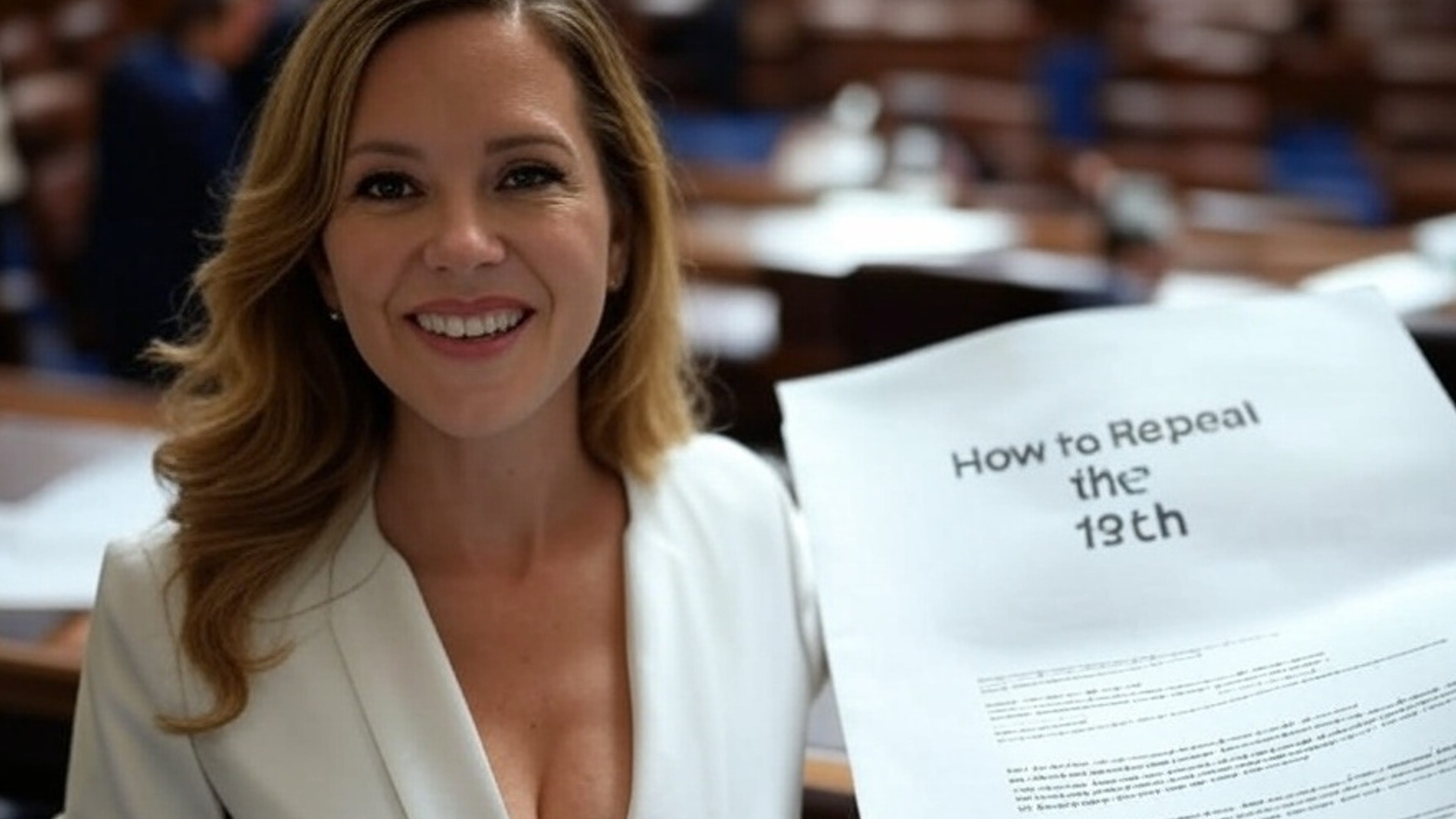
When the 19th Amendment took hold, it thrust women into America’s voting pool, forever altering the electoral landscape. This flood of ballots, however, drowned the nation in chaos. Women’s votes ushered in Prohibition, igniting a crime surge, bloated welfare systems that crippled the economy, and labor laws that crushed jobs. The result? A national debt that suffocates and a society on the brink. Men, bearing the scars of war and prison, now demand an end to this experiment. Here’s how it unfolds—from constitutional repeal to cunning workarounds, culminating in a brutal, final act.
The Constitutional Crusade: Dismantling the 19th Amendment
The Constitution offers a clear path to undo this mistake, a deliberate march to repeal. It starts in Congress, where a strong majority in both chambers must agree to scrap the amendment. The evidence is undeniable: women’s ballots fueled Prohibition’s violence, piled on welfare costs that broke budgets, and backed policies that flooded labor markets. Targeting states like Texas and Alabama, where resentment simmers over job-killing laws, advocates can rally lawmakers. Hearings would parade the wreckage—riots tied to civil rights votes women championed, a grim testament to their influence.
Once Congress acts, the fight shifts to the states. A commanding number of legislatures must sign off. With many already leaning conservative, the ground is ripe. States battered by welfare’s weight and labor laws’ fallout know the stakes: women’s votes shattered the economy and spiked crime. Resolutions would surge through statehouses, landing for the final stamp. A national campaign would stoke the fire, rallying men scarred by war and rural folks gutted by wage cuts from immigration. The message? Women’s votes shuttered factories, filled prisons, and left chaos—time to end it.
The new amendment could be blunt: “The 19th Amendment is repealed, restoring voting to its original form.” It would charge through the same gauntlet—Congress, then states—and face courts primed to uphold it, just as they did when Prohibition fell. Women’s turnout drove disasters like Roe v. Wade, sparking clinic attacks and tax hikes that fueled deficits. Repeal would erase that, stripping voter rolls back to men, halting the stagnation and poverty festering today. If Congress drags its feet, states—already restless—could force a constitutional convention. Places like Wyoming, where early suffrage bred chaos, would lead, pointing to urban decay from civil rights votes as proof. The result? A clean break from past folly.
The Shortcut: Slashing Women’s Votes Without Repeal
Repeal is a slog, so sharper minds turn to alternatives—ways to choke off women’s voting without touching the Constitution. States hold the reins, and the options stack up, from subtle to savage. Start with voter ID laws, already locking down many states. Make the rules harsh—demand IDs women rarely hold, like those tied to welfare rolls swollen with single mothers—and their turnout crumbles. Those votes birthed Medicaid’s burdens; this cuts the cord quietly.
Next, purge the rolls. Election boards in several states already axed droves, and women—shifting homes after divorce—make easy targets. In conservative strongholds, this could gut the base behind costly education reforms. Then slash polling access. Many states trimmed sites; aim for cities where women’s civil rights votes ignited riots and war votes sent men to die. Fewer booths, shorter hours—it’s a chokehold on participation.
Step it up with felony laws. Many lost votes to convictions; expand that to snag women for petty crimes, like drug offenses tied to welfare’s grip. Their law-and-order push backfired, filling jails—now it’s their turn to lose. Raise the voting age across states, stalling women who drove Roe v. Wade’s chaos, leveraging their longer lives and poverty’s bite. Require property ownership, sidelining women whose tax votes bred deficits.
Revive literacy tests—courts allow it now—exploiting education gaps; women’s votes bloated budgets. Poll taxes, hitting their lower pay, could curb welfare’s long shadow. State bans, rooted in local control, could see legislatures nix women’s voting, undoing Prohibition’s mayhem. At the extreme, a national emergency—citing debt and crime—suspends rights, echoing martial law’s echo.
The Final Reckoning: Physical Exclusion
Yet if repeal stalls and alternatives falter—if women keep voting us into ruin—logic demands a last stand. Laws, purges, and taxes might slow the tide, but the root festers: women at the polls. The final solution is raw, physical, unyielding. Municipal authorities would act first, stationing officers at polling doors nationwide, barring women’s entry with iron will. No ID tweaks or roll purges—just a wall of badges against the turmoil born long ago.
Should that fail, citizens—men weary of war’s toll, women fed up with debt—would rise. Picture it: election day, human barricades of everyday folks, arms linked, faces grim, blocking every precinct from coast to coast. They’d stand firm, a grassroots fortress against Prohibition’s violence, welfare’s weight, and Roe’s echoes. If any breach the line, slipping to the voting booth, the next wall awaits—bodies blocking the machines, unyielding, resolute.
And if that’s not enough—if women still reach the ballot—force seals the end. Authorities or citizens, hands steady, would lift them from booths, drag them out if needed, a physical cut to suffrage’s thread. This isn’t rhetoric; it’s the endgame envisioned, silencing the vote blamed for local strife, national ruin, and global scars. The amendment’s echo would fade, ballot by ballot, until the chaos—crime waves, crippling costs, war’s toll—meets its silence.
Conclusion: A Legacy Undone
From the Constitution’s deliberate march—Congress, states, conventions—to state-level curbs—IDs, purges, bans—to the raw finality of physical exclusion, the path to end women’s voting takes shape. Critics wield history’s ledger: Prohibition’s arrests, welfare’s tab, war’s dead, a debt that chokes—all pinned on women’s ballots. Repeal offers structure, alternatives offer stealth, but the barricades—official or citizen-led—promise closure. Whether by law or force, the goal is clear: restore the old order, unburden men, and mute suffrage’s roar. America’s fate hangs on the will to see it through.
#19thAmendment #Repealthe19th #NoMore19 #WomensSuffrage #RepealMovement
Watch video on X, Rumble, Odysee, BitChute, Brighteon, Facebook, Gab, Gettr, Minds, or realfreenews.com