Introduction
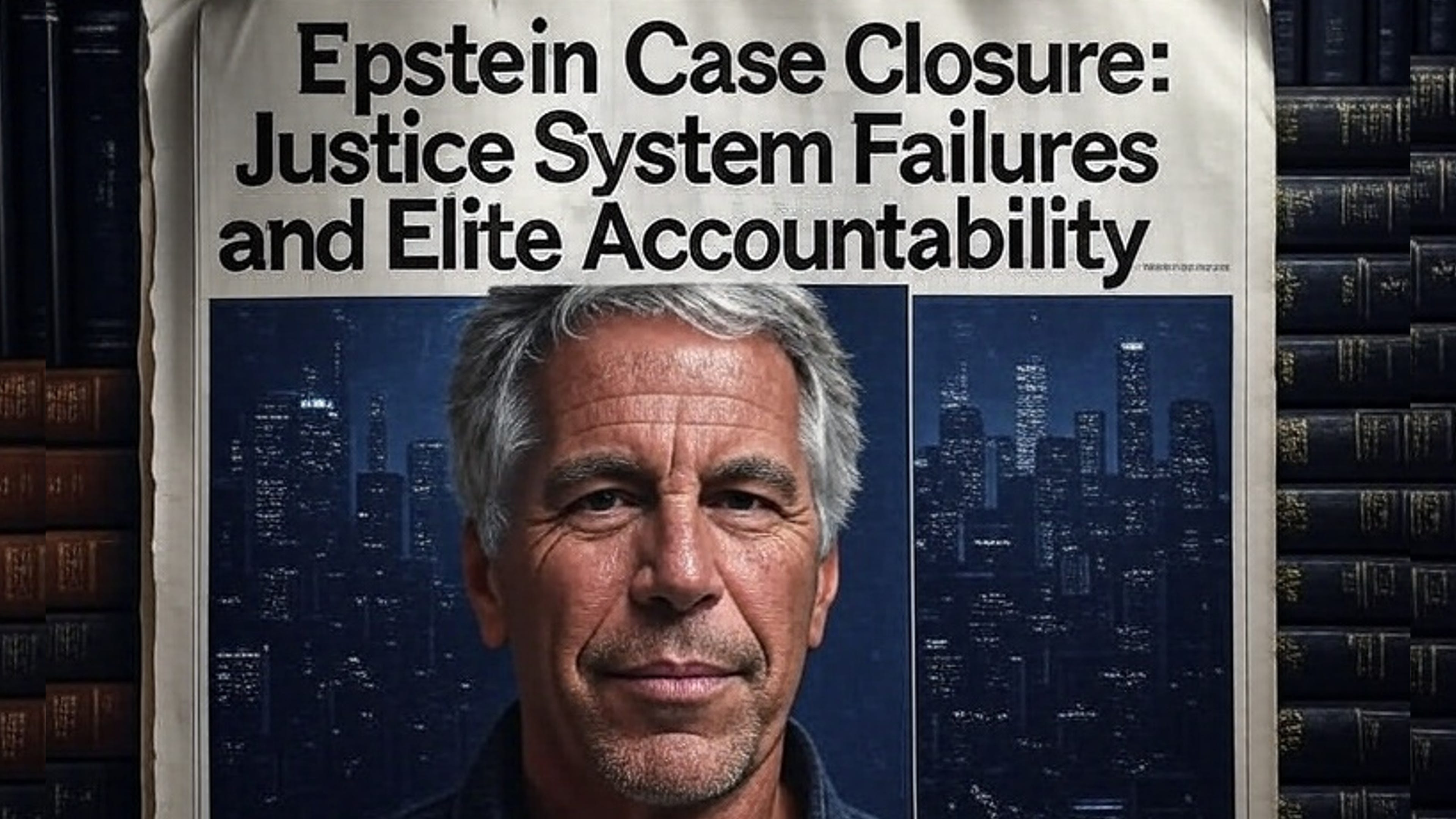
The Jeffrey Epstein case, a sprawling scandal of trafficking and elite connections, has become a lightning rod for public distrust in the American justice system’s capacity to hold powerful figures accountable. Epstein, a financier linked to global luminaries, orchestrated a network abusing minors across his properties in Manhattan, Palm Beach, and Little St. James from the 1990s to 2018. His arrest in 2019 by the Southern District of New York, followed by a death officially ruled as suicide, and the Department of Justice’s closure of the investigation in July 2025 under Attorney General Pam Bondi, FBI Director Kash Patel, and Deputy FBI Director Dan Bongino, have provoked widespread outrage. Despite voluminous evidence, including flight logs, a contact book listing 1,500 names, over 250 victim testimonies, and seized digital media, the DOJ concluded that no new charges were viable, citing insufficient evidence to pursue third parties. This decision, set against a backdrop of perceived systemic bias favoring influential figures like Bill Clinton, Prince Andrew, and Donald Trump, has intensified public demands for accountability. The 2008 non-prosecution agreement granting immunity to co-conspirators, irregularities surrounding Epstein’s death, and Bondi’s unfulfilled claims of a “client list” and extensive video evidence fuel suspicions of a cover-up. The DOJ’s inaction, despite its vast investigative resources, prompts questions about legal constraints, political motives, and potential concealment. Since 2018, media coverage has amplified the case’s prominence, highlighting Epstein’s trafficking network and its elite connections, yet the closure leaves victims and society questioning whether justice was deliberately withheld. This article examines the evidence, Epstein’s death, the DOJ’s closure, and public expectations, analyzing the multifaceted reasons—legal barriers, political expediency, elite evasion, and speculative cover-ups—behind the case’s termination, revealing a justice system strained by the challenges of prosecuting the powerful and the weight of public demands for equality under the law.
Part I: Evidence and Legal Barriers to Prosecution
The Epstein case’s closure in July 2025 hinges on substantial evidence that failed to yield new prosecutions, constrained by stringent legal barriers. The FBI possesses flight logs documenting over 100 passengers on Epstein’s private plane, including Bill Clinton, Prince Andrew, and Donald Trump, alongside victims like Virginia Giuffre, who traveled to trafficking hubs like Little St. James. A single contact book with 1,500 names, seized during the 2005 Palm Beach investigation and referenced in the 2019 Manhattan raid, lists social and business associates, some annotated with terms suggesting illicit roles. Over 250 victim testimonies detail abuse by Epstein and associates like Prince Andrew, yet these led to civil settlements rather than criminal charges, as seen in Andrew’s 2022 $16 million settlement with Giuffre. Digital evidence from 2019 raids, including CDs, hard drives, and surveillance footage, was reviewed, but the DOJ’s 2025 memo concluded no incriminating material was found, a claim the public questions given Epstein’s known surveillance systems. Financial records showing victim payments and offshore accounts hint at money laundering, yet no elite was implicated, fueling speculation of evidence suppression.
The 2008 non-prosecution agreement, negotiated under Alexander Acosta, granted immunity to co-conspirators like Sarah Kellen, blocking federal charges unless new, post-2008 evidence emerges. State-level abuse charges face statutes of limitations of five to seven years, unlike federal trafficking laws, but corroboration remains elusive. Court-ordered seals protecting over 1,000 victims’ identities restrict access to evidence like surveillance footage, limiting its use in open court. The DOJ’s review of 300 gigabytes by 1,000 agents found leads exhausted, citing encrypted or damaged data. Speculation suggests the DOJ avoided prosecutions to protect elites who could leverage legal defenses or flee to non-extradition countries. The failure to pursue financial tracking via FinCEN or pressure witnesses like Kellen indicates a lack of resolve, leaving victims without justice and fueling beliefs in systemic bias toward the powerful.
Part II: Epstein’s Death and Systemic Anomalies
Epstein’s death on August 10, 2019, officially ruled a suicide, remains a focal point of public skepticism due to irregularities suggesting incompetence or deliberate orchestration. Found hanged with a bedsheet in his Metropolitan Correctional Center cell, Epstein’s death followed a July 2019 incident, possibly a suicide attempt or assault, and his premature removal from suicide watch against psychological advice. Malfunctioning cameras, the camera angle recording his incarceration, including a missing minute in 2025-released footage, and falsified guard logs by sleeping guards Tova Noel and Michael Thomas, raise doubts, though the 2019 autopsy and 2023 Inspector General report confirmed suicide. Epstein’s $500 million fortune, connections to prominent figures like Bill Clinton, William Barr, and William Burns, alleged intelligence ties through Ghislaine Maxwell’s father, and links to agencies like the CIA or Mossad and other intelligence figures underscore his extensive influence, raising questions about whether he was arrested without forewarning or under specific contingencies. The Southern District of New York’s sealed indictment prevented flight, but his failure to evade capture, despite a lenient 2008 plea, puzzles observers. Theories propose murder to silence him, a faked death for relocation to a non-extradition country, or protective custody to shield his network, driven by his potential to expose powerful figures.
The DOJ’s closure without addressing these anomalies intensifies suspicions. Reasons for inaction include legal constraints, as sealed evidence limited prosecution options, and political pressures, as Trump sought to focus on other priorities in July 2025. Speculation suggests the DOJ withheld incriminating footage to protect elites or leverage it for political blackmail, though the unsigned 2025 memo claims to have found no such evidence. The public questions how a connected financier was arrested without a tip-off, suspecting an orchestrated effort to silence him or exit him from public. The DOJ’s failure to pursue international leads, such as boat logs from Little St. James, reinforces beliefs that systemic failures or deliberate concealment protected Epstein’s associates, denying accountability for heinous crimes and leaving victims without closure.
Part III: Political Pressures and DOJ’s Strategic Choices
The DOJ’s closure of the Epstein case in July 2025, under Pam Bondi, Kash Patel, and Dan Bongino, reflects a confluence of political pressures, legal constraints, and strategic decisions. The DOJ reviewed 300 gigabytes of evidence, concluding no basis for new charges, despite Bondi’s earlier claims of a “client list” and extensive video evidence, later contradicted by Patel and case lawyers. The 2008 non-prosecution agreement, court seals protecting victim identities, and state statutes of limitations limited prosecution options. Bondi’s February 2025 release of mostly public records, including flight logs naming Trump, disappointed supporters expecting elite accountability. Trump’s reported frustration in July 2025, prioritizing issues like national emergencies, suggests a desire to end a divisive investigation that risked political fallout. The contrast with aggressive prosecutions, such as Daniel Mackey’s 2018 conviction for satirical memes or over 1,200 January 6 defendants charged for lesser offenses, underscores perceived bias toward elites and selective prosecution.
Speculative motives for closure include protecting powerful figures, as elites could delay cases with legal teams or flee to non-extradition countries. Theories also suggest Trump, linked to Epstein through plane flights and social circles, sought to avoid exposure, though no victim accuses him. Alternatively, the DOJ may have aimed to leverage evidence for political gain, though no proof currently publicly supports this. The public’s skepticism about the absence of incriminating footage, given Epstein’s surveillance, fuels cover-up theories. The DOJ’s decision to prioritize resources over an expansive but potentially low-yield investigation, rather than pursue financial or witness leads, suggests questionable pragmatic inaction. This failure to provide transparency or pursue accountability deepened public distrust, leaving victims and society convinced that the justice system prioritizes elite protection over justice for heinous crimes.
Part IV: Elite Evasion and Public Demand for Accountability
The Epstein case epitomizes public frustration with a justice system perceived to shield elites while punishing ordinary citizens. Federal trafficking laws, with no statute of limitations, should enable prosecutions, yet figures like Sarah Kellen, protected by the 2008 agreement, and Prince Andrew, who settled allegations civilly, remain uncharged. The DOJ’s 2025 closure, despite evidence of Epstein’s network, fuels beliefs that elites evade justice through wealth, legal maneuvering, or flight to non-extradition countries. The public questions the DOJ’s claim that no incriminating videos or photographs were found, suspecting suppression to protect powerful figures. Reasons for closure include legal barriers, as the 2008 agreement and court seals restricted evidence use, and political motives, as Trump prioritized other issues over a divisive case. Speculation suggests the DOJ avoided prosecutions to shield elites, leverage evidence for blackmail, or conserve resources for higher-priority initiatives.
Public demands for accountability, amplified by media since 2018, reflect a call for equality. The DOJ’s failure to pursue leads, such as international records or witness testimony, despite FBI capabilities, indicates a lack of resolve. Alternative approaches, such as releasing a redacted list of names or explaining evidence limitations, could have addressed public demands without violating victim privacy. Theories propose that Epstein’s death was orchestrated to silence him, protecting his network, or that the DOJ closed the case to avoid exposing Trump’s ties or to exploit evidence for undisclosed purposes. The closure benefits elites named in records, leaving victims betrayed and reinforcing perceptions of a system that favors the powerful over accountability for crimes against minors.
Conclusion
The Jeffrey Epstein case exposes a justice system grappling with legal, political, and ethical challenges, failing to deliver accountability for a trafficking network involving powerful figures. The DOJ’s July 2025 closure, citing insufficient evidence after reviewing 300 gigabytes, reflects a confluence of barriers: the 2008 non-prosecution agreement, court seals, and state statutes of limitations. Flight logs, a contact book, victim testimonies, and seized digital media confirm Epstein’s crimes but lack corroboration for new charges, leaving figures like Prince Andrew unprosecuted. Epstein’s suspicious death, marked by jail irregularities, fuels theories of murder or escape, suggesting possible concealment. Public disbelief that no incriminating footage was found, despite Epstein’s surveillance, underscores distrust. Reasons for closure span legal constraints, evidential gaps, elite evasion through wealth or flight, and political expediency to end a divisive case. The contrast between prosecutions of ordinary citizens for exaggerated charges, minor offenses, or victimless crimes and leniency toward elites underscores systemic bias in the justice system by those tasked with upholding the law, who neglect responsibilities or abuse power.
Epilogue
The Department of Justice’s decision to close the Jeffrey Epstein case in July 2025, despite the absence of statutes of limitations for federal sex trafficking, left a legacy of public distrust, as alternative approaches that could have addressed demands for transparency and accountability were not pursued due to legal, ethical, and political complexities. Releasing a redacted list of names from existing records, accompanied by a clear statement that association does not imply criminality, could have signaled openness to the public, countering perceptions of concealment while navigating potential defamation lawsuits from influential figures with robust legal resources. Pursuing limited prosecutions against facilitators, using fresh evidence to circumvent immunity agreements from 2008, might have encouraged cooperative testimonies revealing additional network members, though risks of acquittals due to insufficient corroboration and potential harm to victims deterred such actions. Issuing a detailed public statement clarifying investigative constraints—such as immunity protections, jurisdictional barriers, or inaccessible digital records—could have fostered trust by explaining why prosecutions stalled, balancing transparency with ethical obligations to protect victim privacy. Leveraging financial investigations through the Financial Crimes Enforcement Network to trace illicit payments or pursuing international leads via Mutual Legal Assistance Treaties with jurisdictions like the U.S. Virgin Islands or France might have uncovered new witnesses or financial trails, addressing public demands for deeper scrutiny. Pressing witnesses for cooperation, as seen in organized crime prosecutions, could have prompted disclosures from reluctant figures, though their immunity or silence posed challenges. Establishing an independent review panel, modeled on historical precedents like the Watergate special prosecutor, might have restored public confidence by objectively assessing evidence and recommending actions, ensuring impartiality without risking futile legal battles.
These approaches were avoided, likely due to concerns over legal repercussions from powerful figures who could delay cases through sophisticated defenses or relocate to non-extradition countries, as well as fears of political backlash from supporters anticipating elite accountability. Speculative motives suggest the DOJ prioritized resource allocation to other national priorities, such as immigration enforcement or disaster response, over a case with low conviction prospects. Theories also propose the closure shielded influential figures from exposure or preserved evidence for potential political leverage. The case’s closed status does not preclude future justice, as federal sex trafficking laws allow reopening with new evidence, such as decrypted surveillance footage, recovered financial records, newly cooperative witness testimonies, or international documents like boat logs or foreign bank transactions. A new presidential administration, taking office in 2029 or beyond, could prioritize reinvestigation, driven by public pressure or a commitment to transparency. A new DOJ director replacing Pam Bondi or FBI director succeeding Kash Patel could initiate reviews, prompted by congressional oversight, victim advocacy, or whistleblower disclosures revealing suppressed evidence. Public hearings, as used in past high-profile scandals, or victim compensation fund data could further trigger reopening, offering avenues for accountability. Without such developments—new evidence or leadership shifts—the truth about Epstein’s network remains obscured, perpetuating public distrust in a justice system seen as favoring the powerful. These alternative approaches, both past and future, highlight the potential for justice through persistent scrutiny, ensuring that the pursuit of accountability for heinous crimes endures beyond the 2025 closure.
This overview lists individuals documented in Jeffrey Epstein’s records, including flight logs, his black book, court documents, police reports, and verified sources like FBI releases and credible media. It covers victims, staff, high-profile associates, and others, focusing on verified names from public records. Presence on the list does not imply guilt, and the list is not exhaustive due to sealed or redacted information.
• Juan AlessiTestified about visitors at the Palm Beach mansion as a housekeeper. His role is documented in court documents and Palm Beach Post (2024).
• Woody AllenAttended a 2010 Manhattan dinner as a filmmaker. There are no abuse allegations against him. His presence is reported by New York Magazine (2019).
• Eva Andersson-DubinFlew over 36 times as a socialite. There are no abuse allegations against her. Her involvement is documented by Business Insider (2020)
.• Doug BandFlew with Clinton as a Clinton aide. There are no abuse allegations against him. His association is noted in flight logs and the Maxwell trial.
• Ehud BarakVisited the Manhattan townhouse as the former Israeli Prime Minister. There are no abuse allegations against him. His involvement is documented in Giuffre v. Maxwell (2024).
• Gwendolyn BeckFlew in the 1990s as a political candidate. There are no abuse allegations against her. Her involvement is reported by MonitorBP (2025).
• Sandy BergerFlew once as Clinton’s national security adviser. There are no abuse allegations against him. His involvement is noted by Business Insider (2020)
.• Sophie BiddleFlew on the plane as a massage therapist. There are no abuse allegations against her. Her involvement is reported by Hindustan Times (2025).
• Jean-Luc BrunelA modeling agent, was accused of supplying victims and charged with rape; he died in 2022. His involvement is documented in Giuffre v. Maxwell and BBC (2024).
• William BurnsMet Epstein after 2008 as CIA director. There are no abuse allegations against him. His association is noted in The Guardian (2024)
.• Naomi CampbellFlew with Clinton as a supermodel. There are no abuse allegations against her. Her involvement is noted in flight logs and National Post (2020).
• Noam ChomskyMet Epstein after 2008 as a professor. There are no abuse allegations against him. His association is documented in The Guardian (2024).
• Bill ClintonFlew 26 times between 1997 and 2003, including trips to Africa and Asia, and visited the Manhattan townhouse but denied visiting Little St. James or Zorro Ranch as the former U.S. President. There are no substantiated abuse allegations against him. His involvement is recorded in flight logs, Giuffre v. Maxwell, and DOJ 2025 releases.
• David CopperfieldVisited the Manhattan townhouse as a magician. There are no abuse allegations against him. His association is noted in Giuffre v. Maxwell and CBS News (2024).
• Katie CouricAttended a 2010 Manhattan dinner as a journalist. There are no abuse allegations against her. Her presence is reported by New York Magazine (2019).
• Alan DershowitzFlew on Epstein’s plane and visited the Manhattan townhouse as Epstein’s attorney. He was accused by Virginia Giuffre of abuse, though he settled civilly with no charges. His association is noted in flight logs and Giuffre v. Maxwell.
• Glenn DubinA hedge fund manager who flew with his wife Eva, was alleged by Giuffre to have committed abuse, which he denied. His association is noted in flight logs and Giuffre v. Maxwell.
• Maria FarmerAlleged abuse by Epstein and Maxwell in 1996 at the Manhattan townhouse and Zorro Ranch as a victim. Her account is noted in court affidavits and Wikipedia.
• Sarah FergusonVisited the Palm Beach mansion once as the Duchess of York. There are no abuse allegations against her. Her association is documented by Palm Beach Post (2024).
• Bill GatesFlew once in 2011 and visited the Manhattan townhouse and Little St. James for a conference as a tech mogul. There are no abuse allegations against him. His association is documented in flight logs and Newsweek (2021).
• Virginia GiuffreAccused multiple elites of abuse and flew frequently as a victim. She was associated with flights and all properties, including London and Paris. Her account is documented in flight logs and Giuffre v. Maxwell.
• John GlennFlew once as a former astronaut and Senator. There are no abuse allegations against him. His association is documented by Business Insider (2020).
• Stephen HawkingVisited Little St. James for a 2006 conference as a physicist. There are no abuse allegations against him. His association is documented by New York Magazine (2024).
• Reid HoffmanMet Epstein after 2008 as a venture capitalist. There are no abuse allegations against him. His association is documented in The Guardian (2024).
• Michael JacksonVisited the Manhattan townhouse as a singer. There are no abuse allegations against him. His association is documented in Giuffre v. Maxwell and BBC (2024).
• Henry JareckiWas accused in a 2024 lawsuit of aiding Epstein and abusing victims at unspecified properties as a psychiatrist. His alleged involvement is documented by New York Magazine (2024)
.• Sarah KellenWas accused of scheduling victims, granted immunity in the 2008 non-prosecution agreement, and flew 350 times as an associate. She was associated with flights and various properties. Her involvement is noted in flight logs and Giuffre v. Maxwell.
• Ted Kennedy Jr.Was named in a 2025 release as the son of Senator Kennedy. There are no abuse allegations against him. His association is documented by CBS12 (2025).
• Adam Perry LangServed as Epstein’s celebrity chef from 1999 to 2003 and cooperated with the FBI. He was associated with various Epstein properties. His involvement is documented by the National Post (2020).
• Marla MaplesFlew with Trump and their daughter Tiffany as Donald Trump’s then-wife. There are no abuse allegations against her. Her involvement is documented in flight logs and Palm Beach Post (2025).
• Nadia MarcinkovaWas accused of facilitating abuse and granted immunity in the 2008 non-prosecution agreement as an associate. She was associated with flights and various properties. Her involvement is documented in flight logs and court documents.
• Ghislaine MaxwellWas convicted of sex trafficking in 2021 and flew 520 times as Epstein’s associate. She was associated with all properties. Her involvement is documented in flight logs, the Maxwell trial, and court documents
.• George MitchellFlew on Epstein’s plane as a former U.S. Senator. There are no abuse allegations against him. His association is noted in Newsweek (2021).
• Marvin MinskyA computer scientist who is deceased, was alleged by Giuffre to have committed abuse at Little St. James, which was denied. His alleged involvement is noted in Giuffre v. Maxwell.
• Itzhak PerlmanFlew on the plane as a violinist. There are no abuse allegations against him. His association is noted in Newsweek (2021).
• Steven PinkerFlew once as a psychologist. There are no abuse allegations against him. His involvement is noted by Business Insider (2020)
.• Bill RichardsonThe former New Mexico Governor who is deceased (2023), was alleged by Giuffre to have abused her at Zorro Ranch, which he denied. His alleged involvement is noted in Giuffre v. Maxwell and CBS News (2024)
.• David RodgersProvided flight logs as Epstein’s chief pilot. His role is documented in the Maxwell trial and National Post (2020).
• Alfredo RodriguezWas convicted of obstruction for attempting to sell Epstein’s journal as a house manager at Epstein’s Palm Beach mansion. His role is documented in court documents and Wikipedia
.• Charlie RoseAttended a 2010 dinner at the Manhattan townhouse as a journalist. There are no abuse allegations against him. His presence is reported by New York Magazine (2019).
• Kathryn RuemmlerMet Epstein after 2008 as former Obama counsel. There are no abuse allegations against her. Her involvement is noted in The Guardian (2024)
• Peggy SiegalHosted a 2010 Manhattan dinner as a publicist. There are no abuse allegations against her. Her involvement is reported by New York Magazine (2019).
• Johanna SjobergAlleged Prince Andrew groped her at the Manhattan townhouse as a victim. Her account is noted in Giuffre v. Maxwell and BBC (2024).
• Kevin SpaceyFlew on an Africa trip with Clinton as an actor. There are no abuse allegations against him. His involvement is documented in flight logs and National Post (2020).
• Lawrence SummersMet Epstein after 2008 as the former Harvard president. There are no abuse allegations against him. His association is documented in The Guardian (2024).
• Donald TrumpFlew eight times between 1993 and 1997 and socialized with Epstein at the Palm Beach mansion and Manhattan townhouse as the former U.S. President. There are no abuse allegations against him. His involvement is recorded in flight logs, DOJ 2025, and Palm Beach Post (2024–2025)
.• Eric TrumpFlew once in 1995 as Trump’s son. There are no abuse allegations against him. His association is noted in flight logs and Palm Beach Post (2025)
.• Tiffany TrumpFlew with her parents in 1994 as Donald Trump’s daughter. There are no abuse allegations against her. Her involvement is noted in flight logs and Palm Beach Post (2025).
• Chris TuckerJoined an Africa trip with Clinton as an actor. There are no abuse allegations against him. His involvement is documented in flight logs and Newsweek (2021).
• Larry VisoskiTestified in the Maxwell trial as Epstein’s pilot. His role is noted in Newsweek (2021).
• Andrew WindsorA British royal, was accused of abuse by Giuffre, settled in 2022, and flew and visited properties including the Manhattan townhouse, Little St. James, and London. His involvement is documented in flight logs, Giuffre v. Maxwell, and BBC (2024).
Jeffrey Epstein was accused and convicted of various crimes, primarily related to sex trafficking and sexual abuse, at both federal and state levels. Below is a comprehensive overview of the crimes he was accused of and those he was convicted of, based on available information.
Convicted Crimes
1. **State-Level Conviction (Florida, 2008)**
- **Charges**: In 2006, Epstein was charged by the Palm Beach County State Attorney’s Office with multiple counts related to the sexual abuse of minors. These included:
- Solicitation of prostitution.
- Procuring a minor for prostitution.
- **Plea Deal**: In June 2008, Epstein pleaded guilty to two state charges:
- **Soliciting prostitution** (a felony).
- **Procuring a person under 18 for prostitution** (a felony).
- **Sentence**: He was sentenced to 18 months in the Palm Beach County jail, with work release privileges (allowing him to leave jail for up to 12 hours a day, 6 days a week). He served 13 months before being released in July 2009.
- **Context**: The plea deal stemmed from allegations that Epstein abused dozens of underage girls, some as young as 14, at his Palm Beach mansion between 1998 and 2005. Victims were paid to perform sexual acts, and some were recruited to bring other girls, creating a pyramid-like scheme.
- **Registration**: As part of the plea, Epstein was required to register as a sex offender in Florida and other jurisdictions where he owned property (e.g., New York, New Mexico, and the U.S. Virgin Islands).
2. **Federal Non-Prosecution Agreement (2008)**
- **Context**: During the Florida investigation, the FBI and U.S. Attorney’s Office for the Southern District of Florida investigated Epstein for federal sex trafficking and related crimes involving interstate and international activities.
- **Outcome**: Instead of federal charges, Epstein and his legal team negotiated a controversial **non-prosecution agreement (NPA)** with federal prosecutors, led by then-U.S. Attorney Alexander Acosta. The NPA, signed in September 2007, granted Epstein and unnamed co-conspirators immunity from federal prosecution in the Southern District of Florida in exchange for his guilty plea to the state charges.
- **Criticism**: The deal was later criticized for its leniency, lack of victim notification (violating the Crime Victims’ Rights Act), and secrecy. In 2019, a federal judge ruled the NPA violated victims’ rights, though the agreement remained in effect.
Accused but Not Convicted Crimes
Epstein faced numerous additional accusations, some leading to indictments, but he died before facing trial for most federal charges. These accusations span federal, state, and local jurisdictions, with significant overlap due to the nature of his activities across multiple locations.
1. **Federal Charges (2019, Southern District of New York)**
- **Indictment**: On July 8, 2019, Epstein was arrested and indicted by the U.S. Attorney’s Office for the Southern District of New York (SDNY) on two counts:
- **Sex trafficking of minors** (18 U.S.C. § 1591).
- **Conspiracy to commit sex trafficking** (18 U.S.C. § 371).
- **Allegations**: The indictment alleged that between 2002 and 2005, Epstein and associates enticed and recruited girls, some as young as 14, to engage in sexual acts at his Manhattan townhouse and Palm Beach mansion. Victims were paid hundreds of dollars per encounter, and some were induced to recruit others, constituting a trafficking network. The charges also referenced interstate and international travel (e.g., to his private island, Little St. James, in the U.S. Virgin Islands).
- **Outcome**: Epstein died by suicide in his jail cell on August 10, 2019, before trial. The charges were dismissed posthumously, preventing a conviction.
- **Scope**: Prosecutors indicated the investigation involved dozens of victims, with potential additional charges related to money laundering and obstruction of justice under consideration before his death.
2. **Additional Federal Investigations**
- **Southern District of Florida (Pre-2008)**: Before the 2008 NPA, the FBI investigated Epstein for:
- Sex trafficking of minors across state lines.
- Violations of the Mann Act (transporting individuals for prostitution).
- Possible international trafficking, given allegations involving his private plane and properties in the U.S. Virgin Islands, Paris, and New Mexico.
- These investigations were halted by the NPA, but evidence included victim testimonies, flight logs, and seized materials (e.g., Epstein’s “black book” of contacts).
- **Other Jurisdictions**: After 2019, federal authorities in the U.S. Virgin Islands investigated Epstein’s activities on Little St. James, where he allegedly abused girls as young as 12 between 2001 and 2018. No charges were filed before his death, but the investigation led to civil lawsuits against his estate.
- **Financial Crimes**: Epstein was suspected of money laundering and tax evasion due to his opaque financial dealings, offshore accounts, and shell companies. The FBI and IRS investigated his wealth’s origins, but no federal financial charges were filed.
3. **State and Local Accusations**
- **Florida (Beyond 2008 Conviction)**:
- **Additional Victims**: After the 2008 plea, more victims came forward, alleging abuse at Epstein’s Palm Beach home. These claims did not result in new state charges, partly due to the NPA’s immunity provisions and statutes of limitations.
- **Local Police Investigations**: The Palm Beach Police Department initially investigated Epstein in 2005 after a parent reported their 14-year-old daughter was paid for a sexual encounter. This led to the 2006 state charges but also uncovered a broader network, with up to 70 potential victims identified.
- **New York**:
- **State Charges Considered**: After the 2019 federal indictment, New York state prosecutors explored charges like rape and sexual abuse, based on allegations at Epstein’s Manhattan townhouse. No state charges were filed before his death, as federal prosecutors took precedence.
- **Local Violations**: Epstein violated New York sex offender registration requirements by failing to report his movements (e.g., frequent travel to New Mexico and the Virgin Islands). He was not prosecuted for these violations.
- **U.S. Virgin Islands**:
- Allegations of sexual abuse on Little St. James were investigated by local authorities, but no territorial charges were filed. Civil lawsuits later claimed Epstein ran a trafficking operation from the island.
- **Other States**:
- **New Mexico**: Allegations surfaced that Epstein abused girls at his Zorro Ranch near Santa Fe. No state charges were filed, but the property was part of federal and civil investigations.
- **California and Other Locations**: Victims alleged abuse at Epstein’s properties or during travel (e.g., Los Angeles), but no state or local charges materialized, likely due to jurisdictional challenges and his death.
Uncharged Allegations and Civil Lawsuits
- **Scope of Abuse**: Hundreds of women have claimed Epstein or his associates abused them, with allegations spanning decades (1990s–2010s). Many filed civil lawsuits against his estate after his death, seeking damages for rape, sexual assault, and trafficking. Notable plaintiffs include Virginia Giuffre, who alleged Epstein and Ghislaine Maxwell trafficked her to high-profile individuals.
- **International Allegations**: Epstein was accused of trafficking girls to international locations like Paris and London. French authorities investigated him in 2019, but no charges were filed due to his death. The lack of extradition or concrete evidence limited foreign prosecutions.
- **Conspiracy and Obstruction**: Epstein was suspected of witness tampering (e.g., paying victims to remain silent) and intimidating victims or their families. These allegations supported the 2019 conspiracy charge but were not fully prosecuted.
- **High-Profile Connections**: Allegations that Epstein facilitated abuse for powerful figures (e.g., politicians, royalty, business moguls) fueled public intrigue but lacked sufficient evidence for criminal charges against others, except Ghislaine Maxwell, who was convicted in 2021 for related trafficking crimes.
Legal Context and Outcomes
- **Statutes of Limitations**: Many potential state charges (e.g., rape, sexual assault) were barred by statutes of limitations, especially for pre-2008 allegations. Federal trafficking charges in 2019 were pursued because they had longer or no time limits.
- **Victim Compensation**: Epstein’s estate established a $125 million compensation fund in 2020, paying over 135 victims. This addressed civil claims but did not result in new criminal convictions.
- **Co-Conspirators**: The 2008 NPA’s immunity for co-conspirators limited prosecutions of associates like Maxwell until the SDNY revisited the case in 2019. Maxwell’s 2021 conviction for trafficking and related crimes confirmed aspects of Epstein’s network.
Summary
- **Convicted Crimes**:
- Florida (2008): Soliciting prostitution and procuring a minor for prostitution (state felonies).
- **Accused but Not Convicted**:
- Federal (2019): Sex trafficking and conspiracy (SDNY indictment, dismissed after death).
- Federal (Pre-2008): Trafficking, Mann Act violations, financial crimes (halted by NPA).
- State/Local: Additional abuse in Florida, New York, U.S. Virgin Islands, New Mexico; registration violations; uncharged due to death, NPA, or limitations.
- International: Trafficking and abuse in France, UK (investigated, no charges).
- **Unresolved Allegations**: Extensive civil claims and suspicions of broader criminal networks involving elite figures remain unprosecuted, with Epstein’s death closing many avenues for justice.
Summary
This analysis examines a high-profile case closed in 2025, exploring evidence, legal challenges, and public skepticism. It addresses systemic issues, political influences, and the demand for accountability, offering insights into judicial processes and their implications. The study invites further discourse on justice and transparency in complex investigations.
#EpsteinCase #JusticeSystem #Accountability2025 #DOJClosure #PublicDistrust
Tags: epstein-case, justice-system, accountability-2025, doj-closure, public-distrust
Watch video on X, Rumble, Odysee, BitChute, Brighteon, Facebook, Gab, Gettr, Minds, or realfreenews.com