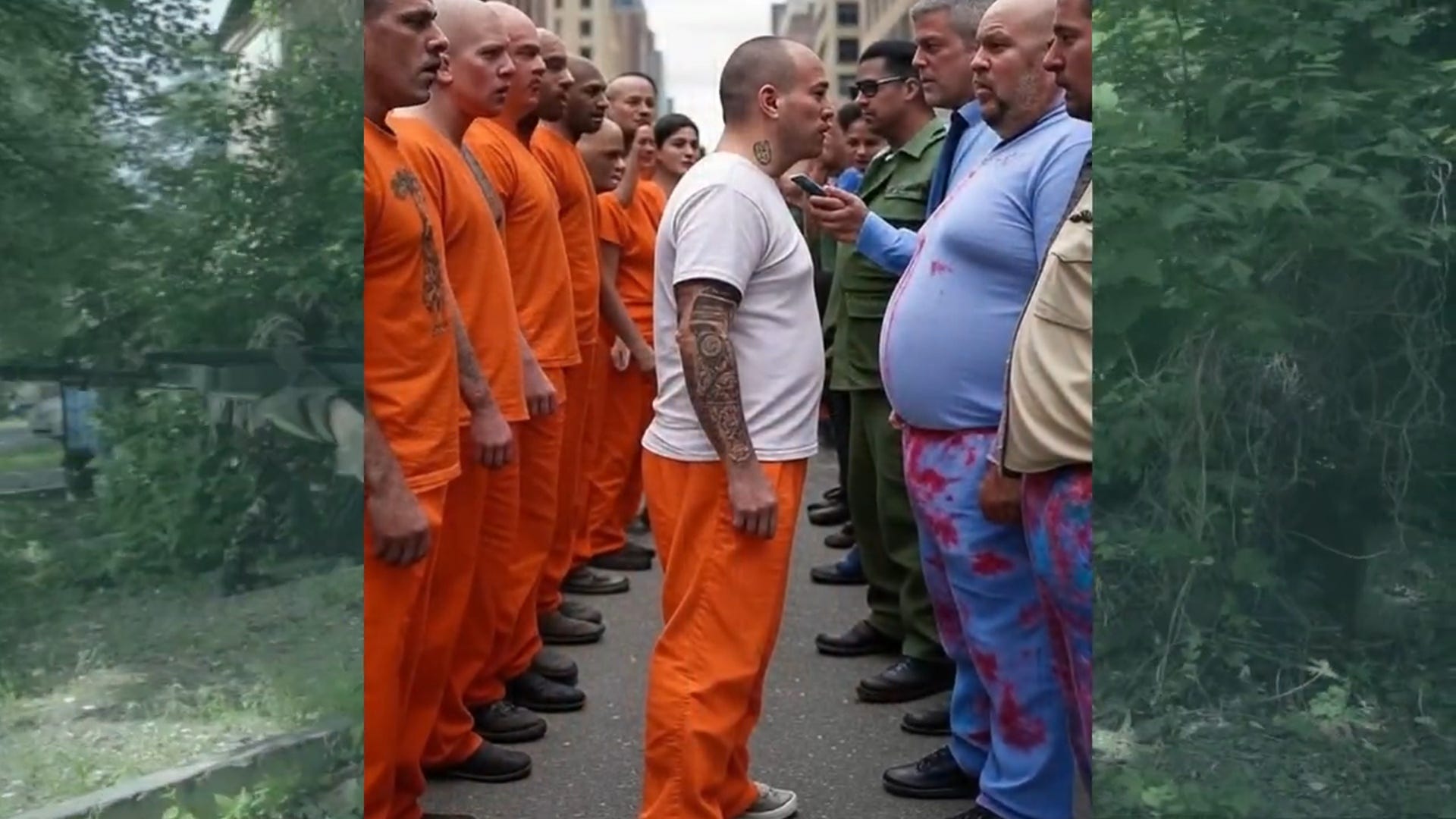
The United States faces a complex national security environment, with challenges stemming from an estimated 15 million undocumented immigrants, a figure that credible analyses suggest could be two to three times higher. This population includes potential foreign operatives and organized criminal groups, posing significant threats to domestic and regional stability. Concurrently, the U.S. military, with 2.1 million personnel, grapples with recruitment practices that prioritize inexperienced youth and policies that emphasize inclusivity over combat readiness, resulting in a 25% obesity rate and declining physical standards. Law enforcement, comprising approximately 800,000 officers and 80,000 prison guards, also faces challenges in maintaining peak operational capacity. A proposed strategy to address these threats is to transform a select group of the nation’s 2.3 million incarcerated individuals, specifically physically capable male inmates, into a specialized military force for high-intensity ground combat, primarily in the Western Hemisphere or near U.S. borders, with secondary roles supporting domestic law enforcement and border security. This approach leverages the incarcerated population’s physical toughness, aggression, and survival instincts, shaped by the harsh conditions of correctional facilities, to create a cohesive, combat-ready unit. Historical precedents, spanning from the Revolutionary War to the Vietnam War, demonstrate the effectiveness of integrating hardened individuals into combat roles, providing a foundation for this proposal.
To evaluate the combat potential of this population and the limitations of current military and law enforcement forces, four hypothetical battle scenarios are analyzed, comparing the U.S. military, law enforcement, and incarcerated populations under varying conditions. These scenarios include unarmed close-quarters combat, small arms combat, a military with full resources against prisoners with makeshift weapons, and a nationwide conflict involving military and law enforcement against all released inmates. This article focuses on the comparative analysis of these scenarios, highlighting the incarcerated population’s raw capabilities, the military and law enforcement’s technological and tactical advantages, and the strategic implications for national defense. The scenarios reveal the potential of a trained incarcerated force while exposing vulnerabilities in current forces, offering insights into reimagining defense strategies through the lens of shared resilience and historical trust among inmates, often rooted in cohesive racial prison population dynamics.
Scenario 1 - Unarmed Close-Quarters Combat
In the first hypothetical scenario, 2.1 million U.S. military personnel confronted 2 million incarcerated individuals from state and federal prisons in an urban environment, engaging in unarmed close-quarters combat with no rules and a fight to the death. The military, consisting of 1.3 million active-duty members and 800,000 reservists, had 43% of its personnel under 25 years old, 17% female, amounting to 357,000 individuals, and 25% obese, totaling 525,000 personnel, with an average age of 28, according to Department of Defense data from 2024. Only 50% of recruits pass initial fitness screenings, and while all receive basic close-quarters combat training, covering strikes, grapples, and defensive maneuvers, only 5%, or 100,000, in specialized units like Rangers or Marines possess advanced skills, as outlined in Army Field Manual 3-25.150. The incarcerated population, with 93% male, equating to 1.86 million individuals, and an average age of 39, included 70% physically fit individuals, or 1.4 million, capable of meeting Army fitness standards, with 60%, or 1.2 million, experienced in prison yard brawls and 30%, or 600,000, with violent crime histories, per Bureau of Justice Statistics from 2023. Their close-quarters combat experience, involving chokeholds and group attacks, was survival-driven but lacked coordination.
The battle unfolded over 5 hours across city streets, alleys, and buildings. Initially, the military formed defensive formations, using discipline and basic close-quarters combat skills to counter prisoner advances. Specialized units targeted gang leaders to disrupt coordination, but the prisoners’ physical dominance, with 93% male and 70% fit, overwhelmed weaker military personnel, including female, obese, and non-combat roles. Gang-affiliated inmates, numbering 200,000 to 400,000, employed loose group tactics, exploiting urban terrain for ambushes. By the mid-phase, the military’s coordination weakened as prisoners’ relentless aggression and endurance, bolstered by an older average age of 39 compared to 28, dominated, eliminating female and obese personnel. In the endgame, the prisoners’ 1 million fit male fighters prevailed, leaving 500,000 to 700,000 survivors and no military survivors. The prisoners’ victory resulted from their physicality, aggression, and adaptability in chaotic settings, while the military’s diverse, less fit composition and limited close-quarters combat focus were critical weaknesses. This scenario highlights the incarcerated population’s potential in physical combat, suggesting that with structured training, they could form a formidable force, as supported by research on prison violence dynamics by Crouch and Marquart in 1989.
Scenario 2 - Small Arms Combat
The second scenario involved small arms combat, with both groups using knives, pipes, bats, chains, handguns, semi-automatic rifles, and some automatic weapons in an urban environment. The military’s 2.1 million personnel benefited from extensive firearms training, with all members proficient in handguns like the M9 pistol and semi-automatic rifles like the M4 carbine, and 5%, or 100,000, in specialized units trained in dynamic tactics, as detailed in Army Field Manual 3-23.35. However, their 17% female, totaling 357,000, 25% obese, amounting to 525,000, and 60% non-combat personnel, equating to 1.26 million, limited effectiveness in close-quarters engagements with improvised weapons. The 2 million prisoners, with 93% male and 70% fit, leveraged close-quarters combat experience with shanks and pipes, with 60%, or 1.2 million, involved in such conflicts, and 30%, or 600,000, having some handgun experience from criminal activities, though untrained compared to military standards. Gang networks, numbering 200,000 to 400,000, facilitated scavenging of firearms from fallen soldiers.
The 5-hour battle saw the military initially dominate open streets with coordinated rifle fire, but prisoners excelled in alleys and buildings, using knives, bats, and scavenged handguns, estimated at 50,000 to 100,000, with brutal efficiency. The military’s female and obese personnel were early casualties, reducing their force to 1.1 million by the mid-phase. Prisoners, despite losing female, totaling 140,000, and unfit inmates, amounting to 400,000, maintained 800,000 fit male fighters, whose aggression and urban adaptability outmatched military discipline. By the endgame, prisoners’ relentless close-quarters combat and scavenged firearms secured victory, with 400,000 to 600,000 survivors and no military survivors. The prisoners’ success stemmed from their physical dominance and experience with improvised weapons, while the military’s structured tactics faltered in chaotic urban combat. This scenario reinforces the incarcerated population’s effectiveness in semi-armed engagements, aligning with research on gang-driven violence in unstructured settings by Decker and Pyrooz in 2015.
Scenario 3 - Military with Full Resources vs. Prisoners with Makeshift Weapons
The third scenario pitted the military, equipped with small arms, tanks, jets, artillery, helicopters, and drones, against prisoners armed with shanks, pipes, and scavenging capabilities in an urban-rural battlefield. The military’s 2.1 million personnel, with 10%, or 210,000, in combat roles and 5%, or 100,000, in specialized units, leveraged combined arms tactics, integrating air strikes, armored assaults, and infantry sweeps, as outlined in Army Field Manual 3-0. Their $816 billion budget ensured ample resources, though 17% female and 25% obese personnel were vulnerabilities. The 2 million prisoners, with 93% male and 70% fit, used close-quarters combat skills, with 60%, or 1.2 million, experienced, and scavenged firearms, estimated at 50,000 to 100,000, from fallen soldiers, but lacked heavy weapons or training.
The 4-hour battle began with military air strikes and artillery barrages decimating prisoner groups in open areas. Tanks and infantry secured urban zones, while prisoners retreated to buildings, staging ambushes with shanks and scavenged rifles. Gang-led inmates, numbering 200,000 to 400,000, seized weapons but lacked tactical coordination, falling to military counterattacks. By the mid-phase, prisoners lost 50%, or 1 million, including female and unfit inmates, while the military’s rear positioning of weaker personnel minimized losses. In the endgame, air and armored assaults eradicated remaining prisoners, leaving 1.8 to 1.9 million military survivors and no prisoner survivors. The military’s technological superiority overwhelmed the prisoners’ physicality and aggression, highlighting their need for training and armament, as noted in studies on asymmetric warfare by Mack in 1975.
Scenario 4 - Military and Law Enforcement vs. Prison and Jail Population
The fourth scenario involved 2.98 million military personnel, totaling 2.1 million, and law enforcement personnel, including 800,000 officers and 80,000 prison guards, against 2.3 million incarcerated individuals from prisons, jails, and other facilities, released nationwide with shanks, pipes, and scavenging capabilities. The military’s arsenal included tanks, jets, and artillery, while law enforcement wielded handguns, rifles, and armored vehicles, with 10,000 SWAT units enhancing urban combat, per Bureau of Justice Statistics from 2023. The incarcerated population, 88% male, equating to 2.02 million, and 70% fit, totaling 1.4 million, used close-quarters combat skills, with 60%, or 1.38 million, experienced, and looted firearms, estimated at 100,000 to 200,000, from stores and residences, with gang networks, numbering 230,000 to 460,000, aiding coordination.
The 12-hour battle spanned urban, suburban, and rural areas. Initially, military air strikes and police sweeps decimated prisoners, who lost 40%, or 920,000, to firepower. Prisoners looted gun shops, seizing rifles, but lacked training, falling to SWAT raids and tank assaults. By the mid-phase, prisoners’ 1 million fit males staged guerrilla ambushes, but military drones and police checkpoints crushed resistance. The endgame saw total prisoner elimination, with 2.6 to 2.7 million military and law enforcement survivors, due to overwhelming coordination and resources. This scenario underscores the incarcerated population’s guerrilla potential but their disadvantage against modern forces, supporting the need for structured integration, as discussed by Kilcullen in 2009.
Conclusion
The four hypothetical battle scenarios illuminate the incarcerated population’s raw combat potential in close-quarters and semi-armed engagements, driven by their 88% male, 70% fit demographic and aggressive survival instincts, but reveal their critical limitations against the advanced resources of the U.S. military and law enforcement. The unarmed and small arms scenarios demonstrate their physical and chaotic advantages, particularly in urban environments, where their experience with improvised weapons and gang-driven tactics outperforms the military’s less fit, diverse personnel. However, the full-resource and nationwide scenarios highlight the necessity of formal training and armament, as the military’s tanks, jets, and artillery, combined with law enforcement’s urban expertise, render the prisoners’ scavenging and aggression futile. Historical precedents, from Revolutionary War outcasts to Vietnam-era offenders, validate the potential of incarcerated men as combatants when properly integrated, emphasizing the need for a structured military force to harness their capabilities. The military’s vulnerabilities—17% female, 25% obese, and reliance on non-combat roles—underscore the urgency of incorporating hardened fighters to address modern threats. The shared resilience and historical trust among these inmates, often rooted in racial prison population dynamics, enhance their potential for unit cohesion and operational effectiveness. Despite challenges such as public perception and logistical integration, the scenarios suggest that a trained incarcerated force could significantly bolster national defense, particularly for high-intensity ground operations in the Western Hemisphere or domestic support roles. This analysis provides a compelling case for reimagining defense strategies, leveraging the untapped potential of incarcerated men to strengthen the nation’s security framework in an era of evolving threats.
Summary
In a chaotic clash, raw grit battles disciplined might across urban sprawls. Unarmed brawls and armed skirmishes test resilience and strategy. The outcome challenges defense norms, hinting at untapped potential in unlikely warriors, urging a bold rethink of security in a volatile world.
#PrisonCombat #MilitaryVsInmates #NationalSecurity #CQCShowdown #DefenseInnovation
Tags: Incarcerated Military, Close-Quarters Combat, U.S. Security, Small Arms Battle, Defense Strategy
Watch video on X, Rumble, Odysee, BitChute, Brighteon, Facebook, Gab, Gettr, Minds, or realfreenews.com
Concise Step-by-Step Bullet Point Breakdown
Assess Security Challenges:
U.S. faces threats from 15M+ undocumented immigrants, including potential foreign operatives and criminal groups.
Military (2.1M) struggles with 25% obesity, inclusivity focus, and youth-centric recruitment.
Law enforcement (800K officers, 80K guards) faces operational capacity issues.
Propose Solution:
Repurpose physically capable male inmates from 2.3M incarcerated into a specialized military force.
Primary role: High-intensity ground combat in Western Hemisphere or near U.S. borders.
Secondary roles: Support law enforcement, bolster border security.
Evaluate via Scenarios:
Analyze four hypothetical battles: U.S. military/law enforcement vs. incarcerated population.
Scenarios: Unarmed CQC, small arms combat, military with full resources vs. prisoners with makeshift weapons, nationwide conflict.
Scenario 1: Unarmed CQC (Urban, 5 Hours):
Forces: 2.1M military (17% female, 25% obese, avg. age 28) vs. 2M prisoners (93% male, 70% fit, avg. age 39).
Military: Basic CQC training; 5% (100K) specialized; limited by non-combat roles (60%), fitness issues.
Prisoners: Survival-driven brawling (60%, 1.2M); gang tactics (200K–400K); lack coordination.
Outcome: Prisoners win via physicality, aggression; 500K–700K survivors; no military survivors.
Scenario 2: Small Arms Combat (Urban, 5 Hours):
Forces: Same as Scenario 1; military with firearms training; prisoners with shanks, scavenged guns.
Military: Proficient in rifles, handguns; hindered by female/obese/non-combat personnel.
Prisoners: Use knives, bats, 50K–100K scavenged firearms; 30% (600K) with handgun experience.
Outcome: Prisoners win via urban adaptability, aggression; 400K–600K survivors; no military survivors.
Scenario 3: Military Full Resources vs. Prisoners Makeshift Weapons (Urban-Rural, 4 Hours):
Forces: Military (tanks, jets, drones) vs. prisoners (shanks, 50K–100K scavenged firearms).
Military: Combined arms tactics; $816B budget; 10% (210K) combat roles.
Prisoners: Gang-led ambushes; lack heavy weapons, training.
Outcome: Military wins via technological superiority; 1.8M–1.9M survivors; no prisoner survivors.
Scenario 4: Military & Law Enforcement vs. All Incarcerated (Nationwide, 12 Hours):
Forces: 2.98M (2.1M military, 880K law enforcement) vs. 2.3M prisoners (88% male, 70% fit).
Military/LE: Tanks, jets, SWAT; coordinated tactics.
Prisoners: Loot 100K–200K firearms; guerrilla tactics; gang coordination (230K–460K).
Outcome: Military/LE win via firepower, coordination; 2.6M–2.7M survivors; no prisoner survivors.
Draw Conclusions:
Prisoners excel in CQC, small arms due to physicality, aggression, urban skills.
Military/LE dominate with resources, highlighting prisoners’ need for training, armament.
Historical precedents (e.g., Revolutionary War) support integrating inmates.
Trained incarcerated force could address military vulnerabilities, enhance defense.
Synopsis
A bold strategy proposes turning inmates into a combat force to tackle U.S. security threats. Four battle scenarios test their raw power against military and law enforcement, revealing strengths in chaos but weaknesses against technology, urging a rethink of defense with hardened fighters.
References:
Bureau of Justice Statistics. 2023. Correctional Populations in the United States. U.S. Department of Justice.
Crouch, B. M., and J. W. Marquart. 1989. An Appeal to Justice: Litigated Reform of Texas Prisons. University of Texas Press.
Decker, S. H., and D. C. Pyrooz. 2015. The Real Gangbanging: Understanding the Dynamics of Street Gangs. Oxford University Press.
Department of Defense. 2024. Military Personnel Statistics. U.S. Government Publishing Office.
Federal Bureau of Prisons. 2023. Inmate Statistics. U.S. Department of Justice.
Kilcullen, D. 2009. The Accidental Guerrilla: Fighting Small Wars in the Midst of a Big One. Oxford University Press.
Mack, A. 1975. Why Big Nations Lose Small Wars: The Politics of Asymmetric Conflict. World Politics 27, no. 2: 175–200.
U.S. Army. 2008. Field Manual 3-0: Operations. Department of the Army.
U.S. Army. 2009. Field Manual 3-23.35: Combat Training with Pistols. Department of the Army.
U.S. Army. 2010. Field Manual 3-25.150: Combatives. Department of the Army.
U.S. Army. 2017. Field Manual 3-90: Tactics. Department of the Army.