
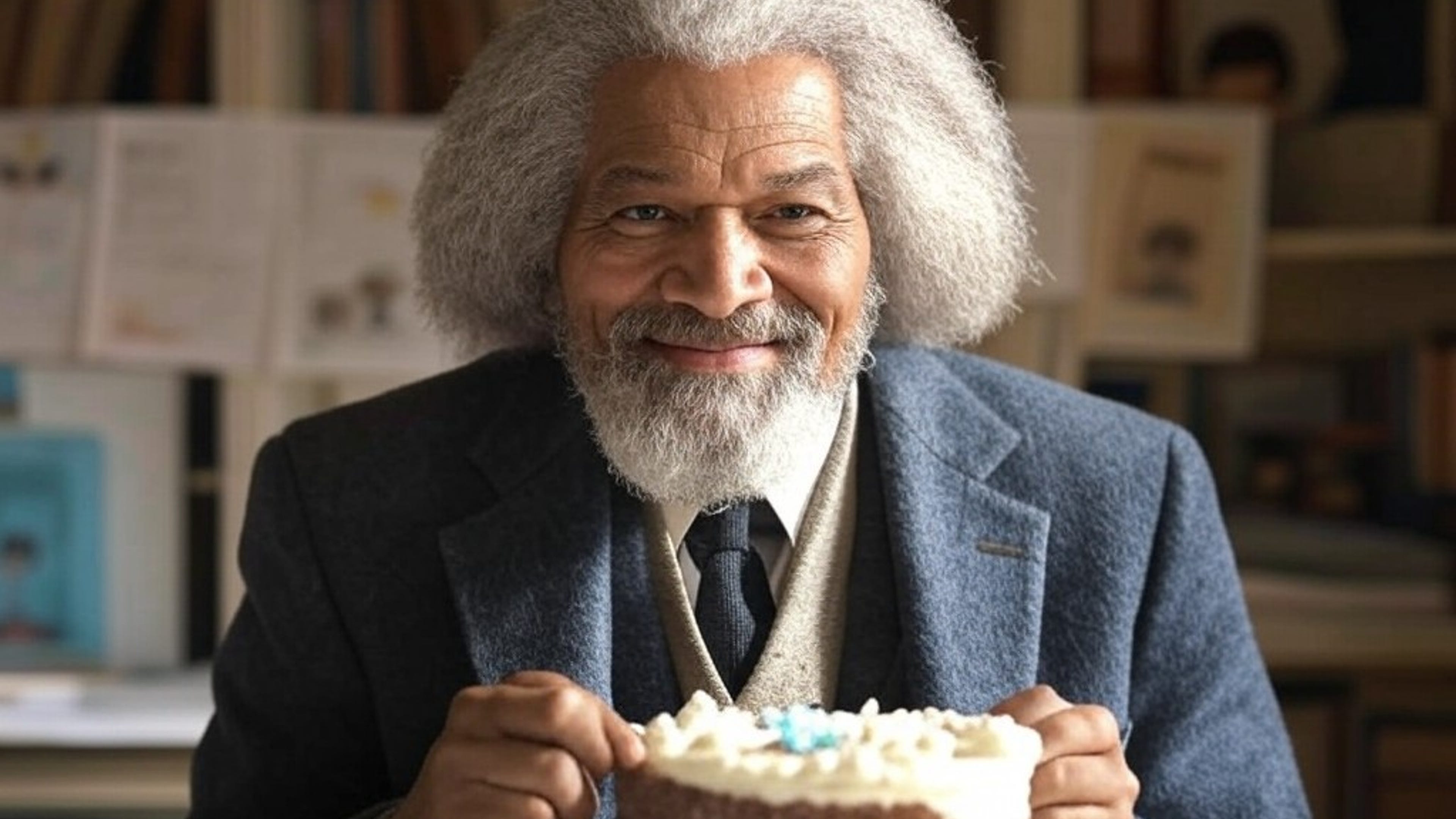
Every year, Americans, and even people around the world, particularly students, are forced to engage in the observation of Black History Month, which includes recognizing Frederick Douglass. Black History Month was established, in part, to honor Douglass, promoting his ideas and writings to the broader public and educational systems. Originally launched in 1926 as "Negro History Week," the timing was selected to align with the birthdays of both Abraham Lincoln and Frederick Douglass. Students are often compelled to acknowledge Douglass as a significant writer and orator, though many might not delve deeply into his actual writings. Upon closer examination, one might find that the portrayal of Douglass does not always match the reality of his work.
Frederick Douglass's birthday recognition is on February 14, even though the exact date is uncertain, as he chose to celebrate it as his birthday. We are reminded annually on this date of his acclaimed status as a writer and orator. Yet, reading his work feels more akin to skimming through a preteen's diary entries than engaging with profound literature. His writings are not particularly special, and his thoughts and insights are basic at best, lacking in any real depth or profound nuance.
Born into slavery, Douglass's journey from bondage to freedom is an interesting narrative, set against the backdrop of an era where both free and enslaved Africans coexisted. His escape from slavery is a compelling story and a noble pursuit. His ability to read and write, largely self-taught without any formal education, is a commendable achievement. However, his literary skills are far from commendable. His writing is not only substandard but often borders on the incoherent, making one question the yearly accolades he receives as a "great and eloquent" writer.
Douglass was not promoted for his writing abilities but rather because his influence was tactically valuable in advancing the abolitionist movement, both in ways he was aware of and for broader political objectives he could not have fully grasped. This elevation was less about his personal merit and more about serving as a tool for subversive political agendas. His writings and speeches were utilized to advance the conversation on emancipation, targeting many misguided Whites open to public discourse on the subject, particularly those who were easily persuaded. Many Whites, who arguably should have focused on their own affairs, instead meddled in these issues, driven by a naive belief in equality, more in word than in actual implementation, without comprehending the complexities or potential repercussions of such actions.
The narrative that Frederick Douglass was an eloquent orator and a profound thinker is perpetuated yearly, yet his writings reveal a man whose thoughts are simplistic at best, laughable at worst. His rise to fame was orchestrated by those needing a figurehead for their political machinations, exploiting Douglass's image to advance their social and political agendas. He may have been an effective orator; however, public speaking is a skill that can easily be acquired, and the ability to persuasively communicate does not equate to having something significant to say. His thoughts in writings, both his own and recorded by others, reveal a person without understanding or perspective, possessing a very narrow intellectual field of view whose application on most topics, including the significance of America's founding documents, is not warranted, and his opinion is not wanted.
In essence, the annual celebration of Douglass's eloquence and wisdom is a farce. His work, when scrutinized, lacks the depth and quality expected of someone so lauded. Instead of being remembered for his actual contributions, he has become a symbol used to promote a narrative that does not hold under critical examination. His lowly thoughts and rudimentary writings, akin to those of a pretentious and delusional sage propped up by his promoters, much like the teenage pop stars of today who garner unearned attention, do not serve as a testament to his intellect but as a reminder of how such figures in the past have been used and how history can be manipulated today to serve contemporary political ends.
#BlackHistoryMonth #FrederickDouglass #LiteraryFarce #SubversiveSymbol #EducationalManipulation
Watch video on X, Rumble, Odysee, BitChute, Brighteon, Facebook, Gab, Gettr, Minds, or realfreenews.com