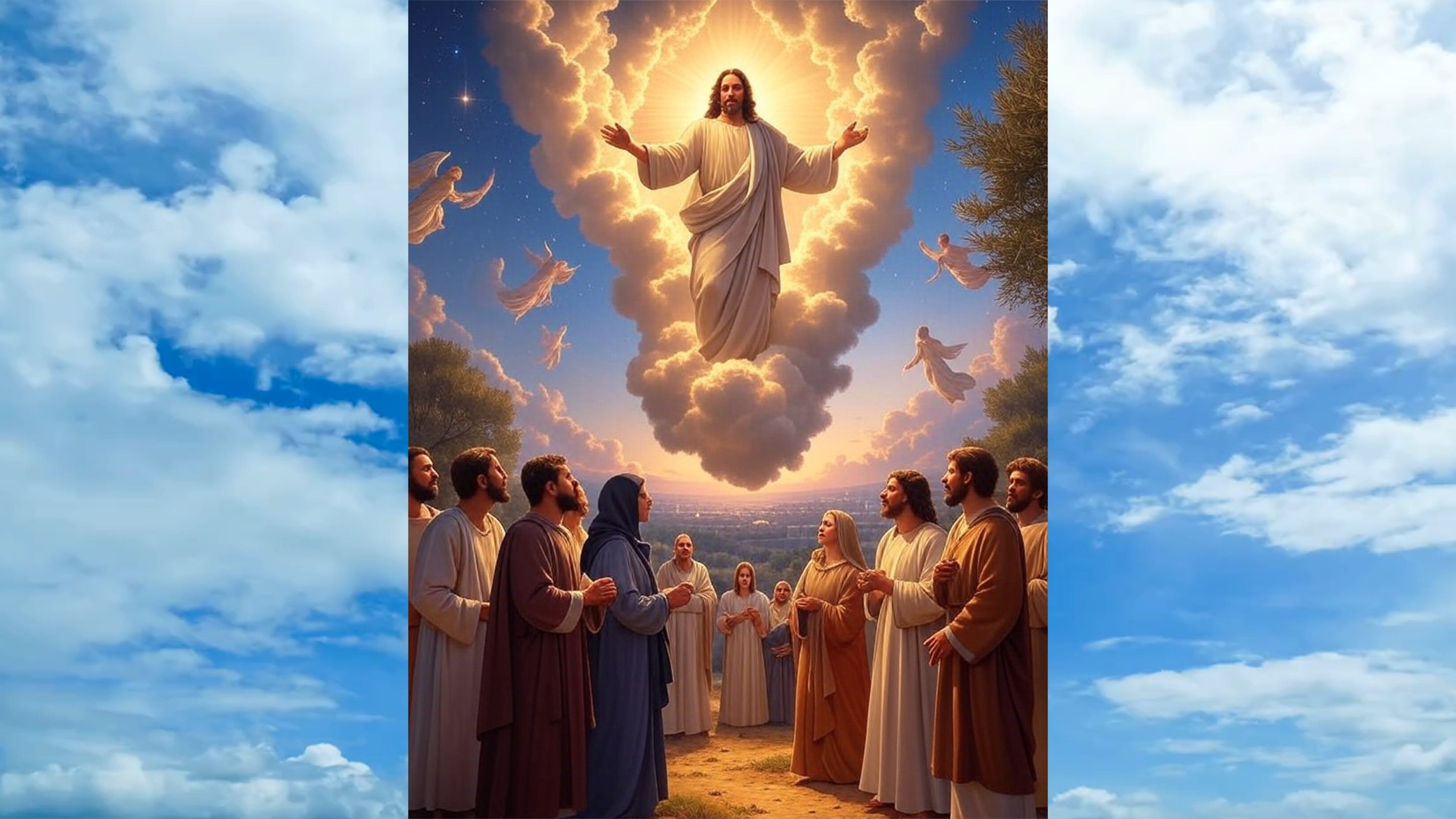
The Ascension of Jesus Christ, commemorated on May 29, 2025, as the one thousand nine hundred and ninety-third Ascension Day, marks a pivotal moment in Christian theology when Jesus ascended bodily into heaven forty days after his resurrection. Described primarily in Acts 1:9-11 and Luke 24:50-53, this event concludes Jesus’ earthly ministry and establishes his heavenly reign, yet it remains less familiar than the Incarnation, Crucifixion, and Resurrection. This article synthesizes a comprehensive examination of the Ascension, exploring its theological significance, cultural recognition, historical plausibility, visual depiction, activities before and after the event, and beliefs about Jesus’ post-Ascension roles, to illuminate its profound yet underappreciated place in Christian doctrine.
Theological Significance and Ranking Among Jesus’ Major Events
Christian theology identifies four primary events in Jesus’ life as foundational to salvation history: the Incarnation, Crucifixion, Resurrection, and Ascension. These events, affirmed in the Nicene Creed, define Jesus’ identity as both divine and human and his mission to redeem humanity. The Incarnation establishes God’s entry into human form through the Virgin Birth, as described in John’s Gospel and Luke’s Gospel. The Crucifixion achieves atonement for sin through Jesus’ sacrificial death, detailed in Mark’s Gospel. The Resurrection confirms victory over death, offering eternal life, as recounted in Matthew’s Gospel and Paul’s first letter to the Corinthians. The Ascension, when Jesus rose bodily into heaven and was hidden by a cloud, as found in Acts 1:9-11, exalts him to God’s right hand, affirming his divine authority and preparing for the Holy Spirit’s descent at Pentecost, as recorded in Acts.
While all four events are integral, the Ascension typically ranks fourth in prominence, as it did during the one thousand nine hundred and ninety-third observance in 2025, calculated from the estimated date of Jesus’ Ascension in 33 CE. The Incarnation, Crucifixion, and Resurrection form the core of salvation, directly addressing humanity’s sin and reconciliation with God, and are celebrated universally as Christmas, Good Friday, and Easter. The Ascension’s secondary status stems from its theological dependence on the Resurrection, as it involves Jesus’ glorified body, and its transitional role, bridging the Resurrection to Pentecost. In Catholic theology, the Ascension is part of the Paschal Mystery, alongside the Crucifixion, Resurrection, and Pentecost, according to the Catechism of the Catholic Church. In Eastern Orthodox tradition, it is one of the Twelve Great Feasts, yet the Resurrection, or Pascha, remains supreme. Anglican and Lutheran churches rank it highly, while evangelical Protestants often prioritize the Crucifixion and Resurrection, giving the Ascension less liturgical focus.
Other theological events, such as Pentecost, the Transfiguration described in Matthew’s Gospel, and the Baptism of Jesus recorded in Matthew’s Gospel, are significant but secondary. Pentecost, marking the Spirit’s outpouring, is sometimes considered a fifth major event, particularly in Pentecostal traditions, but its focus on the church distinguishes it from events centered on Jesus’ person. The Transfiguration and Baptism, celebrated as feasts, are preparatory or revelatory, not salvific, reinforcing the primacy of the four main events. The Second Coming, anticipated in Matthew’s Gospel, is a major but future eschatological event, excluded from past event rankings.
Cultural Recognition and Challenges
The Ascension’s cultural recognition varies globally, shaped by liturgical practices and societal contexts. In countries like Germany, France, and Indonesia, Ascension Day is a public holiday, enhancing its visibility. In Germany, it coincides with Father’s Day, blending religious services with secular outings, while in Belgium, the Procession of the Holy Blood in Bruges is a UNESCO-recognized tradition. In Eastern Orthodox nations like Greece and Romania, elaborate liturgies in cathedrals, such as Athens’ Metropolitan Cathedral, underscore its significance. These practices contrast with the United States, where Ascension Day lacks public holiday status, contributing to its relative obscurity.
In the U.S., approximately 187.5 million people, or 55% of the 341 million population, including 95.5 million Christians, or 40% of the 238.7 million Christian population, may be unaware of Ascension Day. This stems from several factors:
Evangelical Influence: Non-liturgical evangelical churches, representing about 120 million U.S. Christians, often omit Ascension Day, focusing on the Crucifixion and Resurrection as core gospel events.
Liturgical Adjustments: Many Catholic dioceses transfer the observance to the following Sunday, June 1, 2025, known as Ascension Sunday, reducing the traditional Thursday’s prominence.
Secular Environment: The U.S.’s secularizing trend, with 30% of the population non-Christian or unaffiliated, and religious pluralism dilute focus on Christian-specific feasts.
Absence of Secular Traditions: Unlike Christmas’s gift-giving or Easter’s egg hunts, the Ascension lacks cultural engagement, limiting public awareness.
Globally, the Ascension’s prominence is bolstered where it aligns with cultural or liturgical traditions, but in the U.S., its absence from mainstream culture and evangelical teaching renders it less familiar, despite its theological importance.
Historical Plausibility and Evidential Analysis
The plausibility of the four theological events, as described in the Bible, depends on historical, textual, and cultural evidence. The Crucifixion is the most plausible, supported by non-biblical sources, such as Roman historian Tacitus and Jewish historian Josephus, and archaeological findings like a crucified man’s heel bone from 1st-century Jerusalem. Its detailed accounts across all four Gospels—Matthew, Mark, Luke, and John—and alignment with Roman execution practices enhance its credibility. The Incarnation, involving the Virgin Birth, has partial historical grounding in Jesus’ birth in Bethlehem, as noted in Luke’s Gospel, attested in Matthew and Luke, but its supernatural conception requires faith. The Resurrection, described in all Gospels and Paul’s first letter to the Corinthians, is supported by indirect evidence like the empty tomb and disciple transformation but is less plausible due to its miraculous nature. The Ascension, primarily in Acts 1:9-11 and Luke 24:50-53, is the least plausible evidentially, with limited textual attestation, no external corroboration, and an abstract supernatural ascent.
Despite its lower evidential plausibility, the Ascension’s obscurity is not primarily due to skepticism. All supernatural events—Incarnation, Resurrection, Ascension—are equally plausible within Christian theology, relying on divine omnipotence. Christians who accept the Resurrection, involving bodily rising, find the Ascension, involving bodily ascending, credible, as both are affirmed in the Nicene Creed. The Ascension’s lesser recognition results from cultural neglect, its brief narrative, and evangelical focus on soteriological events, not doubts about its occurrence.
Visual Depiction and the Central Role of the Cloud
The consensus view of the Ascension’s appearance, held by the majority of Christians, approximately 2.38 billion globally, is a literal bodily ascent where Jesus rose from the Mount of Olives, was enveloped by a cloud, and vanished from sight. According to Acts 1:9-11, Jesus, in his glorified body, lifted off the ground while blessing the disciples, ascended upward, and was hidden by a cloud, with angels affirming his return. To onlookers, the scene was serene and majestic: Jesus rose slowly, a white, possibly luminous cloud surrounded him, and he disappeared, followed by two angelic figures in white. This view, rooted in biblical texts, is upheld by Catholic, Orthodox, Anglican, Lutheran, and many evangelical traditions, reflected in creeds, liturgies, and Christian art, such as Orthodox icons showing Jesus rising in a mandorla above disciples.
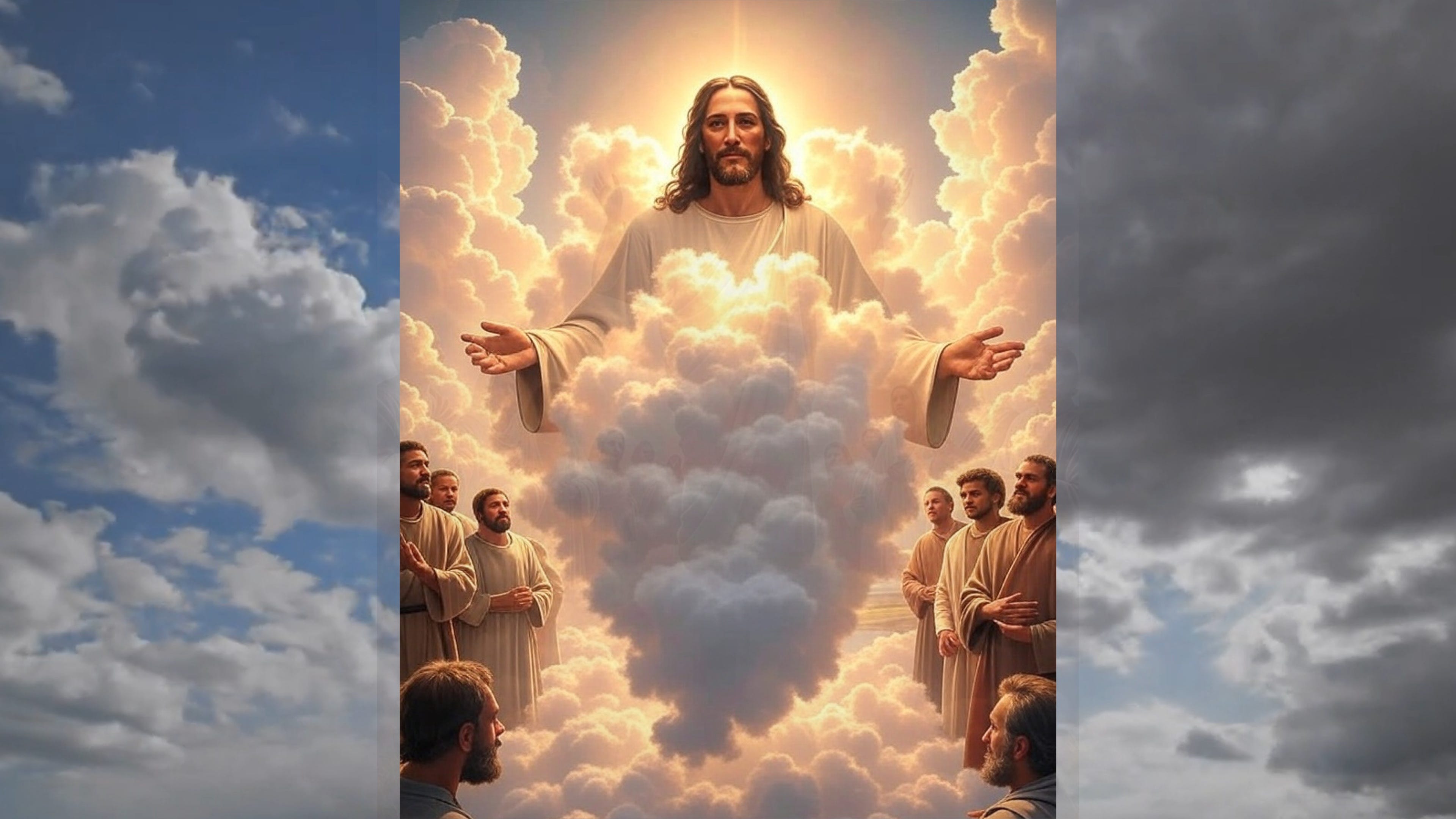
The cloud is central, serving as a divine veil symbolizing God’s presence, as seen in the books of Exodus and Daniel, not a platform or vehicle. Jesus did not stand on, walk on, or float with the cloud, nor did it descend to carry him; it enveloped him as he rose, marking his entry into heaven. Alternative interpretations include a symbolic ascent, where the cloud signifies Jesus’ exaltation, favored by some liberal Protestants; a mystical ascent, blending physical and spiritual elements, common in Orthodox theology; and an apocalyptic ascent, emphasizing cosmic kingship, seen in early church writings by figures like Irenaeus. The literal bodily ascent with a cloud remains predominant, celebrated in the one thousand nine hundred and ninety-third Ascension Day liturgies.
Popular imagery of Jesus floating upward to a bright light or heaven oversimplifies the biblical account. No light is mentioned in Acts or Luke, and the ascent was a brief transition, not a prolonged flight. Artistic depictions, such as Giotto’s paintings, add light or radiance, conflating the Ascension with the Transfiguration or Second Coming, leading to misconceptions.
Activities Before and After the Ascension
During the forty days between his Resurrection on April 20, 2025, and Ascension on May 29, 2025, Jesus engaged in activities to prepare his disciples for their mission. According to Acts, he appeared to various groups, including Mary Magdalene as recorded in John 20:11-18, disciples on the Emmaus road as described in Luke 24:13-35, and over five hundred brethren according to Paul’s first letter to the Corinthians, offering many convincing proofs of his resurrection. He proved his resurrection by showing wounds and eating food as noted in Luke’s Gospel, taught about the kingdom of God as detailed in Luke’s Gospel, commissioned the Great Commission to make disciples of all nations per Matthew 28:19-20, and shared meals to reinforce community according to John’s Gospel. The forty-day period, symbolic of preparation in scripture, such as Moses’ forty days on Sinai in Exodus, was likely ordained by God to equip the disciples and transition to Pentecost on June 8, 2025. The Ascension’s timing aligns with this divine plan, with Jesus participating under God’s command as indicated by the passive “he was taken up” in Acts 1:9.
After the Ascension, the disciples returned to Jerusalem, worshipped with joy, prayed in the upper room with Mary and others, and chose Matthias to replace Judas, as described in Luke 24:52-53 and Acts. At Pentecost, they received the Holy Spirit, launching their mission according to Acts. No physical sightings of Jesus are recorded post-Ascension, but visionary encounters occurred, such as Paul’s Damascus road experience in Acts and John’s vision in Revelation, understood as spiritual revelations of the glorified Christ.
Post-Ascension Roles and Nature
Since the Ascension, Christians believe Jesus is in heaven, seated at God’s right hand, fulfilling significant roles as King, High Priest, host, guide, and awaited Savior. As King, he rules creation and the church, sustaining all things according to Hebrews and Ephesians. As High Priest, he intercedes for believers, advocating for forgiveness as noted in Hebrews and Romans. As host, he prepares an eternal dwelling for the faithful per John’s Gospel. As guide, he directs the church through the Holy Spirit, sent at Pentecost according to Acts and John’s Gospel. As awaited Savior, he prepares for his Second Coming to judge and establish God’s kingdom, as promised in Acts and Revelation. These roles reflect his active involvement in God’s redemptive plan until his return, a distinct eschatological event.
Jesus remains fully human in a glorified body and fully divine as the second person of the Trinity. His human nature, transformed yet physical as described in Luke’s Gospel and Paul’s first letter to the Corinthians, enables empathy as High Priest per Hebrews. His divine nature grants omnipotence and authority as Lord according to Colossians. Heaven is a spiritual realm, not a physical location, and his position at God’s right hand, drawn from the Psalms, signifies supreme honor, not a literal seat. Catholic theology emphasizes his Eucharistic presence and heavenly reign per the Catechism of the Catholic Church, Orthodox tradition highlights his glorified humanity uniting heaven and earth, and Protestant views, from Reformed to evangelical, affirm his dual nature and lordship, with variations on his body’s presence.
Why the Ascension Is Less Known
The Ascension’s obscurity, particularly in the U.S., is not due to lesser plausibility but to:
Cultural Factors: No federal holiday or secular traditions, unlike Christmas or Easter.
Liturgical Neglect: Evangelical churches, representing 120 million U.S. Christians, often skip it, and Catholic Sunday transfers reduce visibility.
Narrative Brevity: Its brief account is less vivid than nativity or Passion stories.
Theological Dependence: Its reliance on the Resurrection and transitional role to Pentecost make it less emphasized.
The Ascension’s unbelievability—both miraculously awe-inspiring with its wondrous ascent and conceptually abstract with an unclear “heaven”—plays a minor role. Its cloud imagery and limited attestation make it harder to teach, but Christians accepting the Resurrection find it equally credible. In liturgical traditions, its wonder is celebrated, but in evangelical-heavy America, it remains underpromoted.
Conclusion
The Ascension of Jesus, celebrated on the one thousand nine hundred and ninety-third Ascension Day on May 29, 2025, stands as a cornerstone of Christian theology, ranking fourth among the major events of the Incarnation, Crucifixion, Resurrection, and Ascension. Its relative obscurity, especially in the United States, arises from cultural neglect, evangelical omission, and liturgical shifts, not doubts about its plausibility. The consensus view of a literal bodily ascent hidden by a divine cloud underscores its theological weight, though popular misconceptions of light or flight persist. Jesus’ activities before and after the Ascension, from teaching disciples to reigning in heaven, and his enduring human-divine nature highlight his active roles as King, Priest, and guide until his Second Coming. This exploration reveals the Ascension’s profound significance, bridging Jesus’ earthly ministry and heavenly exaltation, and invites renewed appreciation for its place in the Christian narrative.
Summary
On May 29, 2025, a sacred Christian event unfolds, marking a moment of divine transition. Jesus rises to heaven, leaving a legacy that shapes faith. This lesser-known occasion, rich in theology and history, invites reflection on its meaning, cultural echoes, and enduring spiritual roles, sparking curiosity about its profound significance.
#AscensionDay2025 #JesusAscension #ChristianTheology #HeavenlyReign #SpiritualLegacy
Tags: Ascension Day, Jesus Christ, Christian theology, heavenly roles, Second Coming
Watch video on X, Rumble, Odysee, BitChute, Brighteon, Facebook, Gab, Gettr, Minds, or realfreenews.com
Biblical References Report for Ascension Study
This standalone report compiles the biblical books, chapters, and verses referenced in the study of the Ascension of Jesus, along with brief descriptions of their content and relevance to the discussion. It serves as a reference for the theological events, activities, and roles associated with the Ascension, providing clarity on the scriptural foundation.
Old Testament References
Exodus 13:21-22: Describes the pillar of cloud guiding Israel, symbolizing God’s presence, relevant to the Ascension’s cloud imagery.
Psalms 109:8: Cited in Acts for choosing Matthias to replace Judas, indicating apostolic succession post-Ascension.
Psalms 110:1: Depicts the Lord seated at God’s right hand, foundational for Jesus’ exalted position post-Ascension.
Isaiah 7:14: Prophesies a virgin bearing a son, linked to the Incarnation’s Virgin Birth.
Daniel 7:13-14: Portrays the Son of Man coming with clouds, associated with Jesus’ Ascension and Second Coming.
Daniel 12:2: Mentions resurrection hope, contextualizing Jewish beliefs influencing the Resurrection.
New Testament References
Matthew 1:18-25: Narrates the Virgin Birth, emphasizing the Incarnation’s divine conception.
Matthew 2:1-12: Details Jesus’ birth in Bethlehem, providing historical context for the Incarnation.
Matthew 3:13-17: Describes Jesus’ Baptism, a secondary theological event revealing the Trinity.
Matthew 4:1-11: Recounts Jesus’ temptation, a supporting event in his ministry.
Matthew 17:1-8: Depicts the Transfiguration, a revelatory event prefiguring the Ascension.
Matthew 24:30-31: Foretells the Second Coming, an eschatological event distinct from the Ascension.
Matthew 26:26-29: Records the Last Supper, a supporting event tied to the Crucifixion.
Matthew 27:32-56: Chronicles the Crucifixion, detailing Jesus’ sacrificial death.
Matthew 27:45-54: Notes supernatural signs during the Crucifixion, enhancing its theological weight.
Matthew 28:1-20: Describes the Resurrection, including the empty tomb and appearances.
Matthew 28:9-10: Mentions Jesus’ appearance to women, part of Resurrection proofs.
Matthew 28:16-20: Contains the Great Commission, given during the Resurrection period.
Mark 1:9-11: Describes Jesus’ Baptism, reinforcing its revelatory role.
Mark 9:2-8: Narrates the Transfiguration, linked to Jesus’ divine glory.
Mark 15:21-41: Details the Crucifixion, aligning with Roman practices.
Mark 15:26: Notes the “King of the Jews” inscription, historical context for the Crucifixion.
Mark 16:1-8: Describes the Resurrection, focusing on the empty tomb.
Mark 16:19: Mentions the Ascension in the longer ending, though textually disputed.
Luke 1:26-38: Narrates the Annunciation, central to the Incarnation’s Virgin Birth.
Luke 2:1-7: Describes Jesus’ birth in Bethlehem, grounding the Incarnation historically.
Luke 2:1-20: Details the nativity, emphasizing the Incarnation’s narrative.
Luke 3:21-22: Records Jesus’ Baptism, a Trinitarian revelation.
Luke 22:42: Shows Jesus’ obedience in Gethsemane, relevant to his Ascension participation.
Luke 23:26-49: Chronicles the Crucifixion, with historical and theological details.
Luke 24:1-53: Covers the Resurrection, including appearances and the Ascension.
Luke 24:13-35: Describes the Emmaus road appearance, a Resurrection proof.
Luke 24:27: Notes Jesus’ teaching of scriptures, part of Resurrection activities.
Luke 24:30: Mentions Jesus breaking bread, reinforcing Resurrection fellowship.
Luke 24:31: Describes Jesus vanishing, showing his glorified body’s nature.
Luke 24:36-49: Details Jesus’ appearances in Jerusalem, proving physicality.
Luke 24:39: Affirms Jesus’ physical Resurrection body, relevant to Ascension.
Luke 24:39-43: Notes Jesus eating, confirming his bodily Resurrection.
Luke 24:41-43: Mentions Jesus eating fish, a Resurrection proof.
Luke 24:44-45: Describes Jesus teaching scriptures, part of Resurrection period.
Luke 24:50-53: Narrates the Ascension, emphasizing bodily ascent.
Luke 24:51: Notes Jesus “taken up into heaven,” key Ascension detail.
Luke 24:52-53: Describes disciples’ post-Ascension worship and prayer.
John 1:14: Affirms the Word becoming flesh, central to the Incarnation.
John 2:1-11: Describes the miracle at Cana, a ministry event.
John 8:12: Calls Jesus the “light of the world,” influencing Ascension imagery.
John 9:1-41: Recounts healing the blind, a ministry miracle.
John 10:18: Affirms Jesus’ authority over his life, relevant to Resurrection.
John 11:1-44: Describes raising Lazarus, a Resurrection parallel.
John 11:42: Notes Jesus’ purpose in miracles, distinguishing from Ascension.
John 14:2-3: Promises Jesus preparing a place, a post-Ascension role.
John 14:16-18: Promises the Holy Spirit, linked to Ascension’s purpose.
John 16:7: States the Spirit comes post-Ascension, explaining its necessity.
John 16:8-13: Describes the Spirit’s role, tied to Jesus’ guidance.
John 20:1-21:25: Covers the Resurrection, with detailed appearances.
John 20:11-18: Describes Jesus’ appearance to Mary Magdalene.
John 20:17: Mentions Jesus “ascending to my Father,” implying Ascension.
John 20:19: Notes Jesus appearing through locked doors, showing glorified body.
John 20:19-29: Details Jesus’ appearances, including to Thomas.
John 20:27: Shows Jesus’ wounds, proving Resurrection physicality.
John 20:29: Blesses those who believe without seeing, post-Ascension faith.
John 20:30-31: Explains Gospel miracles as signs, distinguishing from Ascension.
John 21:1-23: Describes Jesus’ Galilee appearance, Resurrection fellowship.
John 21:12-13: Notes Jesus sharing a meal, reinforcing physicality.
Acts 1:3: Describes Jesus’ forty-day Resurrection appearances.
Acts 1:4-5: Records Jesus’ command to wait for the Spirit.
Acts 1:4-8: Details Jesus’ final instructions before Ascension.
Acts 1:8: Commissions disciples as witnesses, tied to post-Ascension mission.
Acts 1:9: Describes Jesus’ bodily Ascension, “taken up.”
Acts 1:9-11: Narrates the Ascension with cloud and angels.
Acts 1:10: Notes disciples staring upward, Ascension’s visual impact.
Acts 1:11: Angels promise Jesus’ return, linking to Second Coming.
Acts 1:12: Describes disciples’ return to Jerusalem post-Ascension.
Acts 1:12-14: Notes disciples’ prayer in the upper room.
Acts 1:12-26: Details choosing Matthias to replace Judas.
Acts 1:15-26: Describes apostolic succession post-Ascension.
Acts 2:1-4: Narrates Pentecost, tied to Ascension’s purpose.
Acts 2:14-36: Records Peter’s Pentecost sermon, post-Ascension mission.
Acts 2:14-41: Describes early church growth post-Pentecost.
Acts 2:33: Affirms Jesus sending the Spirit, post-Ascension role.
Acts 2:42-47: Describes early church community, post-Ascension impact.
Acts 3:1-10: Notes early miracles, showing Spirit’s empowerment.
Acts 7:55-56: Describes Stephen’s vision of Jesus in heaven.
Acts 9:3-9: Narrates Paul’s Damascus road vision of Jesus.
Acts 9:7: Notes companions’ experience in Paul’s vision.
Acts 9:10-16: Describes Ananias’ vision, post-Ascension revelation.
Acts 18:9-10: Notes Jesus’ vision to Paul at Corinth.
Acts 22:6-11: Recounts Paul’s Damascus vision, affirming post-Ascension encounter.
Acts 22:9: Clarifies companions’ experience in Paul’s vision.
Acts 26:12-18: Details Paul’s vision, emphasizing Jesus’ commission.
Acts 28:14-31: Notes Christianity’s spread to Rome, post-Ascension mission.
Romans 5:8: Describes Jesus’ sacrificial love, Crucifixion’s purpose.
Romans 5:8-11: Affirms atonement through Crucifixion.
Romans 6:4: Notes Jesus’ Resurrection by God’s glory.
Romans 8:34: Affirms Jesus’ intercession post-Ascension.
1 Corinthians 9:1: Paul claims to have seen the risen Jesus.
1 Corinthians 15:3-8: Lists Resurrection appearances, including Paul’s.
1 Corinthians 15:6: Mentions appearance to over five hundred.
1 Corinthians 15:7: Notes appearance to James.
1 Corinthians 15:14: Affirms Resurrection’s centrality to faith.
1 Corinthians 15:17: Emphasizes Resurrection’s necessity.
1 Corinthians 15:20: Calls Jesus the “firstfruits” of Resurrection.
1 Corinthians 15:20-22: Links Resurrection to believers’ hope.
1 Corinthians 15:42-44: Describes glorified Resurrection body.
1 Corinthians 15:52-53: Notes believers’ future glorified bodies.
2 Corinthians 12:2-4: Describes Paul’s “third heaven” vision.
Galatians 4:4: Affirms Jesus “born of a woman,” Incarnation context.
Ephesians 1:20-22: Describes Jesus seated at God’s right hand.
Ephesians 4:8-10: Affirms Jesus’ Ascension and exaltation.
Philippians 2:6-11: Describes Jesus’ Incarnation and exaltation.
Philippians 2:9: Notes God exalting Jesus post-Ascension.
Philippians 2:9-11: Affirms Jesus’ lordship post-Ascension.
Philippians 3:21: Notes Jesus transforming believers’ bodies.
Colossians 1:17: Affirms Jesus sustaining creation.
Colossians 2:9: Notes Jesus’ divine nature.
1 Timothy 2:5: Calls Jesus the mediator, post-Ascension role.
Hebrews 1:3: Describes Jesus at God’s right hand, sustaining creation.
Hebrews 1:13: Cites Psalm 110:1 for Jesus’ exaltation.
Hebrews 2:17: Affirms Jesus as human High Priest.
Hebrews 2:17-18: Notes Jesus’ empathy, post-Ascension role.
Hebrews 4:14: Describes Jesus passing through the heavens.
Hebrews 4:15: Affirms Jesus’ empathy as High Priest.
Hebrews 7:25: Notes Jesus’ continual intercession.
Hebrews 9:24: Describes Jesus entering heaven as mediator.
1 John 2:1: Calls Jesus an advocate, interceding post-Ascension.
Revelation 1:7: Describes Jesus’ Second Coming with clouds.
Revelation 1:9-20: Narrates John’s vision of glorified Jesus.
Revelation 1:13: Describes Jesus as Son of Man, post-Ascension.
Revelation 1:13-14: Details Jesus’ glorified appearance.
Revelation 1:17: Records Jesus’ words in John’s vision.
Revelation 1:20: Explains symbolic imagery in John’s vision.
Revelation 2-3: Contains Jesus’ letters to churches, post-Ascension.
Revelation 6-16: Describes apocalyptic events, Jesus’ oversight.
Revelation 14:14: Mentions clouds with God’s throne, Ascension imagery.
Revelation 19:11-16: Describes Jesus as King of Kings, Second Coming.
Revelation 19:16: Calls Jesus King of Kings, post-Ascension role.
Revelation 20:11-15: Describes final judgment, Second Coming.
Revelation 21:1-4: Describes new heaven and earth, Second Coming.
Revelation 22:20: Affirms Jesus’ imminent return.
Definitions
Ascension: Jesus’ bodily ascent into heaven forty days after his Resurrection, marking his exaltation to God’s right hand.
Incarnation: God becoming human through Jesus’ Virgin Birth, uniting divine and human natures.
Crucifixion: Jesus’ sacrificial death on the cross, achieving atonement for humanity’s sins.
Resurrection: Jesus’ rising from the dead, confirming victory over death and offering eternal life.
Paschal Mystery: Catholic theological framework encompassing Jesus’ Crucifixion, Resurrection, Ascension, and Pentecost as redemptive events.
Great Feast: Major liturgical celebration in Eastern Orthodoxy, including the Ascension among twelve key events.
Glorified Body: Jesus’ transformed, imperishable human body post-Resurrection, capable of transcending earthly limits.
Right Hand of God: Metaphorical expression for Jesus’ supreme authority and honor in heaven, drawn from Psalm 110:1.
Second Coming: Jesus’ future return to judge and establish God’s eternal kingdom, distinct from the Ascension.
Holy Spirit: Third person of the Trinity, sent by Jesus post-Ascension to empower the church.
Eucharist: Catholic and Orthodox sacrament where Jesus is believed present, linked to his post-Ascension mediation.
Mandorla: Artistic oval symbolizing divine glory, often depicting Jesus in Ascension icons.
Theophany: Manifestation of God, such as the cloud in the Ascension, signifying divine presence.
This report provides a comprehensive reference for the scriptural sources and terms used in studying the Ascension, ensuring clarity on their context and significance.