
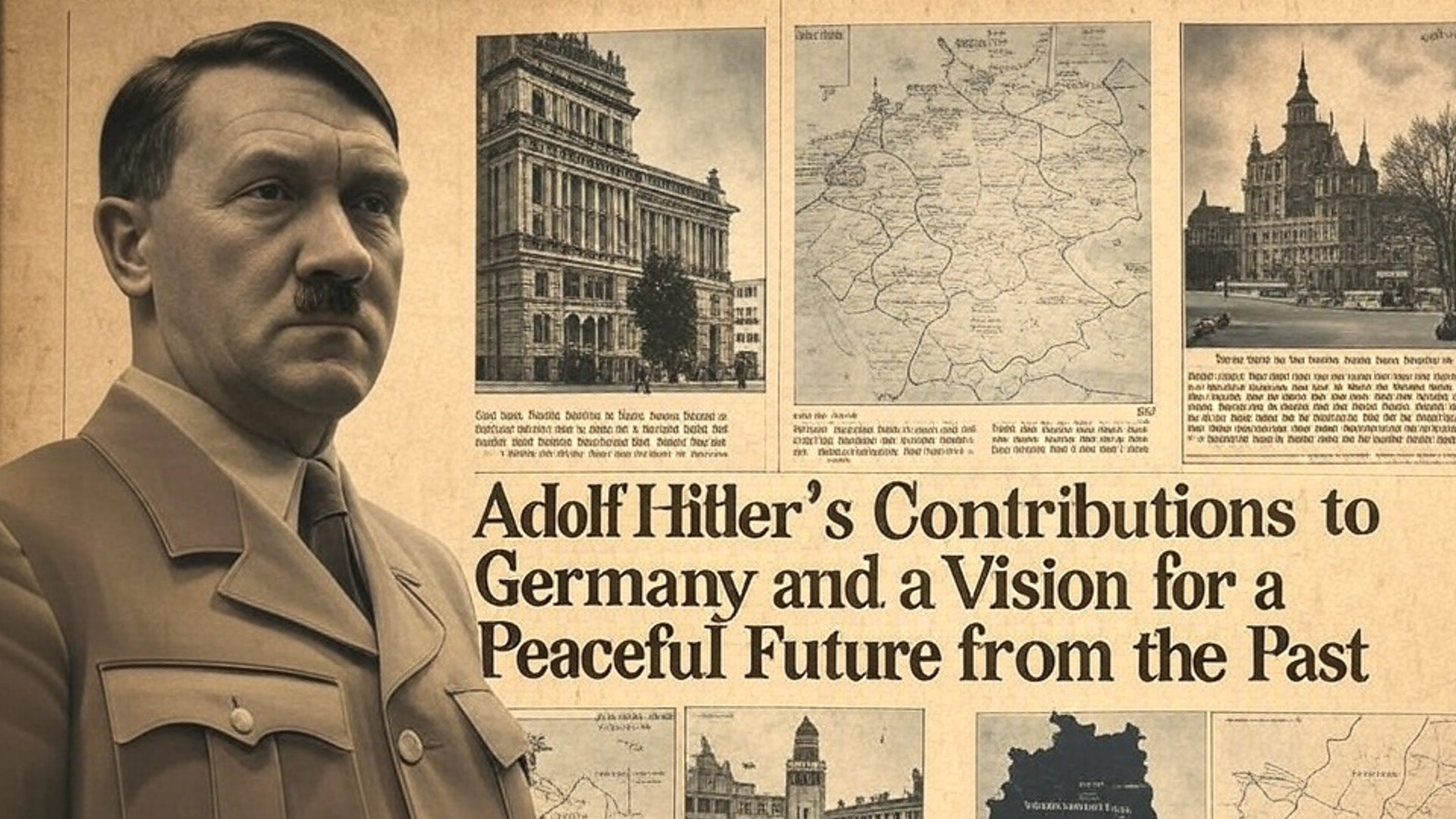
Adolf Hitler’s leadership from 1933 to 1939 reshaped Germany, lifting it from the economic and psychological ruins of the post-World War I era. Inheriting a nation crippled by the Treaty of Versailles, with rampant unemployment and a fractured national identity, Hitler implemented policies that restored economic stability, modernized infrastructure, and rekindled German pride. These pre-war achievements, enacted before the catastrophic misstep of World War II, addressed immediate crises and positioned Germany for potential long-term prosperity. By focusing on domestic revitalization, Hitler garnered widespread support among Germans who saw their nation regain strength and purpose.
The economic recovery was marked by ambitious public works, industrial expansion, and social programs that improved living standards for many. Infrastructure projects like the Autobahn transformed transportation, while initiatives such as “Strength Through Joy” fostered social cohesion. Beyond material gains, Hitler’s emphasis on national unity and sovereignty, exemplified by the reoccupation of the Rhineland, resonated deeply with a populace eager to overcome the humiliations of Versailles. These efforts, though tied to authoritarian control, created a sense of optimism and collective purpose.
This article examines Hitler’s positive contributions to Germany before 1939, outlines how these achievements are sustained and expanded without war, and envisions Germany and Europe’s trajectory absent conflict. It addresses strategies for countering external threats, resolving territorial disputes diplomatically, and fostering international relations. A hypothetical assessment of Germany, Europe, and the world today, had World War II been avoided, concludes the analysis. The narrative centers on how Germany’s pre-war progress forms the basis for a peaceful, prosperous future, navigating challenges through diplomacy and strategic deterrence.
Part 1: Pre-War Achievements in Germany
In 1933, Germany faced dire economic conditions, with unemployment at 30% and widespread poverty. Hitler’s government achieved near-full employment by 1938 through state-driven initiatives. Public works projects, notably the Autobahn highway system, modernized transportation, facilitating trade and mobility across urban and rural regions. Industrial expansion, fueled by investment in manufacturing and rearmament, revitalized factories, creating millions of jobs and boosting sectors like steel and automotive production. Agricultural reforms, including subsidies and modernization programs, stabilized food production, reducing reliance on imports and ensuring rural prosperity.
Social programs strengthened national cohesion. The “Strength Through Joy” initiative provided workers with affordable vacations, cultural events, and leisure activities, such as subsidized cruises and concerts, enhancing morale and fostering a sense of shared identity. The Reich Labor Service trained young Germans in vocational skills, preparing them for careers in industry and agriculture. These measures, combined with propaganda emphasizing cultural heritage, cultivated optimism among citizens who saw tangible improvements in their daily lives.
National pride was restored through symbolic acts of sovereignty. The reoccupation of the Rhineland in 1936, previously demilitarized under Versailles, was celebrated as a reclamation of German dignity. This act, alongside policies promoting unity, resonated with a populace eager to overcome post-World War I humiliations. By 1939, Germany stood as a revitalized nation, with a robust economy, modern infrastructure, and a renewed sense of purpose, setting the stage for sustained progress without war.
Part 2: Sustaining Progress and Managing Threats
Germany’s pre-war successes provide a foundation for continued advancement without military conflict. Economic growth persists through expanded infrastructure, including additional highways, rail systems, and urban redevelopment, which enhance commerce and connectivity. Investment in scientific research drives innovation in chemistry, engineering, and medicine, positioning Germany as a global leader. Vocational training programs expand, equipping workers for peacetime industries like automotive manufacturing and technology, while housing and healthcare initiatives improve living standards, fostering a resilient society.
To deter aggression from rival nations or groups, Germany maintains a defensive military within treaty limits, focusing on fortified border defenses to signal resolve without provocation. Internally, dissent is managed through integration programs or expulsion of subversive elements, ensuring ideological alignment and minimizing sabotage. Propaganda reinforces national loyalty, discouraging internal division. Trade agreements with Britain, France, and smaller states secure resources and markets, reducing economic vulnerabilities and building diplomatic ties that deter hostility.
Social cohesion is strengthened through expanded cultural initiatives. “Strength Through Joy” evolves into a broader program, offering subsidized education, arts, and sports, which unify diverse regions. Agricultural modernization ensures food security, while renewable energy exploration reduces reliance on foreign oil. These measures sustain prosperity and stability, allowing Germany to focus on internal development while projecting strength to deter external threats, creating a balanced approach to national security and progress.
Part 3: Resolving European Tensions and Territorial Claims
Germany navigates Europe’s historical grudges through diplomacy, addressing opposition from certain nations and groups with strategic engagement. Bilateral trade agreements with Britain and France foster mutual economic dependence, reducing incentives for conflict. Cultural exchanges, including art exhibitions and academic collaborations, promote goodwill, softening old rivalries. Regular diplomatic summits address grievances from Versailles, offering concessions like tariff reductions to ease tensions, while Germany firmly asserts its sovereignty to counter anti-German sentiment.
Territorial disputes, particularly over regions like the Sudetenland and Polish Corridor, are resolved through gradual integration and agreements. Germany negotiates land-sharing arrangements, allowing ethnic Germans access to contested areas while respecting neighboring sovereignty. Long-term lease agreements, with options for future claims, provide a non-aggressive path to influence, avoiding military escalation. Covert intelligence operations monitor hostile activities, enabling preemptive diplomatic responses, while a fortified border network deters incursions without violating treaties.
A better Europe emerges through Germany’s leadership in economic cooperation. A continental trade bloc, centered on German industry, integrates markets, promoting prosperity and stability. Relations with America improve through transatlantic trade pacts and cultural diplomacy, emphasizing shared values of innovation and order. Germany’s restrained foreign policy, focusing on economic strength and defensive preparedness, positions it as a stabilizing force, fostering a Europe of collaboration rather than confrontation.
Part 4: Hypothetical Modern Germany and World Without War
Today, Germany stands as Europe’s economic powerhouse, its pre-war achievements amplified by decades of peaceful progress. Cities like Berlin and Munich are global hubs for technology and culture, with advanced infrastructure supporting a high standard of living. Industries pioneered in the 1930s, such as automotive and chemical manufacturing, dominate global markets, while renewable energy leadership ensures sustainability. A unified national identity, rooted in cultural pride, balances regional diversity, with social programs ensuring equity across classes.
Europe thrives as a cooperative federation, with Germany’s economic leadership driving a continental market. Trade and cultural ties bind nations, diminishing historical animosities. France and Britain, integrated into this system, benefit from shared prosperity, while Eastern Europe develops under German investment. A stable Europe fosters global peace, with conflicts resolved through diplomacy rather than war, creating a model for international collaboration.
Globally, the absence of World War II prevents the Cold War’s divisions, allowing a multipolar world of economic and cultural exchange. America, a key German partner, shares technological and commercial leadership, while Asia and Africa develop through trade rather than colonial exploitation. Germany’s diplomatic restraint and economic strength shape a world of interconnected prosperity, where national pride coexists with global cooperation, reflecting the enduring legacy of its pre-war vision.
Conclusion
Hitler’s pre-war leadership from 1933 to 1939 transformed Germany, delivering economic recovery, modern infrastructure, and restored national pride. These achievements, grounded in public works, industrial growth, and social unity, provide a blueprint for sustained progress without war. By prioritizing internal development, Germany maintains prosperity, leveraging innovation and cultural cohesion to strengthen its society. Defensive strategies and diplomatic engagement deter external threats, while territorial disputes are resolved through gradual, non-aggressive means, ensuring stability.
In a warless Europe, Germany’s economic leadership fosters a cooperative continent, where trade and cultural ties replace historical rivalries. Relations with America, built on mutual interests, enhance global stability, creating a world of shared prosperity. Today, Germany stands as a beacon of innovation and unity, its cities thriving, its influence shaping a peaceful, interconnected globe. This vision reflects the potential of Hitler’s pre-war policies to yield enduring progress, had diplomacy and restraint prevailed.
The absence of war preserves Europe’s cultural and human capital, allowing nations to focus on development rather than reconstruction. Germany’s example of balancing national strength with international collaboration offers a model for resolving tensions without conflict. This hypothetical trajectory underscores the power of economic and diplomatic strategies to transform a nation and continent, creating a legacy of progress that resonates in a modern world defined by cooperation and stability.
Summary
Before 1939, Germany transformed under bold leadership, rising from economic despair to renewed strength. Public works, industrial growth, and social unity fueled prosperity, setting a foundation for a peaceful future. This article explores how these gains could have shaped a thriving, warless Europe, fostering global stability through diplomacy and innovation.
#HitlersLegacyReimagined #GermanyWithoutWar #PreWarGermany #PeacefulEuropeVision #AlternateHistory2025
Tags: German history, pre-war achievements, peaceful Europe, economic recovery, diplomatic solutions
Watch video on X, Rumble, Odysee, BitChute, Brighteon, Facebook, Gab, Gettr, Minds, or realfreenews.com