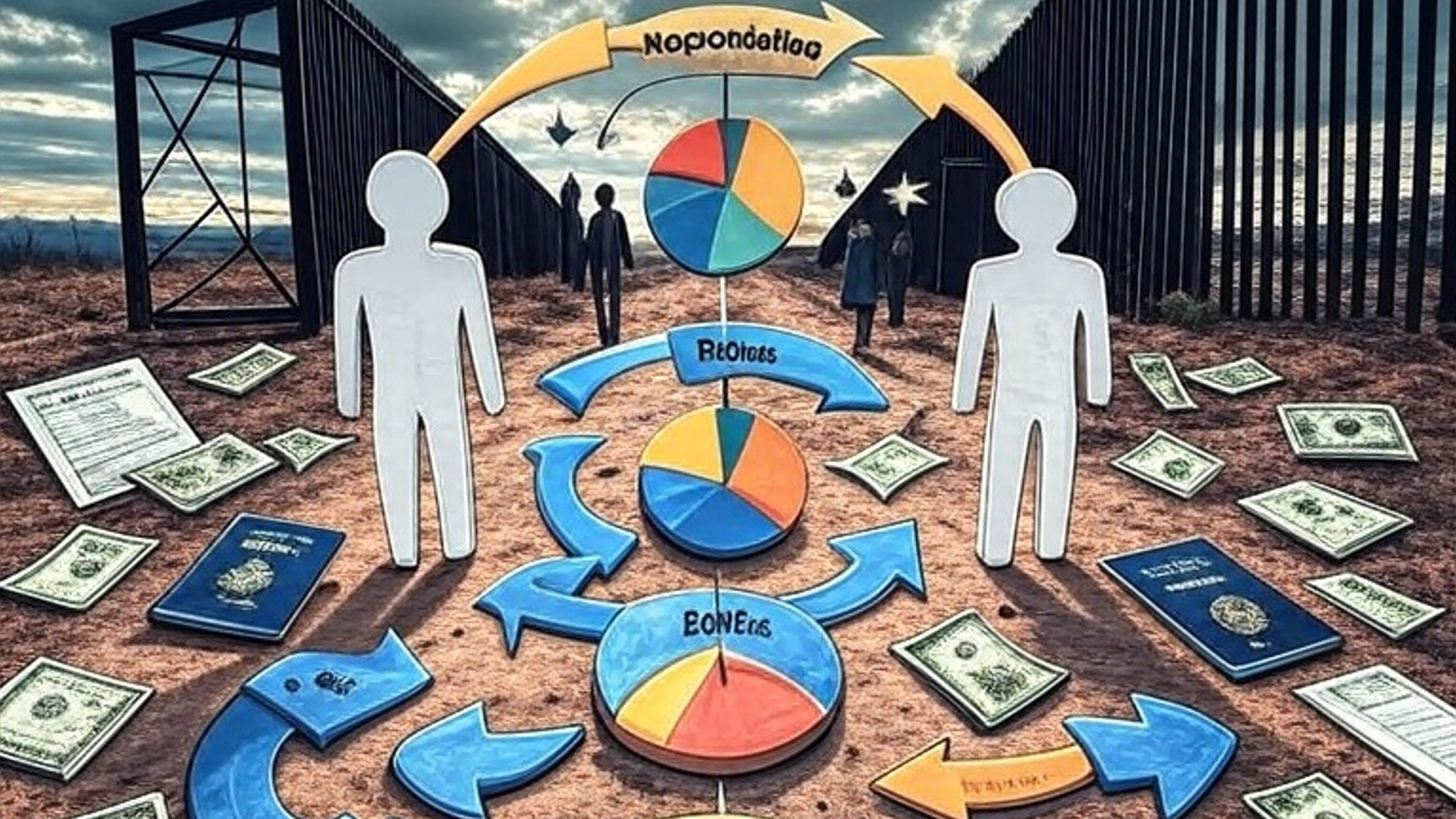
This essay proposes a conceptual framework to analyze contemporary immigration patterns, particularly in Western civilizations, through the lens of four interrelated processes: relocation, representation, rights, and resources. This framework, denoted by the unifying initial "R," serves as one interpretive model among many to understand the transformative impact of immigration—whether perceived as a societal shift, an invasion, or a natural evolution—on established communities. It is acknowledged that perspectives differ: immigrants or "illegals" may view these processes as steps toward integration or empowerment, while receiving societies might interpret them as an encroachment or loss of sovereignty. The framework does not prescribe a rigid sequence; rather, these stages may intermix, fluctuate, progress, or regress, reflecting the dynamic nature of immigration. Historical precedents and current global trends inform this analysis, offering a broader context while maintaining focus on this specific conceptual model. Solutions to mitigate these dynamics are also explored, emphasizing reversal and prevention strategies applicable at individual and societal levels.
Relocation: The Initial Movement
Relocation marks the physical displacement of individuals or groups into new territories, a process enabled by modern transportation and political mechanisms. In contemporary Western contexts, this movement often involves individuals from diverse cultural and ethnic backgrounds entering societies established over centuries by European-descended populations. Historically, such relocations have shaped civilizations—e.g., the migration of Germanic tribes into the Roman Empire (4th-6th centuries CE) or the Norman Conquest of England (1066)—where demographic shifts eventually altered governance and culture. Today, similar movements, facilitated by globalized travel and permissive policies, introduce outsiders with no historical tie to the host society’s development. This phase, while a natural human phenomenon, raises questions of legality and intent, particularly when occurring without formal authorization, challenging the sovereignty of established communities. The order of this process may vary, with relocation sometimes preceding or following demands for representation, depending on political or economic catalysts.
Representation: The Quest for Voice
Following or concurrent with relocation, representation emerges as immigrants seek to influence or participate in the host society’s governance. This may involve self-advocacy through informal networks or alliances with sympathetic locals, often driven by demographic growth or political opportunism. Historically, the Visigoths’ integration into Roman structures (5th century) or the gradual assimilation of Anglo-Saxon elites into British society illustrates how new groups gained representational power over time. In modern contexts, this process is accelerated, with undocumented individuals leveraging numbers or falsified identities to demand a voice, sometimes supported by established citizens seeking electoral advantages. The legitimacy of such representation is contested, as it may lack historical or legal grounding, yet its progression can shift societal power dynamics. This stage may fluctuate, with representation gaining or losing prominence based on legal responses or community resistance, highlighting its fluid integration into the broader framework.
Rights: The Expansion of Entitlements
Rights constitute the third dimension, where relocated individuals, often through representation, claim legal or social privileges akin to those of citizens. This may include access to welfare, language accommodations, or special protections, frequently legitimized by evolving policies or advocacy. Historical examples include the enfranchisement of former slaves in the Roman Republic (after the Social War, 91-87 BCE) or the gradual rights extended to immigrant groups in the United States during the 19th century. In current Western settings, this phase is marked by demands for rights by those without legal status, supported by institutional frameworks that may prioritize inclusivity over citizenship criteria. The sequence here can reverse or overlap with representation, as rights claims may precede formal advocacy, driven by sheer population pressure. This process challenges the historical covenant of rights earned through contribution, prompting debates over fairness and legal integrity.
Resources: The Redistribution of Wealth
Resources, the final component, involve the allocation of economic and social capital—housing, healthcare, education—to the newly arrived, often diverting these from established populations. Historically, the migration of the Huns into Europe (4th-5th centuries) strained Roman resources, contributing to its decline, while the influx of Irish immigrants to the U.S. in the 1840s both enriched and burdened local economies. Today, this redistribution is evident in public expenditures on immigrant services, funded by taxes from long-term residents, raising concerns about sustainability and equity. The process may begin early, with resources allocated to facilitate relocation, or intensify as rights are secured, creating a feedback loop that amplifies resource demands. This stage, like the others, can regress or progress independently, reflecting the complex interplay within the framework.
Conceptual Flexibility and Broader Perspectives
This "4R" framework—relocation, representation, rights, resources—is one conceptual tool among many to interpret immigration dynamics. Alternative models might emphasize economic integration, cultural assimilation, or security threats, depending on the observer’s perspective. For immigrants or "invaders," these stages may represent a strategic progression toward empowerment or survival within hostile environments. For receiving societies, they signify an invasion or transformation, threatening cultural cohesion and resource availability. External observers might view this as a neutral demographic shift, driven by global inequalities. The stages are not linear; they may interweave, with rights demands preceding relocation in asylum cases, or resources allocated to prevent further representation. This fluidity underscores the framework’s utility as a conceptual lens, adaptable to various contexts across America and Western civilizations, where similar patterns are apparent.
Historical and Current Context
Historically, demographic mergers have often led to one group’s dominance—e.g., the Mongol invasions of China (13th century) or the Arab conquests of the Levant (7th century)—where focused intent and population growth shifted power. These precedents suggest that current immigration, while accelerated by modernity, follows a recognizable pattern of cultural and political transformation. In recent decades, Western nations have experienced analogous shifts, with visible strains on infrastructure and identity, though specific instances remain broadly defined to reflect universal applicability. This historical continuity reinforces the framework’s relevance, framing immigration as a multi-stage process with potential for societal overhaul.
Solutions: Reversing and Preventing the 4R Dynamics
Addressing these dynamics requires strategies to reverse or block each "R" phase. Reversing relocation involves strengthening border controls and deporting unauthorized entrants, historically effective in the U.S. during the 1920s immigration quotas, and currently viable through enhanced enforcement mechanisms. Reversing representation necessitates electoral reforms to ensure only legal residents vote, drawing on historical citizenship requirements (e.g., U.S. Naturalization Act of 1790), and countering political incentives with transparency laws. Reversing rights demands a return to citizenship-based entitlements, as seen in early American policies excluding non-citizens from public benefits, supported by legal challenges to overreach. Reversing resource diversion requires reallocating public funds to citizens, mirroring post-World War II European reconstruction efforts that prioritized native recovery.
Prevention strategies include individual actions—community advocacy, legal reporting of violations—and broader measures—national policies to limit immigration, international agreements to curb human trafficking, and cultural campaigns to reinforce identity. Historically, the Roman Empire’s Limes fortifications and the U.S. Border Patrol’s establishment (1924) demonstrate effective barriers. Progress against these dynamics can be maintained through consistent enforcement, public education on legal immigration, and economic incentives for citizen welfare, ensuring a balanced approach that respects both individual rights and societal stability.
Conclusion
The "4R" framework—relocation, representation, rights, resources—offers a conceptual tool to dissect the complex immigration dynamics reshaping Western civilizations. It acknowledges the fluidity of these stages, their historical roots, and their current manifestations, while remaining one perspective among many. Whether viewed as invasion or integration, the process challenges established societies, necessitating a multifaceted response. By reversing and preventing these stages through legal, cultural, and economic means, communities can protect their historical legacies while addressing the realities of modern migration, fostering a sustainable balance between openness and preservation.
Bullet Point Summary
Relocation: Initial movement of individuals into new territories, driven by transportation and policy, raising questions of legality and sovereignty.
Representation: Immigrants seek a voice in governance, often through advocacy or demographic leverage, with contested legitimacy.
Rights: Claims for legal and social privileges, sometimes by undocumented individuals, challenging citizenship-based entitlements.
Resources: Redistribution of economic and social capital to immigrants, straining host society infrastructure and equity.
Conceptual Flexibility: The 4R framework is fluid, with stages intermixing, applicable across historical and modern contexts.
Solutions: Strategies include reversing relocation via border control, limiting representation with electoral reforms, restricting rights to citizens, and reallocating resources to natives.
Summary
Delve into the intricate dance of immigration, where relocation, representation, rights, and resources intertwine. This framework unveils the shifting landscapes of societies, offering a lens to explore transformative impacts. Engage with historical echoes and modern challenges, sparking curiosity about the balance between integration and preservation in a dynamic world.
#ImmigrationDynamics #4RFramework #4R #RightsAndResources #RelocationRepresentationRightsResources
Tags: immigration, relocation, representation, rights, resources
Watch video on X, Rumble, Odysee, BitChute, Brighteon, Facebook, Gab, Gettr, Minds, or realfreenews.com